
Reclaiming Docklands: A six-part series - part six
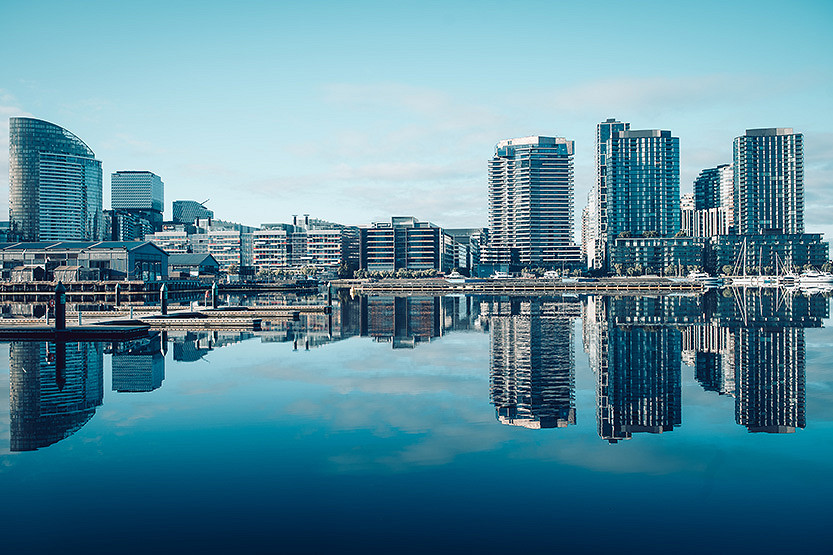
Part six. The future is here: Docklands as a family-first, community-led neighbourhood.
What if Docklands was known not for what it lacks, but for what it leads?
Imagine a suburb where families gather in shaded play areas without wondering if the grass will be fenced off again. Where community events are supported year-round, not just lit up once a year. Where the sounds of children, neighbours, and artists are treated as vital signs of civic life, not as noise to be managed.
That future is possible. But it won’t be delivered by accident. It has to be built deliberately, collectively, and with care.
Over the past five articles, we’ve unpacked the layers of what’s holding Docklands back:
- A neighbourhood that lost its original purpose.
- A place where the stories of everyday residents are written over by commercial interests.
- A community with no formal voice, asked to participate without power.
- A suburb whose social fabric is fraying due to a lack of shared space and structure.
- A post-pandemic “recovery” that prioritised towers and tourists while leaving families and locals to fend for themselves.
But if the past few years have taught us anything, it’s that the strength of a community is measured not in concrete, but in continuity, in the relationships, routines, and rituals that bind us together.
Docklands as a family-first, community-led neighbourhood
Docklands is not just a development. It’s a place where people live, and increasingly, raise families. That reality must shape every decision moving forward.
A family-first Docklands is one where:
- Public space is built for play, not just photos.
- A community centre exists; open daily, resourced, and welcoming to all.
- Children grow up with safe streets, accessible toilets, green spaces, and room to be kids.
- Civic life is visible, local, and inclusive; where governance is not something that happens to the community but with it.
This vision doesn’t exclude others. It expands who Docklands is for.
We must move from a place-centred approach to a people-centred one; from precinct design to neighbourhood belonging.
Practical next steps
Here’s what could realistically be delivered in the next 12 months with shared will from the council, developers, businesses, and the community:
1. Create a Docklands Neighbourhood Assembly within Community3008
A standing advisory body, open to residents, artists, business owners and students, resourced and facilitated in partnership with the City of Melbourne.
2. Establish a permanent community hub
A safe, accessible space that brings people together for events, parenting groups, workshops, co-working, and play, beginning as a low-cost pilot activation.
3. Roll out a family-friendly business program
Recognise and support Docklands businesses that welcome kids and families with signage, grants (e.g., play corners or change tables), and visibility in City marketing.
4. Revive greening of Harbour Esplanade
Reinstate and expand planters. Pilot shaded micro-greenspaces with seating and trees. Embed First Nations-led planting and storytelling along the waterfront. Install an above concrete fenced dog park.
5. Deliver small but powerful community projects
Complete the stencilled games for children that were never delivered. Create welcoming signage. Invest in public realm signals that say: you belong here.
6. Host a “Week of Belonging” in Docklands
Celebrate the people of Docklands through intergenerational events, street food pop-ups, local storytelling, and neighbourhood walks that build connection.
7. Pilot a Docklands participatory budget
Empower locals to vote on how $100,000-plus of community funding is spent. Build democratic literacy and civic trust.
8. Conduct a Docklands family and accessibility audit
Assess toilets, footpaths, shade, seating, play spaces, and school access; with a report to guide the next wave of capital works.
These actions are not about reinventing Docklands. They’re about reconnecting it to the people who live here now and building a future that includes all of us.
What comes next
In the coming months, I’ll be publishing a book that dives deeper into these ideas; about community power, civic imagination, and building neighbourhoods that are designed for belonging.
Because while councils and developers have influence, the real power is, and always has been, with people.
The Final Word
Docklands is already home to artists, families, renters, retirees, dreamers, and business owners. It is rich in stories, skills, and soul. What it needs now is continuity. Conscious investment. And shared care.
“The future of Docklands isn’t in the next tower. It’s in the next neighbour who feels like they belong.”
Let’s build a neighbourhood we’re proud to raise our kids in, grow older in, and contribute to, together. •
Jamal Hakim is a Docklands
resident & former City of Melbourne councillor
Related Articles
Has the government stopped caring about Fishermans Bend?
It is a provocative question, but after more than a decade of delay, drift and diminished ambition, it is one the state government should be prepared to answer honestly.
Read More
Pam the Bird disappears from Bolte Bridge following chaotic Docklands scenes
Meals with Impact launches free Docklands food market

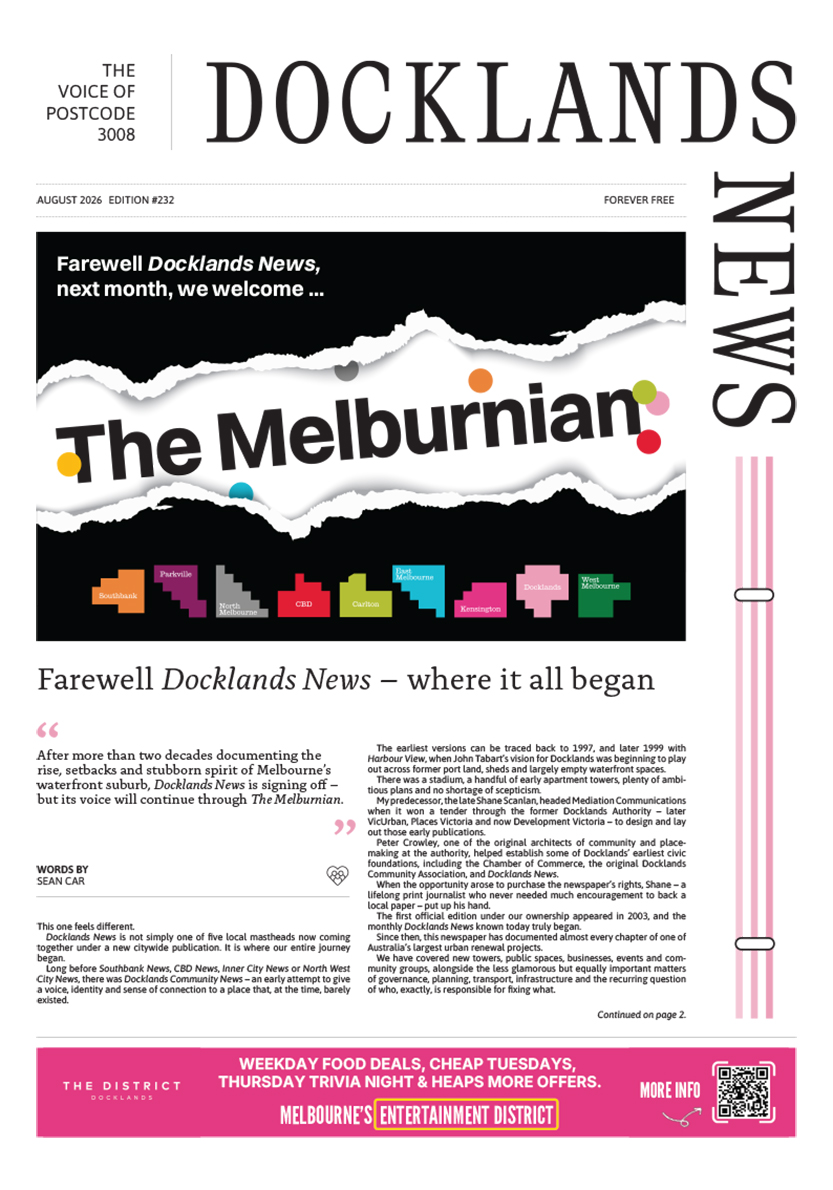 Download the Latest Edition