
Pam the Bird disappears from Bolte Bridge following chaotic Docklands scenes
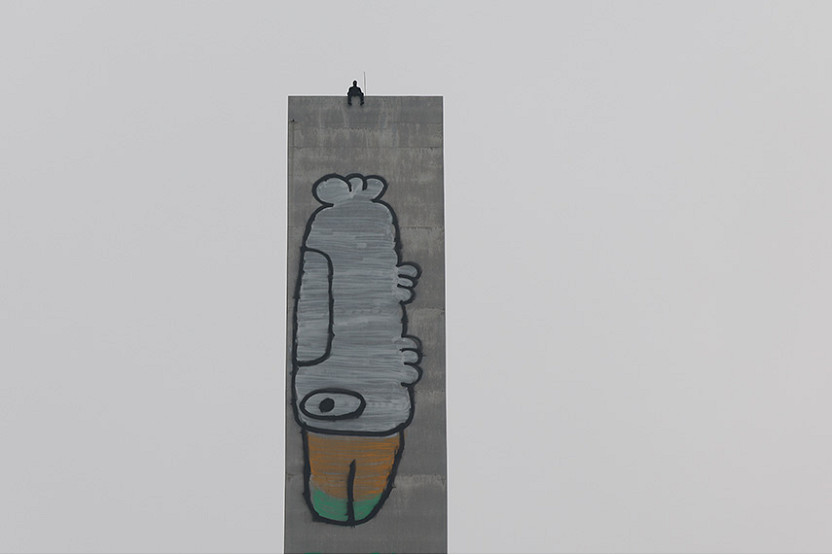

For weeks after Docklanders watched a man descend from the Bolte Bridge and surrender to police at Collins Wharf, a giant Pam the Bird remained painted high on one of Melbourne’s most recognisable pieces of infrastructure.
The image, sprayed onto the eastern pylon of the 140-metre bridge during an audacious early-morning stunt on July 7, became impossible to ignore for motorists, residents and anyone looking back towards Docklands from across the city.
But after weeks of visibility, Transurban began the painstaking task of covering it over – a job that has highlighted both the scale of the incident and the ongoing debate about whether Pam the Bird is vandalism, street art, or something more complicated in Melbourne’s visual culture.
As reported by the ABC, the clean-up took several days and required around 100 litres of surface preparation, primer and paint.
Rather than attempting to remove the image, crews painted over it. The work involved painters climbing the internal stairs of the pylon – a process that takes around 40 minutes – before abseiling down the outside of the structure to reach the affected area.
Transurban general manager of road operations Peter Munro told the ABC the task covered around 200 square metres, describing it as “an area the size of a typical family home”.
For Docklands, the clean-up brings to a close one of the more bizarre public spectacles witnessed in the precinct this year.
On the morning of July 7, police were called after a man allegedly forced entry into the eastern pylon and climbed the bridge, where he later refused to come down. One inbound lane was closed during the operation, affecting thousands of vehicles during the morning peak.
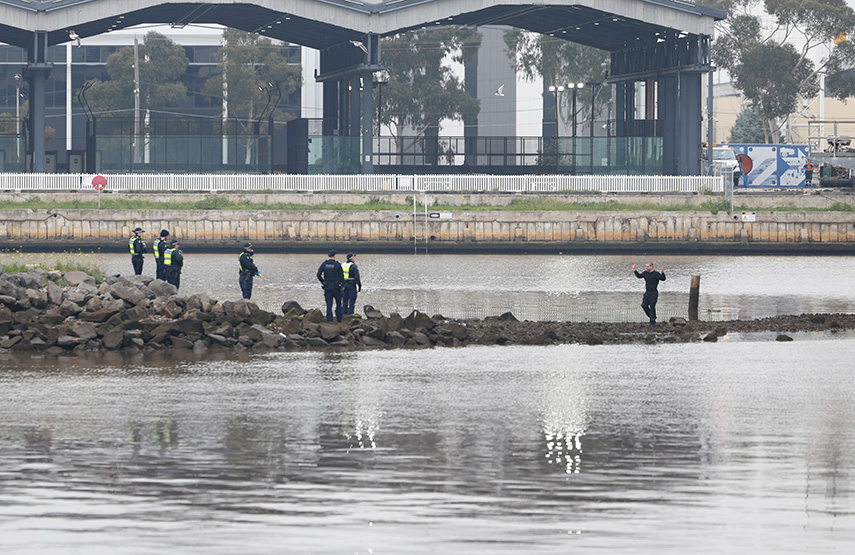
Water police and uniformed officers were deployed, while media and the public were urged not to fly drones in the area due to safety concerns.
The standoff ended before 11am when the man climbed down from the tower, crossed the rocks below and emerged near the tip of Collins Wharf, where he raised his hands and was arrested by waiting police.
Twenty-two-year-old East Geelong man Jack Gibson-Burrell was later charged with 13 offences, including burglary, criminal damage, conduct endangering life, conduct endangering serious injury, committing an indictable offence while on bail, contravening bail conditions and graffiti-related offences.
The incident immediately reignited debate about Pam the Bird, the cartoon-like tag that has appeared across Melbourne in recent years on trains, rooftops, freeway signs, silos, infrastructure and heritage buildings.
To some, the bird has become a kind of unofficial folk symbol – absurd, recognisable and strangely Melbourne. To others, it is straightforward vandalism, imposing clean-up costs, safety risks and damage on public and private assets.
The Bolte Bridge episode has made that debate harder to separate from questions of danger and consequence. Whatever one thinks of the image itself, scaling a major bridge pylon and triggering a police operation during the morning commute placed workers, emergency services and road users in the middle of a high-risk incident.
Transurban made it clear that leaving the image in place was not an option. Mr Munro told the ABC the Bolte Bridge was “an iconic piece of infrastructure for Melbourne” and that the company’s role was to keep it “clean and free from graffiti”.
Pam the Bird may now be disappearing under layers of primer and paint, but the questions it raised are unlikely to vanish as quickly. •
Related Articles
Indian Film Festival of Melbourne begins with star-studded 2026 program
Melbourne has once again become a meeting point for Indian cinema, culture and storytelling as the Indian Film Festival of Melbourne (IFFM) kicking off for its 17th edition from August 13.
Read More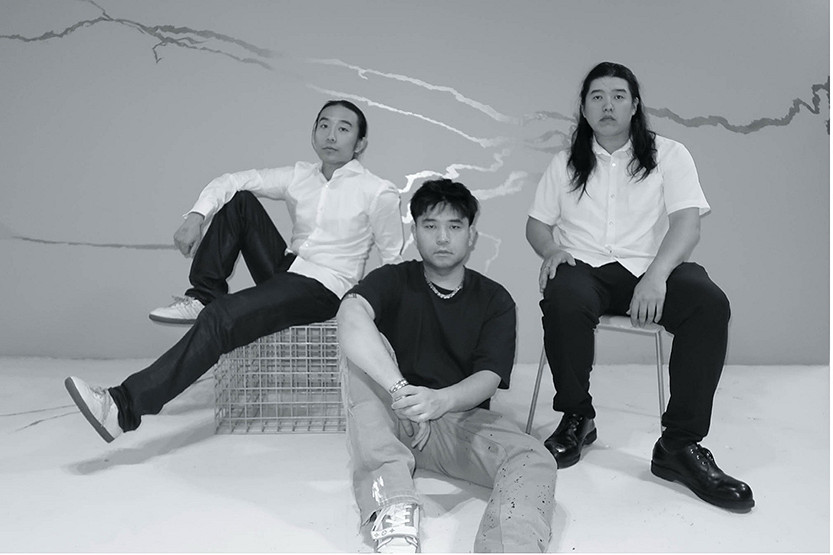
Fractal Studios brings new creative energy to Docklands
A new artist-led studio in Docklands is aiming to help unlock the precinct’s creative potential through workshops, installations, gatherings and experimental public-facing art.
Read More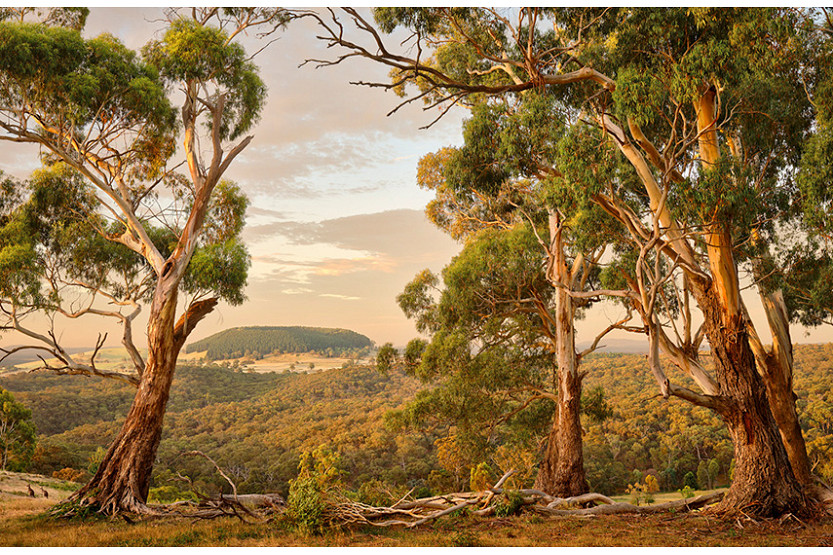
XYZ turns lens on Victorian landscape in new exhibition
Docklands’ hidden photo gallery XYZ is turning its focus to the Victorian bush with a new exhibition exploring landscape, process and place.
Read More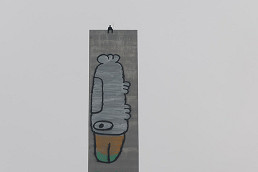
Pam the Bird disappears from Bolte Bridge following chaotic Docklands scenes
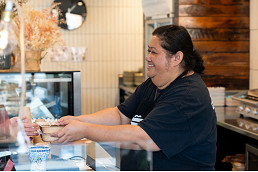
Meals with Impact launches free Docklands food market

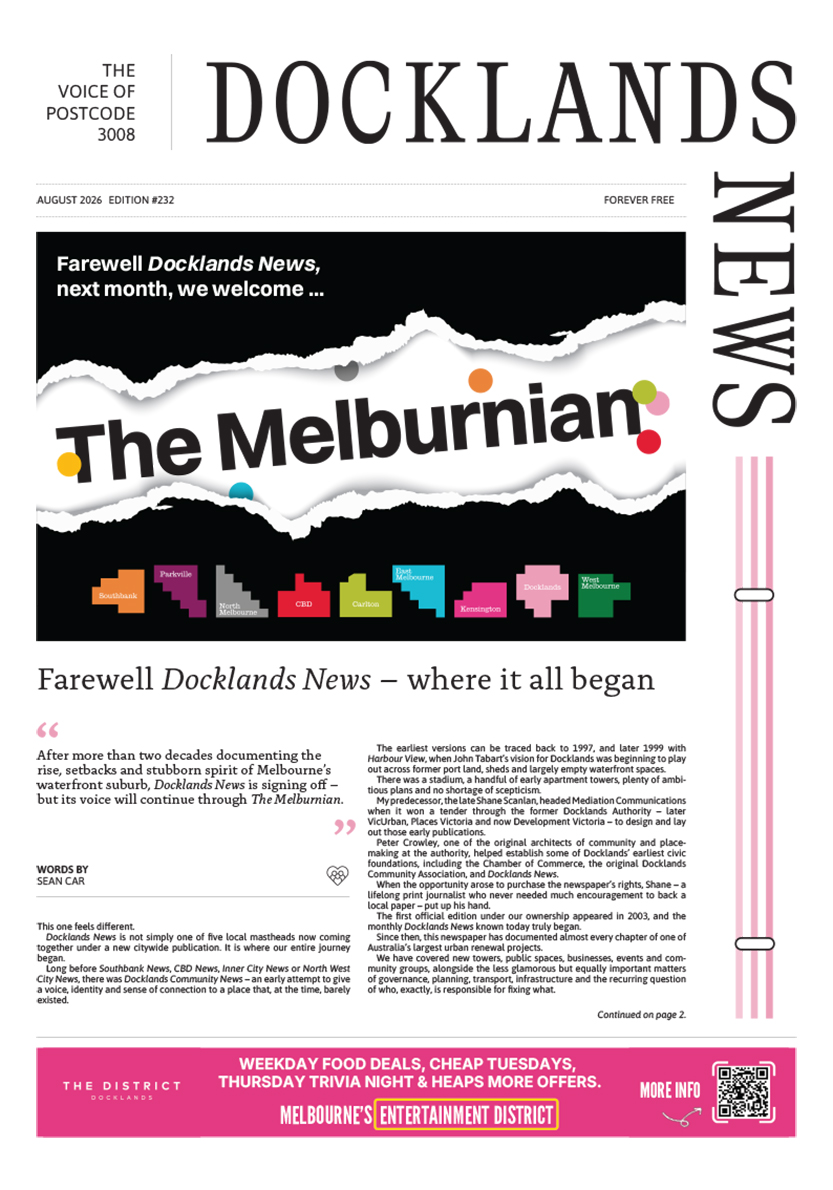 Download the Latest Edition