
Reclaiming Docklands: A six-part series, part five
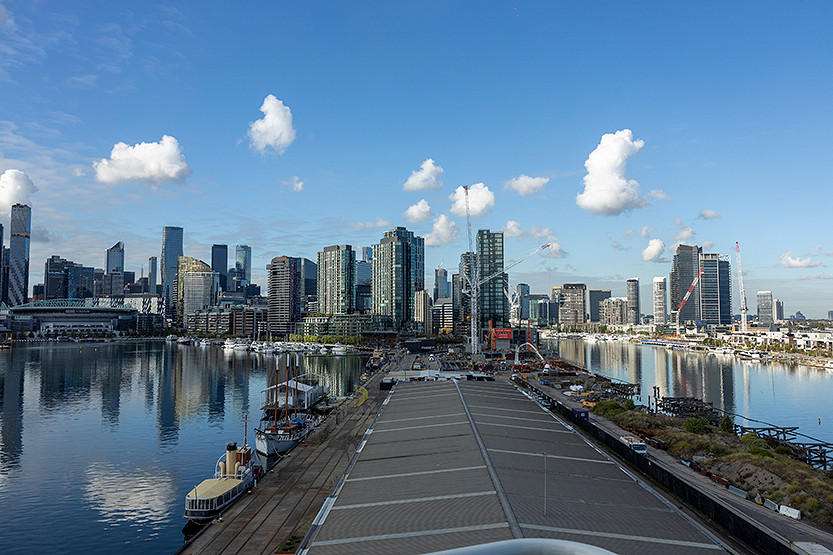
Abandoned at the edge: When “recovery” leaves the community behind.
There’s a small patch of grass at Monument Park that, for the past two years, has quietly become one of Docklands’ most important community spaces.
After school, children gather there to kick a ball, play cricket, or simply run around. Families meet. Conversations spark. Community happens.
But it’s also a space that’s been fenced off repeatedly, each time the grass wears out from use. Each time, the message feels the same: this space wasn’t designed to be lived in. It was designed to be looked at.
“Every time community life starts to take root in Docklands, it gets fenced off – literally and symbolically.”
What’s missing is not just grass but follow-through. A more permanent solution (such as artificial turf) would be relatively simple and inexpensive. But in Docklands, it’s a familiar story: basic community infrastructure is deferred or ignored, while aesthetic or commercial priorities march ahead.
We’ve seen it in the planters once placed along Harbour Esplanade to kick-start greening; they’ve since been shoved aside and never returned. We’ve seen it in the promised stencils for children’s games on footpaths; an idea developed under the former Docklands Stakeholder Group that never materialised.
These aren’t grand asks. They’re symbolic of something deeper: the absence of continuity in the city’s relationship with Docklands.
Continuity means more than turning up once. It means staying. It means resourcing what works. It means building trust not just through vision statements, but through daily acts of reinforcement. That’s what we’ve been missing despite a lot of hard work from many.
This year, the return of the Melbourne Star observation wheel has been celebrated by some as a symbol of renewal. In many ways it is. A beloved (and at times ridiculed) landmark is being given a second chance. It signals confidence in Docklands’ future. It’s a positive step.
But like the $500 million build-to-rent towers at Waterfront City East, or the commercial plazas planned for Collins Wharf, it’s yet another example of big-ticket development taking precedence over community-first infrastructure. These projects might activate the precinct economically, but they don’t build a sense of belonging. Not on their own.
We cannot mistake activity for care. So, here’s a little challenge to the developers, build in community infrastructure as part of your social licence to operate, and talk to community about what you need.
So far, Docklands feels like it has been treated like a footnote in Melbourne’s recovery. The 2025–26 council budget made no significant commitment to our local infrastructure, despite rapid population growth and strong community participation in consultations. The promise of the 2022 Docklands Summit – of meaningful engagement, investment, and recognition – feels distant.
Instead, the community is left holding the line.
Groups like Community3008 Inc. continue to organise events, raise concerns, and try to shape the neighbourhood’s future. Local businesses create pockets of warmth and hospitality. Parents help each other out. These aren’t acts of resistance – they’re acts of persistence.
But persistence without support isn’t sustainable.
A real recovery for Docklands must include:
- Permanent, usable green space for families and children.
- Funded, ongoing community engagement mechanisms.
- Public realm upgrades that prioritise use ove aesthetics.
- Delivery of low-cost, high-impact initiatives (like play stencils and community signage) that signal people are welcome here.
Docklands doesn’t need another summit. It needs follow-through.
We don’t need grand speeches. We need someone to put the planters back.
And more than anything, we need continuity. Not just in events, but in relationships. Not just in strategy, but in care. Because communities don’t flourish on moments alone, they grow through commitment.
Next time, in the final article of this series, I’ll share a vision for Docklands as a family-first, community-powered neighbourhood. One where the city invests in people, not just place, and where everyone has a stake in shaping what comes next.
Jamal Hakim is a Docklands resident and former City of Melbourne councillor. You can reach him on Instagram @thejamalhakim or LinkedIn, or at the local cafe. •
Related Articles
Has the government stopped caring about Fishermans Bend?
It is a provocative question, but after more than a decade of delay, drift and diminished ambition, it is one the state government should be prepared to answer honestly.
Read More
Reclaiming Docklands: A six-part series - part six
Part six. The future is here: Docklands as a family-first, community-led neighbourhood.
Read More
Pam the Bird disappears from Bolte Bridge following chaotic Docklands scenes
Meals with Impact launches free Docklands food market

 Download the Latest Edition