
Has the government stopped caring about Fishermans Bend?
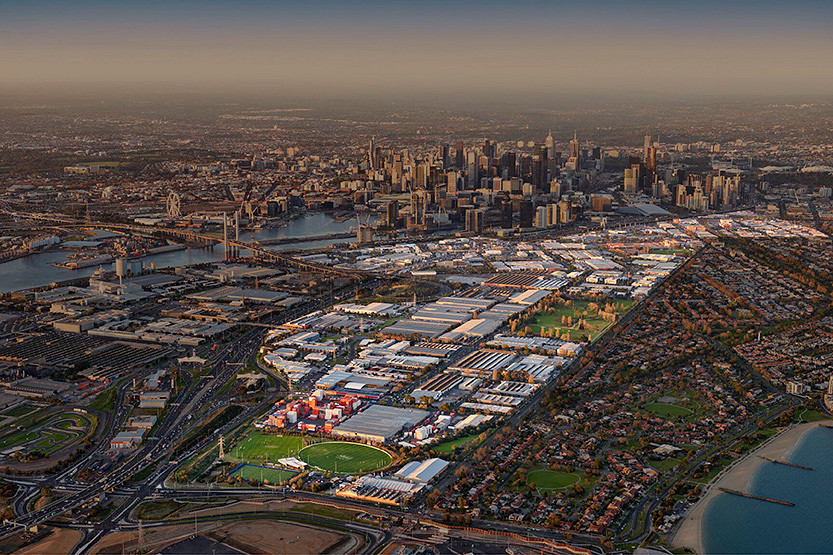

It is a provocative question, but after more than a decade of delay, drift and diminished ambition, it is one the state government should be prepared to answer honestly.
Has it stopped caring about Fishermans Bend?
When that exact question was put to the government, the response was tellingly tepid. Fishermans Bend, a spokesperson said, remained “a key component of Labor’s plan to boost housing supply”, supported by a $9 billion development pipeline, thousands of homes and new schools.
All of that is technically encouraging. None of it answers the question.
Rewind to 2014 and Fishermans Bend was an election issue. The former Napthine government, under planning minister Matthew Guy, had sent shockwaves through the community by rezoning vast areas as Capital City Zone. Land values soared and development applications flooded in, but without the serious planning for transport, parks, schools and community infrastructure required to support a city of this scale.
When Daniel Andrews came to power, a reset was necessary. The consequences of the earlier approach were already obvious. Government and the City of Port Phillip would later spend $19 million buying land for a park opposite South Melbourne Primary School in Montague – an extraordinary price for infrastructure that should have been planned before speculation took hold.
Delay was inevitable. COVID did not help. The community was broadly understanding.
But those explanations have long worn thin.
The government released its recast Fishermans Bend Framework in 2018, setting out an ambitious vision for a precinct twice the size of Melbourne’s CBD. Yet the signs that Fishermans Bend was slipping down the priority list were already emerging.
This is a government that has repeatedly demonstrated its capacity to deliver when it decides something matters. The West Gate Tunnel, Metro Tunnel, North East Link and Suburban Rail Loop show that complexity, cost and opposition are not insurmountable barriers when political will exists.
So why has Fishermans Bend been treated differently?
Outside the delivery of new schools – for which the government deserves genuine credit – the record is thin. The Victorian Auditor-General found last year that agencies were not on track to deliver the projects and outcomes originally promised. Of the medium-term projects once intended for completion by 2025, only a small number had been delivered. Key planning documents remained unfinished years after they were due.
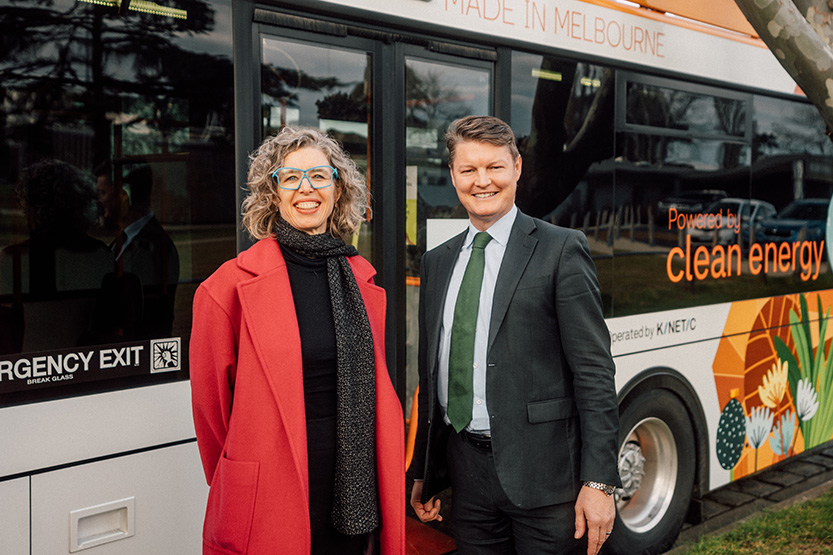
Premier Ben Carroll (then Minister for Public Transport) with Albert Park MP Nina Taylor announcing bus upgrades in Fishermans Bend in 2022.
Transport is the clearest failure.
The 2018 framework envisaged new tram services along Plummer and Lorimer streets by 2025. Not one metre of new track has been laid.
Metro 2, the proposed rail connection between Newport and Mernda through Fishermans Bend, was once expected to follow Metro Tunnel. Instead, Suburban Rail Loop emerged almost from nowhere (even as new Premier Ben Carroll conceded recently), conceived at the highest levels of government and sold brilliantly to voters in Melbourne’s east.
It was an electoral masterstroke. Fishermans Bend and Melbourne’s west paid the opportunity cost.
The government has since released a revised integrated transport plan, but it offers horizons rather than deadlines, lines on maps rather than funded commitments. Even immediate bus improvements along routes 237 and 606 remain incomplete, according to City of Port Phillip Mayor Alex Makin said.
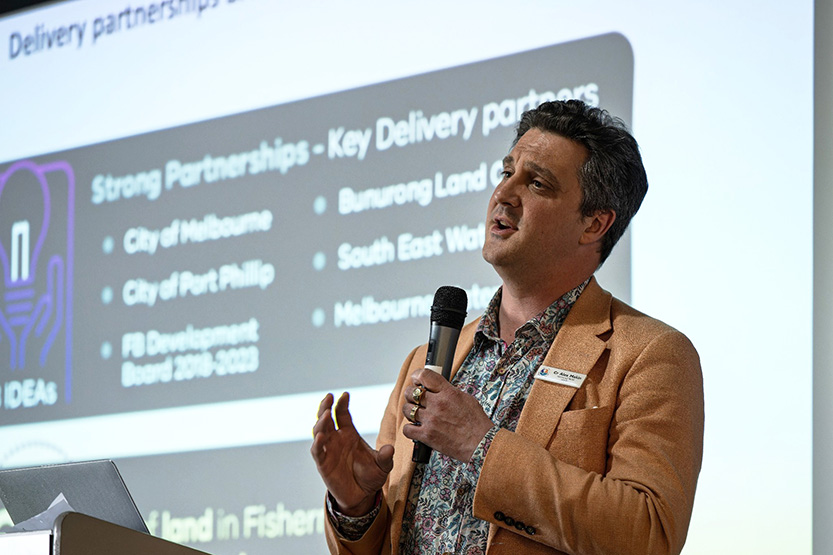
City of Port Phillip Mayor and Montague Ward councillor Alex Makin.
“It remains easier for residents of Fishermans Bend to access the CBD than it is for them to travel across Port Phillip for jobs, schools and community,” he said, adding that Fishermans Bend and Port Melbourne still lacked direct access to Anzac Station, “despite this new bus route being identified as an immediate action”.
“It is also why the Department of Transport and Planning can spend over $1 million on intersection upgrades and fail to include a direct pedestrian link connecting Port Melbourne Secondary College along Graham St. Port Melbourne Secondary College opened in 2022, yet four years later students are still waiting to simply cross the road,” Cr Makin said.
Montague, the precinct’s clearest success story, proves the basic equation. It already has two tram lines, established neighbouring communities, a primary school and a new park. Development followed.
Go figure.
Yet even Montague’s detailed precinct planning remains unresolved, despite promises it would be delivered since 2019.
Further west, Wirraway is deeply dependent on meaningful public transport. Sandridge has endured an unnecessary contest over the former Australia Post site, with the City of Port Phillip forced to fight the government for recreational facilities beside North Port Oval.
Across the municipal boundary, the Employment Precinct offers perhaps the saddest symbol of stalled ambition.
The University of Melbourne’s proposed engineering campus at the former Holden site was meant to anchor an internationally significant cluster linking research, advanced manufacturing and industry. It was once expected to open around 2025-26.
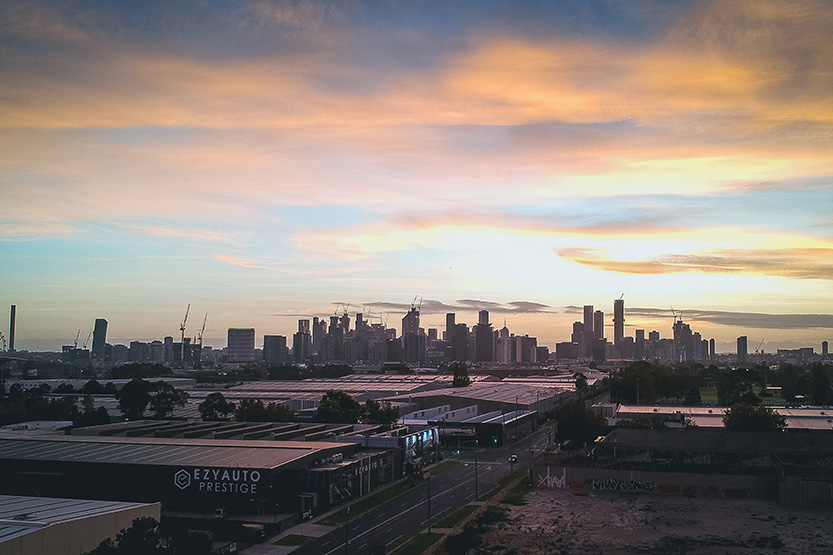
Now the university has withdrawn, leaving an enormous empty site facing Westgate Park and no compelling replacement vision.
The vacuum has become so pronounced that former Melbourne Lord Mayor Sally Capp floated Disneyland. Fishermans Bend Business Forum president Guy Naselli more recently suggested a stadium.
The suggestions may differ, but the message is the same: anything is better than nothing.
The only recent investment the government has supported to fill the broader vacuum is a new data centre - something the City of Melbourne has since raised strong environmental and land-use concerns about.
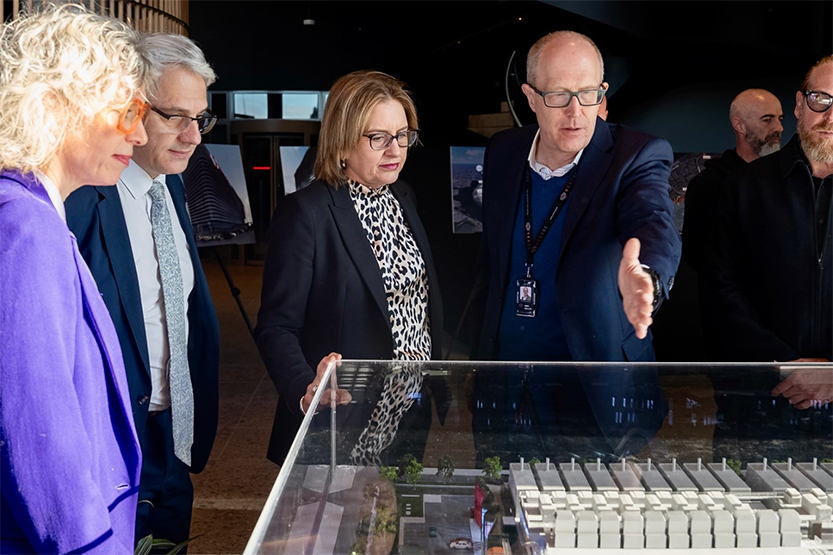
Former Premier Jacinta Allan during the announcement of Next DC's new data centre in Fishermans Bend in 2025.
Lorimer, meanwhile, remains poorly served by public transport and constrained by its coexistence with a major freight and trucking corridor. The limited residential growth emerging there depends heavily on Yarra’s Edge across the road.
The government still maintains Fishermans Bend will accommodate 80,000 residents and 80,000 jobs by 2050. If it still believes those targets are realistic, it must fund the infrastructure required to achieve them. If it no longer does, it should revise them and level with the community.
What it cannot credibly do is continue invoking the language of ambition while avoiding the difficult work of delivery.
I remain an optimist about Fishermans Bend. I was there when Guy announced the Liberal vision in Docklands in 2014. I was there when the first primary school opened in Montague. I have sat through years of forums where planners, councillors, businesses and residents discussed the extraordinary potential of a precinct two-and-a-half times the size of the CBD.
Realised properly, Fishermans Bend could attract global investment, support innovation and create one of Melbourne’s most important new urban communities.
But potential cannot run forever on artist impressions, planning frameworks and revised maps.
An election is approaching. Fishermans Bend should become an election issue again.
The government must either recommit to the vision with funded projects, firm dates and honest accountability, or admit that its priorities have changed.
The community has waited long enough.
Related Articles
Reclaiming Docklands: A six-part series - part six
Part six. The future is here: Docklands as a family-first, community-led neighbourhood.
Read More
Pam the Bird disappears from Bolte Bridge following chaotic Docklands scenes

Meals with Impact launches free Docklands food market

 Download the Latest Edition