
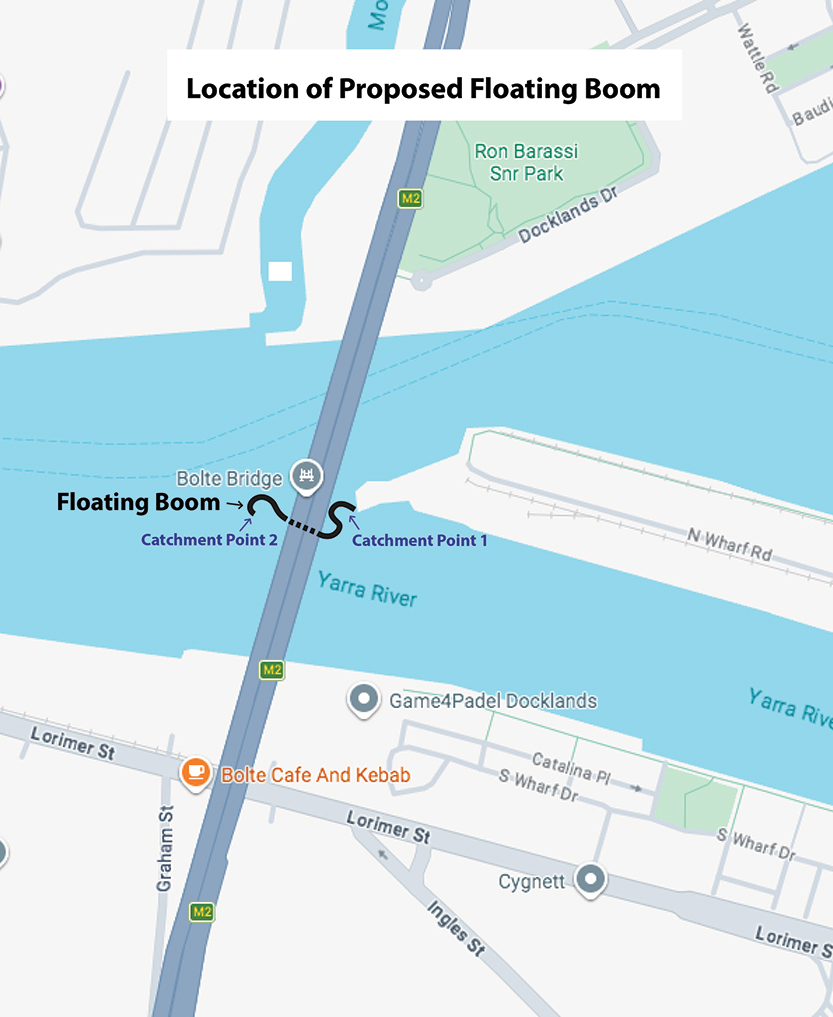
“Schematic of the floating boom”
The schematic depicts the 80-metre section of water through which litter enters Victoria Harbour, particularly during southerly and easterly winds.
The proposed floating boom would span this area and direct rubbish towards two distinct collection points. The schematic is not to scale.
Due to the Yarra River’s constant flow, litter that passes beyond the boom would rarely enter through the main entrance of Victoria Harbour, regardless of wind direction. While the boom would dramatically reduce the amount of litter entering the harbour, it would collect only a small proportion of the rubbish moving downstream.
It should be noted that more than 1000 tonnes of litter bypasses the Yarra River’s 12 existing traps each year, continuing downstream and ultimately entering Port Phillip Bay.
On June 26, I participated in an on-air interview with ABC Radio Melbourne presenter Raf Epstein. While I was able to outline some pertinent facts, the limited duration of the interview meant other important details could not be discussed.
Mr Epstein said he would attempt to conduct a follow-up interview with Parks Victoria. To assist him, I forwarded the following background information, together with a series of questions that I believe should be put to the authority.
I also sent the questions to Parks Victoria representatives in advance, avoiding any suggestion that the organisation had been ambushed.
Background information provided to Raf Epstein
Parks Victoria’s litter traps
Parks Victoria has installed 12 litter traps along the Yarra River, which it says capture around 100 tonnes of rubbish annually.
Government documentation states that 1.4 billion items of litter, representing around 2000 tonnes, enter Port Phillip Bay from the Yarra and Maribyrnong rivers every year. It is estimated that more than 1000 tonnes of this total travels along the Yarra River.
If the Yarra traps capture 100 tonnes annually, this represents around 10 per cent of the total litter travelling along the river.
The movement of fresh and salt water
Fresh water floats above salt water. The fresh-water layer in the Yarra River is between 200 and 400 millimetres deep.
Rubbish floats within this upper layer, which continually travels towards Port Phillip Bay. This occurs even when the incoming tide forces salt water from the bay beneath the fresh-water layer.
The Yarra therefore flows in both directions simultaneously: the fresh-water layer rises with the incoming tide while continuing to move towards the bay. Surface water near the bridge rarely exceeds one knot, or approximately 1.8 kilometres per hour.
Litter entering Victoria Harbour
Parks Victoria does not capture litter in the Yarra River south of the Charles Grimes Bridge at Wurundjeri Way, other than at Yarra’s Edge Marina.
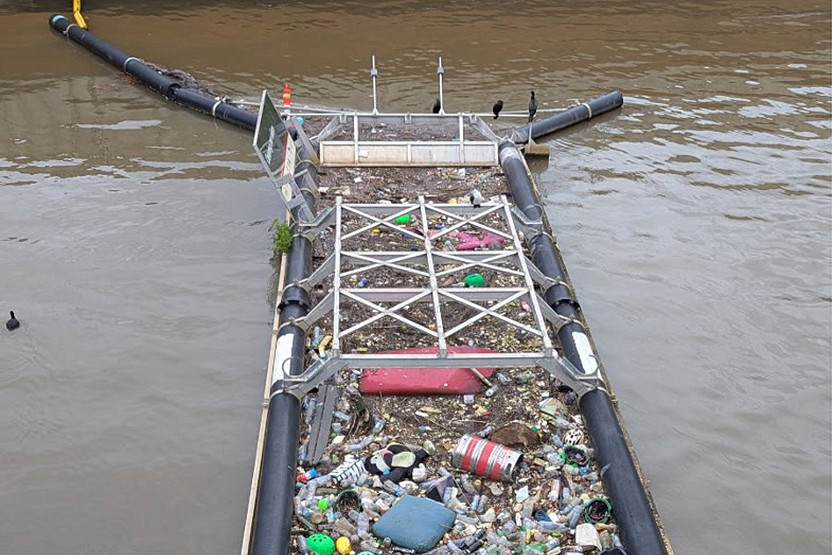
A proportion of the estimated 1000 tonnes of uncaptured litter enters Victoria Harbour through an 80-metre section of open water beside the Bolte Bridge, particularly during easterly and southerly winds.
Questions for Parks Victoria to be raised by Raf Epstein
1. Does Parks Victoria dispute the findings of the 2001 consultancy report, Victoria Harbour Litter Management Study, which identified the 80-metre section of open water near the Bolte Bridge as the point through which significant quantities of Yarra River litter enter Victoria Harbour?
2. Why does Parks Victoria now state that a floating boom would merely divert litter rather than capture it, when Parks Victoria director Sarah Auld wrote to me in April 2026:
“Staff time spent dealing with rubbish collected by the boom would reduce availability for environmental works, asset maintenance and public safety activities.”
3. Parks Victoria has installed a litter trap near the Bolte Bridge. However, I have been informed that its collection arms are too short and that the bankside arm sits between 20 and 25 metres from the riverbank, allowing rubbish to flow past without being collected.
Given that the existing traps capture only around 10 per cent of the total rubbish travelling along the Yarra, how can one additional litter trap substantially reduce the amount entering Victoria Harbour?
4. Why is the Parks Victoria litter barge no longer used in Victoria Harbour when, in 2008, Parks Victoria was contracted to provide 28 hours of on-water rubbish collection each week throughout Docklands’ waterways?
5. Parks Victoria was one of the signatories that authorised the installation of 145 lights in Victoria Harbour for six months at a reported cost of $150,000.
Why not spend $30,000 on a proof-of-concept floating boom to properly test whether the proposal would be effective? The $150,000 spent on the lighting installation would have represented around 30 years of boom protection for the harbour.
6. Other than installing one additional litter trap, what is Parks Victoria’s broader plan for addressing the continuing litter problem in Victoria Harbour? •
Related Articles
Renewed push to reclaim Moonee Ponds Creek in Docklands
Docklands residents are being urged to help renew pressure on the state government to restore public access and improve the neglected mouth of Moonee Ponds Creek, following an address by former federal MP and long-time creek advocate Kelvin Thomson.
Read More
Harbour Esplanade to feature in 220km Birrarung walk
A long-term plan for a 220km “whole-of-river” walking trail along the Yarra, or Birrarung, will take walkers through Docklands and along Harbour Esplanade as part of a major new route connecting the river’s lower reaches to the Upper Yarra Reservoir.
Read More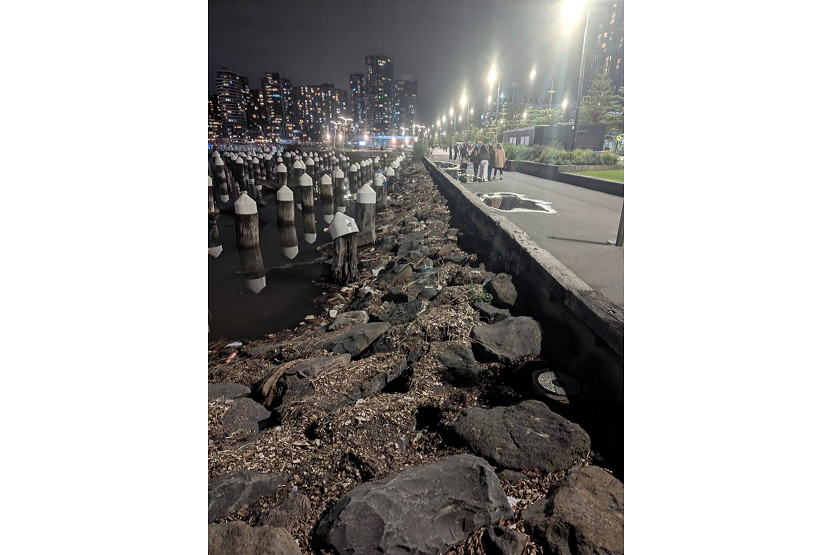
Stopping rubbish entering Victoria Harbour
While battling environment ministers and government departments, it can be easy to lose sight of the issue at hand.
Read More
Pam the Bird disappears from Bolte Bridge following chaotic Docklands scenes

Meals with Impact launches free Docklands food market

 Download the Latest Edition