
Preventing rubbish entering Victoria Harbour: it can and should be done
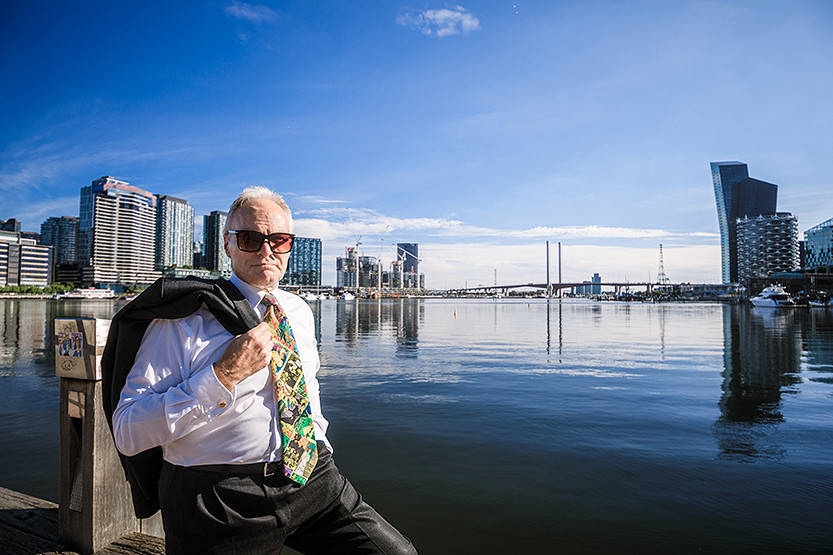

Momentum is building from concerned public and the broader business community to prevent rubbish from entering Victoria Harbour.
A Docklands harbour representative is arguing that a relatively modest intervention would dramatically reduce litter flowing into the waterway and improve one of the precinct’s most visible public assets.
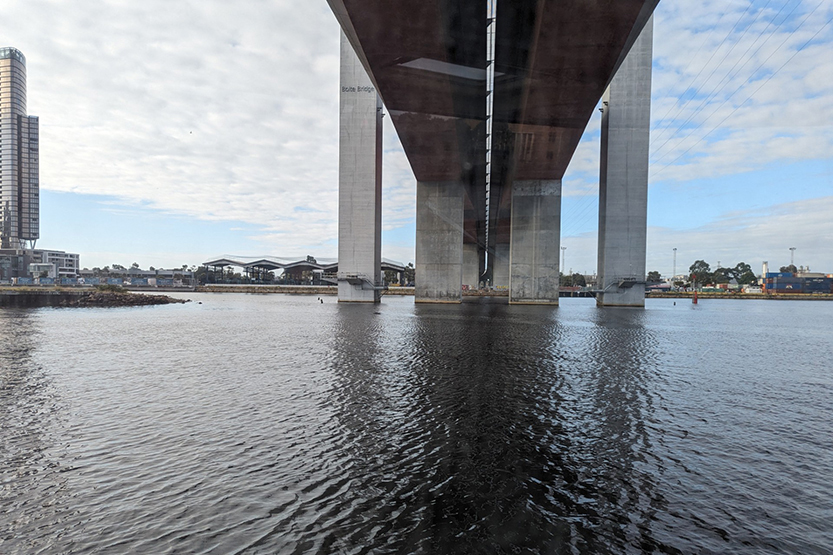
Harvey Cleggett, who represents harbour boat owners, and says he is advocating more broadly on behalf of local residents, has been pressing government and agency stakeholders to support a trial floating boom near the Bolte Bridge pylons where litter enters Victoria Harbour from the Yarra River. According to Mr Cleggett, the problem is especially noticeable after heavy rain periods, and during easterly and southerly wind conditions.
He says the resolution of the litter influx has been identified for decades, siting a detailed consultancy commissioned by the former Docklands Authority in 2001. In it a recommendation was proposed for a low-level deflection rock wall to be installed near the Bolte Bridge pylons, spanning the 90 metres of open water through which the rubbish enters the harbour. Mr Cleggett said respective governments had never implemented this solution due to an estimated installation cost of $200,000 to $230,000.
Believing that a permanent rock wall is unlikely to receive immediate endorsement due to cost and because the concept remains untested in practice, Mr Cleggett has instead proposed what he describes as a ‘proof of concept’ floating boom. He says the boom would have a life expectancy of three to five years and would demonstrate whether a permanent structure was capable of preventing up to 95 per cent of daily rubbish from entering the harbour, while at the same time capture the litter for collection. He said he obtained multiple quotations for the boom and the stabilising blocks required to secure it, with total installation costs in each quote less than $30,000.
Mr Cleggett indicated the proposal was developed after months of direct observation at the Bolte Bridge assessing current flows, wind directions and rubbish movement, as well as having discussions with multiple engineers and Community 3008 co-president Jamal Hakim.
To build support, he sought and received letters backing the floating boom concept from the chief executives of the AFL, Gurner, Lendlease, MAB, Transurban and the Port of Melbourne, with each letter addressed to the Environment Minister Steve Dimopoulos.
Despite that, he says his efforts to secure a government agency willing to champion the proposal have been frustrating.
Mr Cleggett said he initially presented the idea to the City of Melbourne environment portfolio head Cr Davydd Griffiths, who, while liking the concept, advised that the council was not responsible for litter entering the harbour. Mr Cleggett then referred to Melbourne Water, which was positive about the idea, but their Customer Escalations Coordinator advised him in writing that the Department of Transport and Planning (DT&P) was accountable for the Yarra River between the Charles Grimes and Bolte bridges, as well as for Victoria Harbour.
He then approached DT&P and was advised by their Statutory Planning Services group, again in writing, to direct the matter to Minister Dimopoulos, which he did in October 2025. While waiting for a response, he also contacted Development Victoria, which he claimed, informed him it was fully occupied with the construction of six towers along Collins Wharf by Lendlease, and would be involved with that agenda for the next five years.
After contacting the EPA, he was told the agency was not responsible for litter entering the harbour, and that he should contact Melbourne Water.
Mr Cleggett realised at that point, “I had progressed full circle.”
The matter then took an important turn. Mr Cleggett stated that the Parks Victoria, Chief Waterways Ranger, Stuart Lardner advised him that following his submission to the Environment Minister, he had been invited to present the proposal to Parks Victoria and a number of the agencies that had previously informed him they were not responsible for capturing the litter. He said the meeting took place on February 10, 2026, and a reply from the group was received on March 4 indicating they did not support his proposal.
According to Mr Cleggett, the response set out five reasons for rejecting the concept, none of which he claims refuted the efficacy of a floating boom, something which has been proven time and time again throughout the world in multiple weather conditions. He said he subsequently sent a detailed rebuttal of those points to the meeting attendees and the minister.
He was sharply critical of the meeting and the response received, declaring that not once during discussions did any attendee state that reducing the amount of litter entering the harbour was a worthwhile objective that should be pursued. He also claimed that none of the attendees had personally visited the Bolte Bridge location to observe current and litter flows firsthand. According to Mr Cleggett, opposition was raised repeatedly despite the attendees lack of local knowledge. In short, the very departments that claimed in writing they had no accountability for the litter, were vetoing the ‘proof of concept’ boom from progressing.
The litter issue carries increased weight given the scale of residential growth still planned for Docklands. Mr Cleggett noted that Victoria Harbour is already home to almost 20,000 residents, and that once a further 18 high-rise towers are completed by developers, including Lendlease, MAB, Gurner, Salta and the AFL over the next four to five years, the waterfront population could rise to 30, even 35,000 people.
Mr Cleggett said he intended to continue pressing the issue. Among his intended actions he listed to the environment minister in his reply was to launch an online petition aimed at Docklands ratepayers, seek an interview with the Shadow Environment Minister (this has been accepted by the minister); approach 3AW’s Tom Elliott and A Current Affair; and urge the major chief executives who have already written letters of support to contact the minister directly.
Having run major projects for Victoria Police for more than a decade, Mr Cleggett said he understood how progressing public projects could be difficult but maintained that Docklands residents and visitors deserved a clean, rubbish-free harbour, and that the solution was neither complex, nor especially expensive.
He declared that he intended to keep pursuing the matter until a resolution was achieved. •
Related Articles
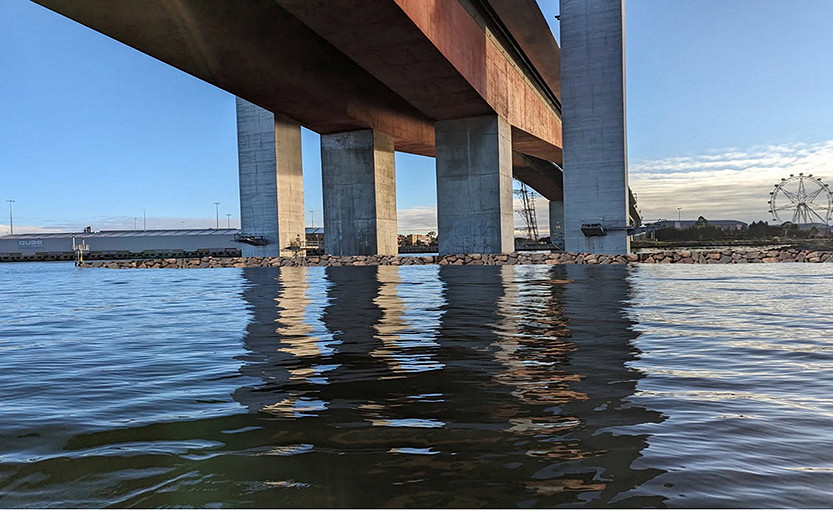
Preventing litter from entering Victoria Harbour
Incremental steps have been achieved since my May update, although the results have again not been as prompt as I would have liked.
Read More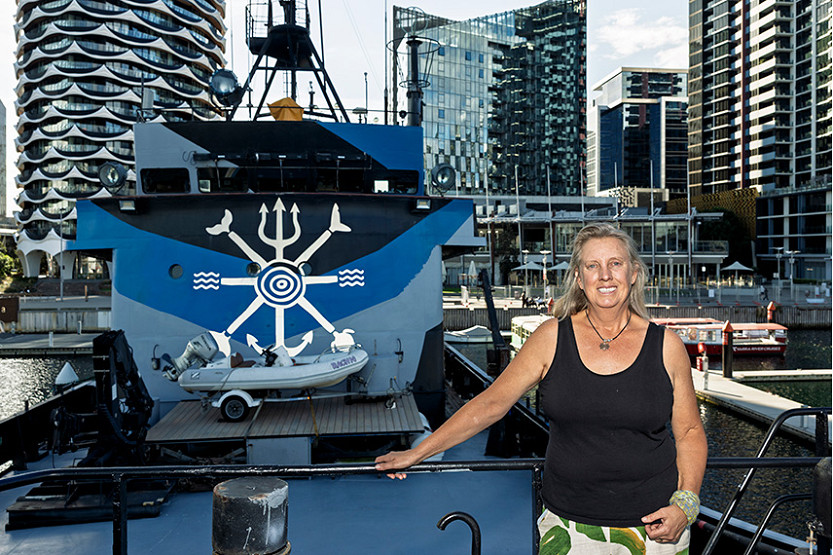
MV Steve Irwin returns to Docklands as Ship 4 Good brings new life to Victoria Harbour
One of the world’s most recognisable conservation vessels has returned to Docklands, with the famous MV Steve Irwin now berthed in Victoria Harbour for a new chapter focused on community access, education and activation
Read More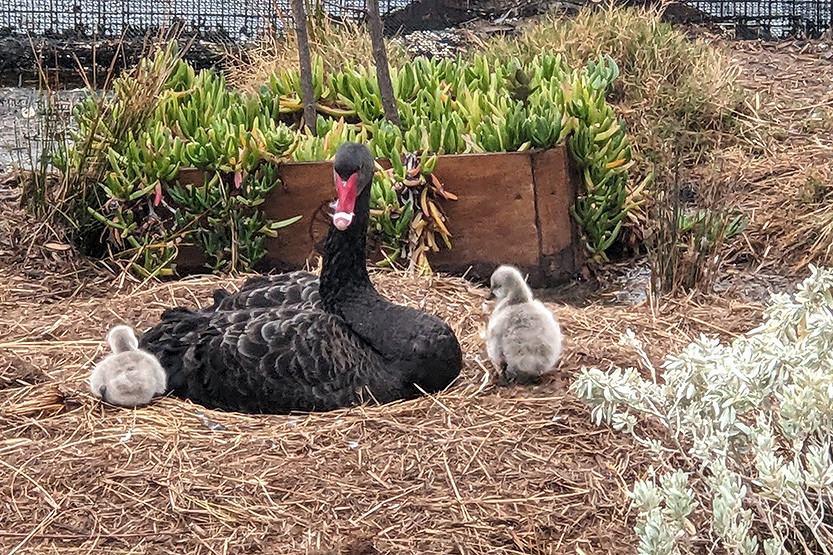
Swan family welcomes cygnets in Victoria Harbour
Docklands has some adorable new residents, with five fluffy cygnets hatching in Victoria Harbour last month.
Read More
Little India precinct debate puts Docklands’ future in sharper focus
ATET case circles back as City of Melbourne’s amended defence revives old admissions

 Download the Latest Edition