
Local charity supporting survivors of institutional abuse
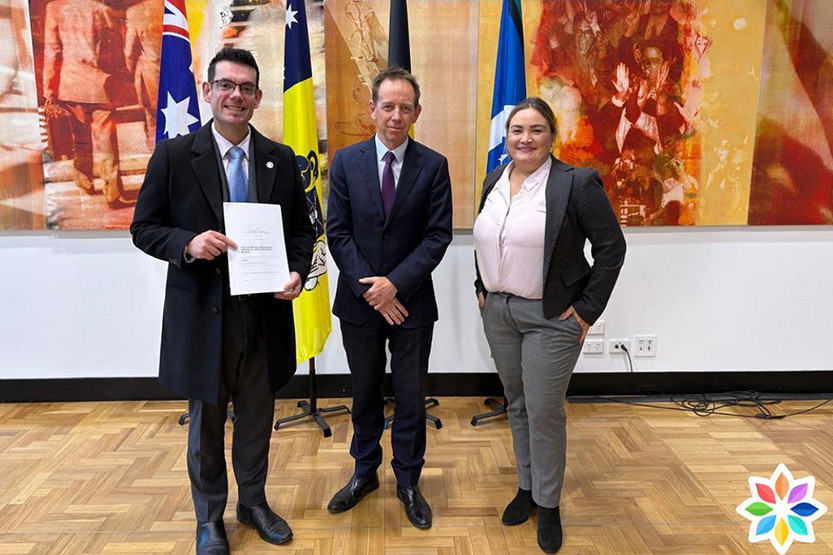
National Survivors Foundation is an Australian charity based in Docklands, working to support survivors, families, whistleblowers and communities whose lives have been impacted by institutional abuse.
The average length of time for survivors of child sexual abuse to disclose the abuse they experienced is 24 years, according to a 2017 report from the Royal Commission into Institutional Responses to Child Sexual Abuse.
Some survivors never disclose the abuse they experienced.
Joe Stroud, chief operating officer at National Survivors Foundation (NSF), says that opening up conversations around institutional abuse is a key part of NSF’s mission.
“Anything that we can do as a community and as a society to truncate that timeline and ensure that when a survivor does come forward, that they’re heard, they’re seen and that they’re believed, the better. That’s what we’re looking to achieve with the work that we do,” Mr Stroud told Docklands News.
Known until recently as the In Good Faith Foundation, NSF was established in 1997.
“NSF’s core mission is to support survivors of sexual and institutional abuse,” Mr Stroud said.
“Our core mission is to provide a wraparound care service and model to survivors of sexual assault and institutional abuse as they traverse the various forms of redress, whether that be through civil litigation, through the criminal courts, and also through the established redress schemes, such as the National Redress Scheme and the Victorian Redress Scheme.”
As a not-for-profit, NSF provides its services to survivors and clients for free and aims to refer clients to additional support partners that provide pro bono, low-cost services.
“We don’t ever retire a person from our books, so to speak. We provide ongoing support. So it may be that we work intensely with a client for three to five years, as they traverse the National Redress Scheme or as they traverse their particular legal proceedings. But we know that trauma is not static, and that it can be rekindled,” Mr Stroud said.
It can be rekindled by things that are seen in the media, by experiences, by external stressors. And so, what we endeavour to do is make sure that there’s a ‘no wrong door’ approach, and that that door always remains open.
NSF provides full wraparound care casework to primary survivors who have been directly impacted by sexual assault or institutional abuse.
“So that is assisting a survivor with all of the day-to-day things that a person needs to be sufficiently fortified with to pursue justice – everything from connecting them with drug and alcohol supports, with traversing the legal systems and the legal processes, so referring them to legal counsel, and to other sort of bodies that may be able to assist them,” Mr Stroud said.
The charity also supports secondary survivors, who are typically family members or supporters of the primary survivor. It also supports whistleblowers with advocacy and legislative change at state, territory and federal levels.
This advocacy work is furthered by the Victorian Survivors Collective (VSF), which is a community action group that was formed by NSF in 2006.
“It [VSF] is an opportunity to bring together survivors, supporters, advocates and practitioners to share the experiences of traversing those journeys to justice, but to also provide updates on what’s happening within this cohort of the survivor community,” Mr Stroud said.
November 12 will mark the fourth annual National Survivors’ Day.
The community can get involved by wearing the multicoloured ribbons that have become emblematic of the annual celebration of the courage of survivors of institutional abuse and sexual assault.
Individuals are also encouraged to participate in the LOUD fence initiative by tying colourful ribbons to their fences, verandahs or workplaces in a show of support for survivors.
“It’s just a really nice way of acknowledging and recognising the survivor experience and celebrating their courage and their tenacity,” Mr Stroud said.
“The most important thing that we can do, more often than not, is to help amplify those voices and that pursuit of justice.”
If you or someone you know needs support, the National Survivors Foundation can be contacted on 1300 12 4433. For more information: igff.org.au •
Related Articles
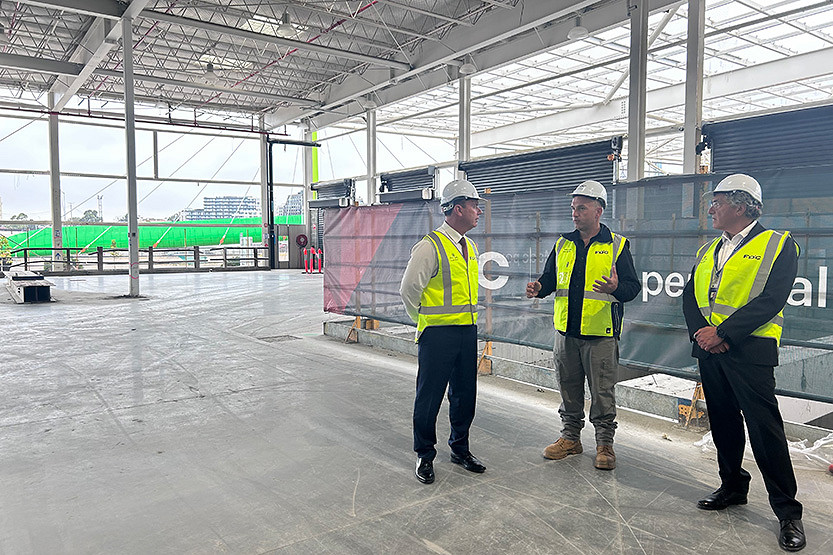
Major healthcare hub takes shape at former Costco site in Docklands
Progress is gathering pace on a major new healthcare hub in Docklands, with Melbourne Pathology moving forward on plans to establish a state-of-the-art Centre of Excellence at the former Costco site.
Read More
Little rituals to make 2026 more magic
Big new year resolutions have a funny old habit of collapsing by mid-January.
Read More
Severe heatwave to hit Docklands: locals urged to seek out cool refuges
Docklands is preparing for a dangerous burst of extreme heat this week, with the Victorian Chief Health Officer issuing a heat health warning from Wednesday, January 7 to Friday, January 9.
Read More
Pam the Bird disappears from Bolte Bridge following chaotic Docklands scenes
Meals with Impact launches free Docklands food market

 Download the Latest Edition