
Anne Jolic: Guiding Docklands from development to discovery

Nearly 30 years after the first piles were driven for Colonial Stadium (now Marvel Stadium) and Melbourne’s newest suburb began to rise from former port land, Docklands still provokes strong opinions.
For some, the job is largely done, and the time has come to hand the keys to the City of Melbourne. For others, the hardest work is what follows construction: stitching together places, programs and partnerships so a waterfront city truly hums.
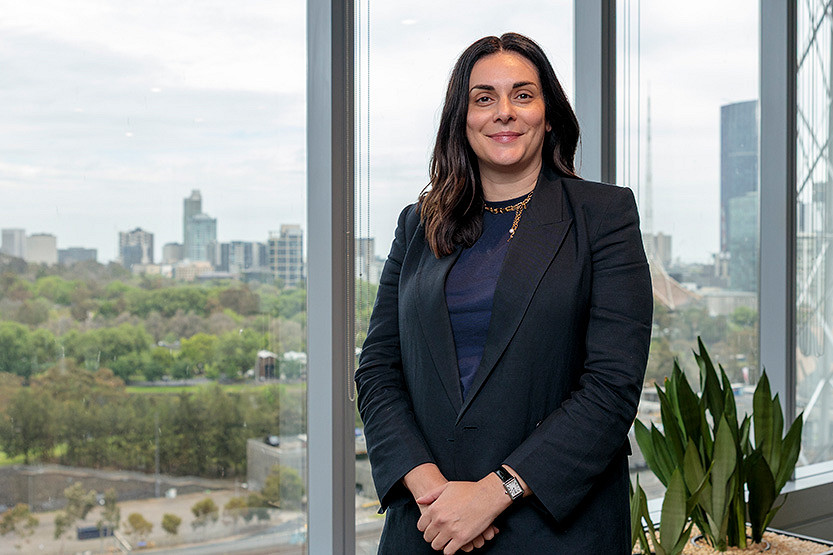
Development Victoria’s (DV) newly appointed CEO, Anne Jolic, has lived that story from the inside and says her focus is now on Docklands’ “maturity phase,” even as the state’s development agency prepares for an eventual transition.
“I started as a grad actually under the predecessor of Development Victoria,” she told Docklands News. “I studied planning at RMIT. In final year they give you a chance to do a work experience placement. It was the only developer placement. That was the only one I applied for and basically got employed and then really never looked back. So, I’ve always been fond of the organisation.”
That placement was with the Urban and Regional Land Corporation, which ultimately merged with the original Docklands Authority, and Ms Jolic ultimately found herself working under its founding chief John Tabart at what would later become VicUrban.
“I worked under John Tabart for a little while,” she said. “I feel like I was there in that formative coming together. My desk was sort of overlooking Harbour Esplanade.”
Mr Tabart is remembered inside and outside government for insisting on long-term thinking and partnership delivery. Those lessons stuck. Asked what she learned most from him, Ms Jolic didn’t hesitate.
“Vision. He was a real visionary in terms of precinct development and also that it takes time, it takes partnerships,” she said. “He was also very generous in letting junior people do some really big things.” She remembers pitching, as a very young planner straight out of uni, for a project with Melbourne Water because “John let you do that.”
Her CV since those early days reads like a Docklands family tree. She served as the Victorian president of the Property Council of Australia in between stints at Mirvac and Lendlease, seeing the likes of Yarra’s Edge and Collins Wharf from the private side.
I feel like I know parts of it [Docklands] really well. I saw it in its very early days and particularly under John, that vision for what Docklands could become.
When asked if she thought Docklands deserved a harsh rap based on what some think it should be by now. “Yeah, I think it can,” Ms Jolic said. “It probably has had a hard rap at times. But when you look at any major precinct like that, they do take time.”
She remembers when there were only a couple of restaurants at NewQuay, some landscaping around AFL House and not much else. “That is not that long ago,” she said. “When you think of all the businesses that are down there now and the 17,000 residents and all the different development precincts, I actually think it is a pretty good example of development done well.”
Ms Jolic is quick to credit a deliberate multi-developer model that pushed the pace. “That key strategic piece of different developers doing different precincts actually meant development happened more quickly,” she said. “Had you just gone one at a time, it would have been a much slower evolution.”
If the first decades were about enabling land release and construction, she said that the next period must be about activation.
“I would just really like to see it more thriving,” Ms Jolic said. “We are probably at a point where we have built a lot of it through our partnerships. Now it is about how we better it and activate it more.”
“It is not just us. We are enabling and we have had this enabling function to this point, but now how can we bring everyone together in a more fulsome way to think about activation. When you look at great precincts overseas, it is about activation and programming. It is not just building.”
That leads inevitably to Harbour Esplanade. She sees the waterfront boulevard as the natural place to anchor this next phase and says the joint venture with the AFL to redevelop Marvel Stadium’s edge is pivotal.

“For me, probably the AFL joint venture is a good one,” Ms Jolic said. “How do we take Harbour Esplanade and now really make this an active waterfront and connect city to water.”
With those Grimshaw Architects renders of the redevelopment in mind, she added: “You get a vision of what this place could be, which is so much progress from when I used to sit at the desk and look out and just see the water and the Cow Up A Tree.”
“That [Harbour Esplanade] could be a world-class waterfront, F&B (food and beverage) dining precinct with the stadium so close to the CBD. Hopefully more office, more housing as well. You do not turn your back on it. You are embracing the water.”
With Central Pier gone, locals have experienced open water there for the first time in decades. Ms Jolic understands the appeal. DV’s heritage permit “does not require it to be rebuilt,” she noted. “People enjoy the open water experience for the first time. If we can get really good activation of Harbour Esplanade and that open water experience, that is a good goal. It is rare to get that sort of city-to-water connection.”
The question that always follows is who should lead this next chapter. Many in the community argue that DV’s role should recede, and more planning control should shift to Town Hall.
Ms Jolic agrees there will be a transition, but not a hard stop.
“We will be at Docklands for as long as we need to be,” she said.
It is about how we complete the missing pieces, but also how we hand over that responsibility to others who will own it in the long term and manage it in the long term.
That will include staged asset transfers and a focus on getting “the right buy-in from all the partners so that there is ongoing improvement, ongoing curation and programs.” The oft-rumoured 2030 departure is not Ms Jolic’s timeline.
“There is a natural point in time where we would have said the development is done and that is definitely not 2030,” she said. “It will be beyond that. My desire is it happens in a staged, orderly way.”
Connectivity between the three major precincts, E-Gate and Fishermans Bend remains a live debate. The ferry terminal’s future is also not DV’s call, but she sees a convening role. “Part of our role is trying to bring others who are responsible for those things together to have the conversations,” she said.
Even as she talks activation, housing delivery remains core business for DV in Docklands.
“There is still more housing,” she said. “There are still a few sites that have not come up yet just because of market and that are still planned. As the state’s developer, we have a real role to play in housing supply. I think the more housing we can deliver, in all sorts of tenure, in build to rent but also build to sell, the better. It [Docklands] does not have enough in terms of social infrastructure and parks. Having the waterfront is amazing and I think it can sustain housing.”
On Lord Mayor Nick Reece’s floated seafood precinct for the waterfront, she smiled.
“It is not a bad idea. I like seafood,” she said. “If you do not like seafood, maybe it is not.”
The point, she added, is to leverage the water in ways that feel authentic and lively.
“It is a bit of what we can do together to help fund and invigorate programming. The Boat Show is great. The more of that sort of stuff where Docklands is known to have these great events, and it is all planned and we know we get good visitation.”

For her, few things capture the spirit of Docklands quite like a quiet afternoon at the Library at the Dock – her favourite spot in the precinct. She recalls spending hours there playing games with her children when they were younger, a personal connection made all the more special given the library was delivered through a partnership between the City of Melbourne, Development Victoria (then Places Victoria) and Lendlease.
And when it comes to Docklands’ best-kept secret: Saluministi’s calamari panini with chilli.
It is impossible to hear Ms Jolic talk about Docklands without hearing an echo of John Tabart’s core tenets. He used to say cities grow organically and that the job of government is to set a clear vision, lock in the right mix and insist on delivery.
Ms Jolic’s version is shaped by 25 years of delivery and a practical instinct for partnership.
“We take a lot of lessons from Docklands,” she said. “What went well, what did not go well. A lot of it has actually been a success story. The task now is to bring everyone together to activate and program the waterfront.”
She wants Melburnians to fall in love with Docklands for what it is becoming rather than what it once was not.
“If people feel like it is a place where they can visit and they love and it is vibrant and it is thriving, I feel like any detractors will fall in love with the place. That is the plan.” •
Related Articles
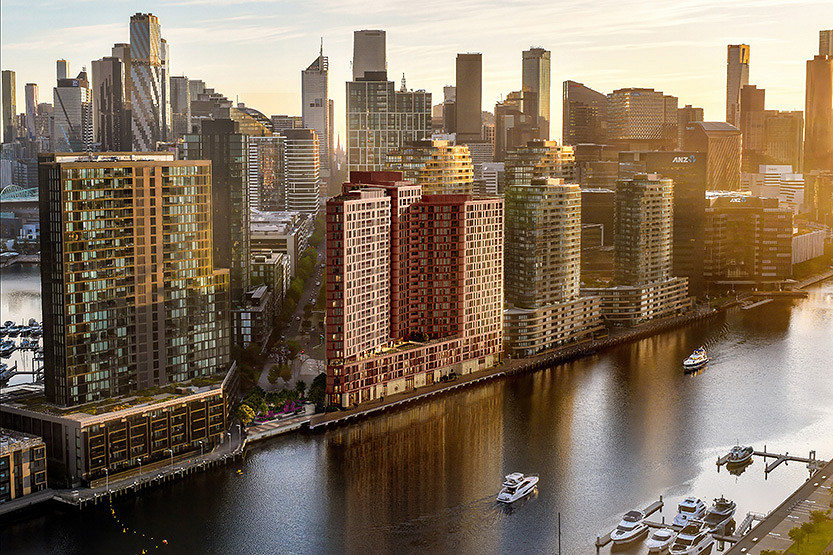
Lendlease’s Docklands build-to-rent tower reaches full height
Lendlease’s latest build-to-rent development has topped out at 899 Collins St, marking a major construction milestone for the 24-storey waterfront project in Docklands.
Read More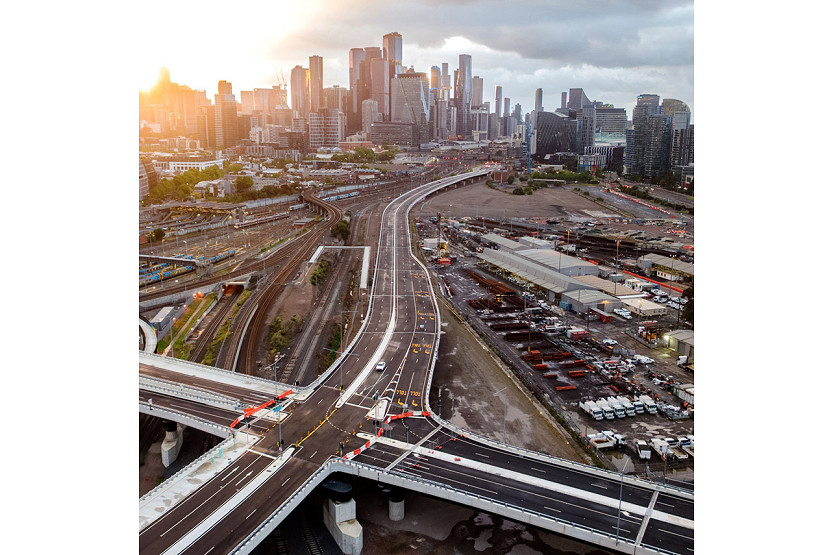
Tram bridge to E-Gate still possible despite West Gate Tunnel fears
A long-mooted tram connection linking West Melbourne to E-Gate and Docklands remains technically feasible despite the construction of the West Gate Tunnel Project’s Wurundjeri Way extension, Docklands News can reveal.
Read More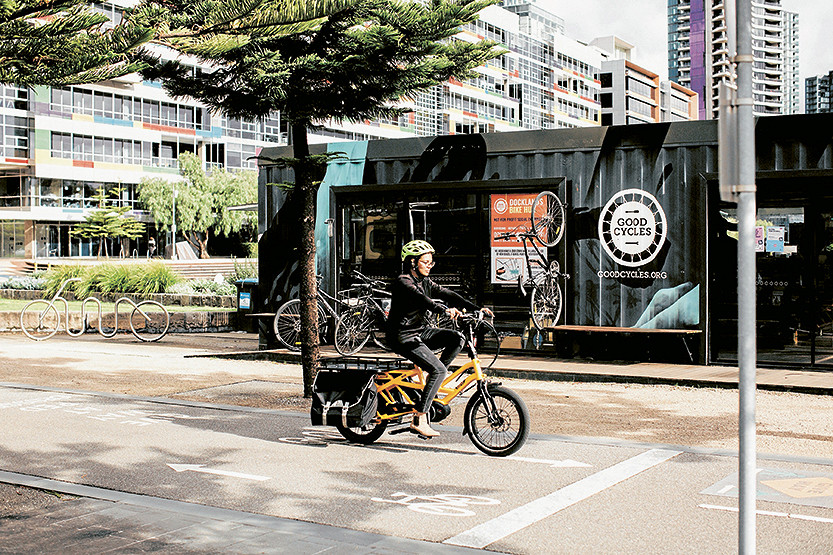
Good Cycles departs Docklands bike hub after decade on Harbour Esplanade
The Good Cycles bike hub on Harbour Esplanade has closed after almost a decade in Docklands, opening up a new opportunity for the City of Melbourne and Development Victoria to rethink one of the waterfront’s most visible small-scale activation sites.
Read More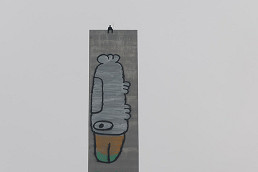
Pam the Bird disappears from Bolte Bridge following chaotic Docklands scenes

Meals with Impact launches free Docklands food market

 Download the Latest Edition