
Victoria Harbour Promenade: from precaution to crisis on the wharf
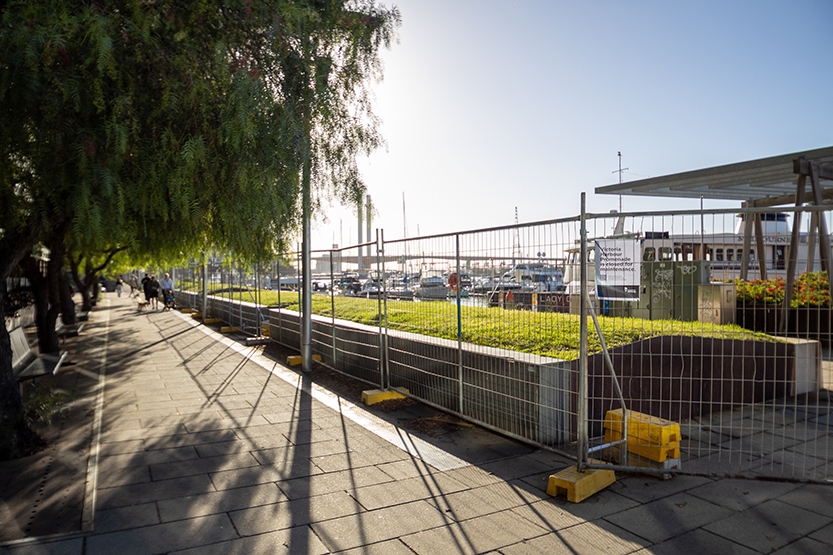
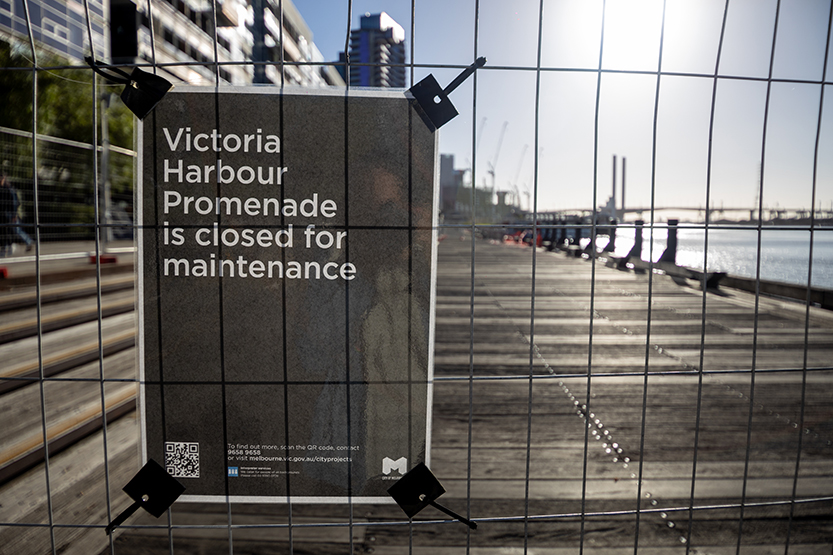

What began as a precautionary safety measure over the New Year period has now hardened into a far more serious problem for Docklands, with the full extent of deterioration along the Victoria Harbour Promenade only just coming into view.
Temporary fencing has now been erected along the waterside edge of Victoria Harbour Promenade from Harbour Esplanade all the way to Library at The Dock. The closure effectively removes continuous public access to the waterfront, forcing pedestrians inland along building lines and requiring all boats previously moored along the wharf to be relocated. For a precinct defined by its relationship with water, the implications are significant.
The deterioration appears far more extensive than initially indicated during the New Year’s Eve period, when parts of the promenade were closed to reduce crowd loading. At the time, authorities framed the decision as a short-term, precautionary response to early signs of structural issues in some piles supporting the wharf. Since then, however, inspections have revealed problems that are neither isolated nor superficial.
Docklands News understands that visual inspections escalated into more detailed investigations after components of the structure began to fail, including sections of external fendering that have partially collapsed and are now being temporarily held in place.
The wharf, originally designed for a nominal lifespan of around 50 years, is barely halfway through that period. Yet deterioration appears advanced enough to trigger widespread closures while engineers determine how to approach its restoration.
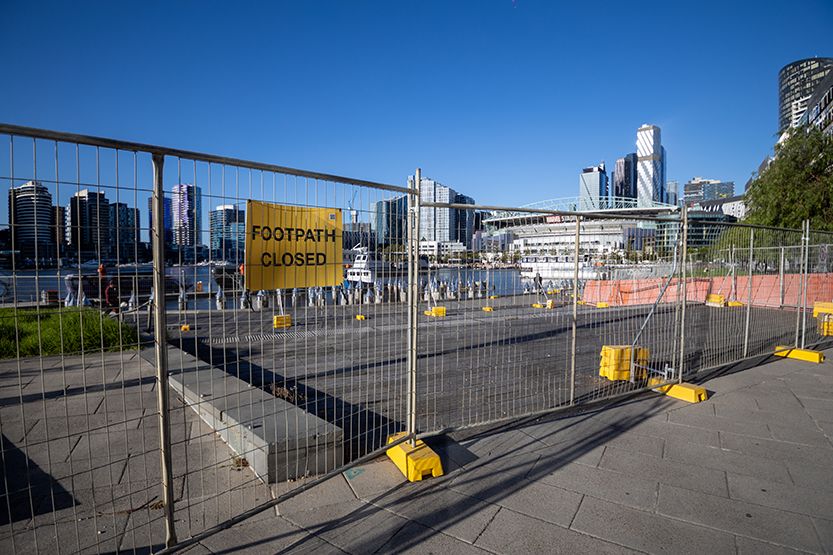
Complicating matters further is the fragmented ownership and construction history of the promenade. Responsibility is split between the City of Melbourne and Development Victoria. As Docklands News understands, roughly three quarters of the affected wharf falls under Development Victoria’s remit, with the remainder managed by the council. This patchwork makes coordinated assessment and remediation more complex, and potentially more protracted.
One factor emerging from early investigations is the unexpected structural burden imposed by raised grass planters along the promenade. Docklands News understands that the weight of these landscaped beds may be contributing to the stress on the wharf structure beneath. Ironically, these elevated lawns have long been criticised for their limited usability, difficult access and poor integration with the waterfront. Their potential role in accelerating structural failure raises uncomfortable questions about design decisions made during Docklands’ redevelopment.
At present, no timeline has been offered for reopening the waterside promenade. Investigations are ongoing, and the scope of rectification works remains unknown. In practical terms, Docklands residents and visitors face the prospect of losing meaningful waterfront access for months, if not years.
Yet amid the disruption, there is also a broader question about what happens next. As Docklands News understands, some stakeholders see this not only as an infrastructure failure but as a rare opportunity to rethink how the harbour edge functions. Rather than simply reinstating a like-for-like wharf, there is scope to consider more resilient, publicly engaging designs that better connect people to the water through stepped edges, naturalised treatments and improved durability.
For now, however, the reality is stark. The promenade’s closure underscores the vulnerability of Docklands’ waterfront infrastructure following similar issues over at NewQuay Promenade in recent years.
What was originally a precaution is becoming a crisis, and how it is addressed will shape not just access to Victoria Harbour, but confidence in the precinct’s future as a genuinely liveable waterfront. •
Related Articles
Tram bridge to E-Gate still possible despite West Gate Tunnel fears
A long-mooted tram connection linking West Melbourne to E-Gate and Docklands remains technically feasible despite the construction of the West Gate Tunnel Project’s Wurundjeri Way extension, Docklands News can reveal.
Read More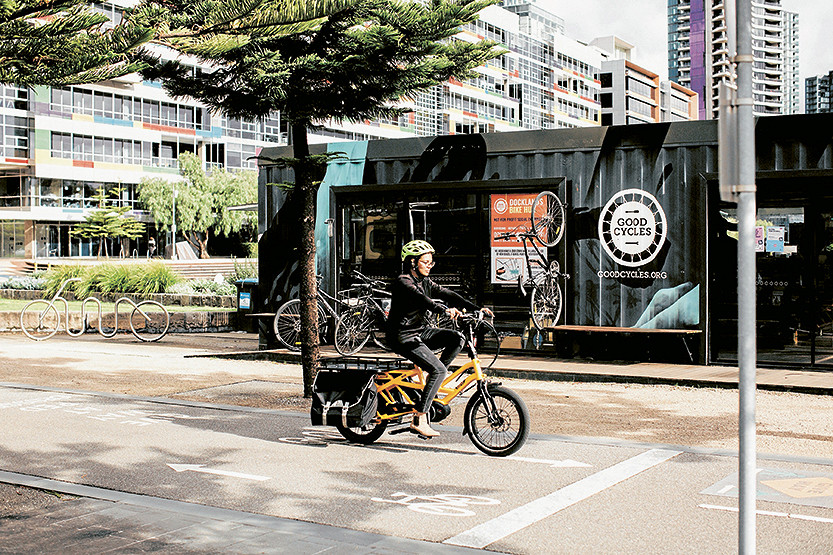
Good Cycles departs Docklands bike hub after decade on Harbour Esplanade
The Good Cycles bike hub on Harbour Esplanade has closed after almost a decade in Docklands, opening up a new opportunity for the City of Melbourne and Development Victoria to rethink one of the waterfront’s most visible small-scale activation sites.
Read More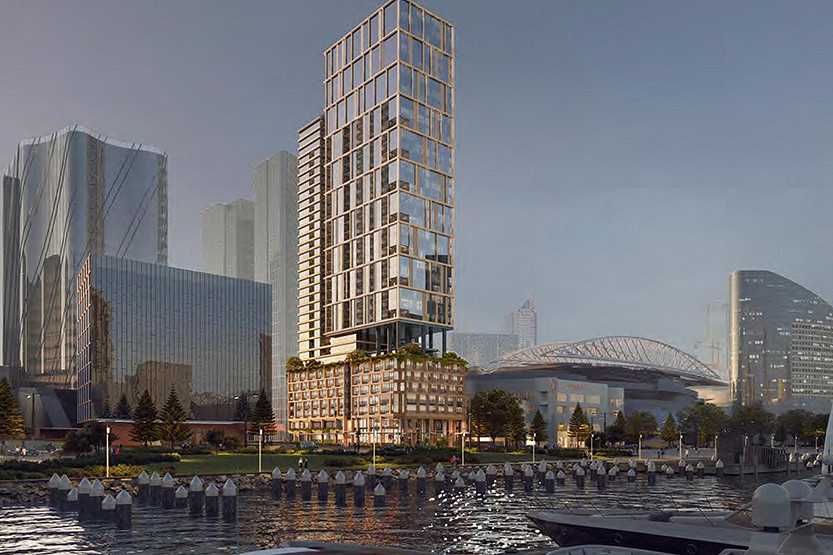
State approves major Docklands build-to-rent tower near Marvel Stadium
The Victorian Government has approved a major new build-to-rent tower in Docklands, giving the green light to a 554-home rental project at 699 La Trobe St in another sign of the precinct’s growing role in Melbourne’s expanding BTR market.
Read More
From one café client to 60 brands: The growth of Born Social
Tram bridge to E-Gate still possible despite West Gate Tunnel fears

 Download the Latest Edition