
Tram bridge to E-Gate still possible despite West Gate Tunnel fears
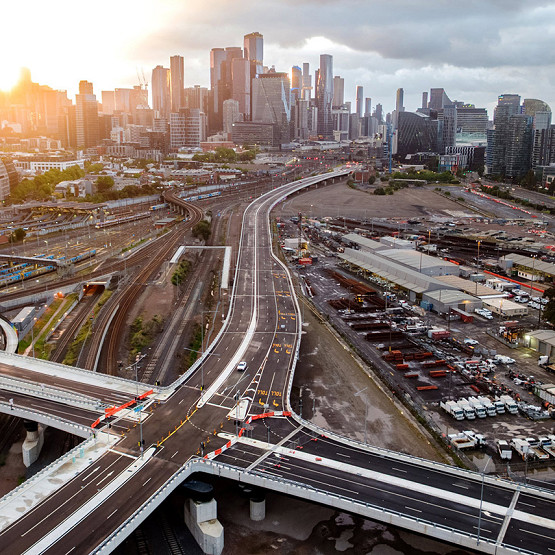

A long-mooted tram connection linking West Melbourne to E-Gate and Docklands remains technically feasible despite the construction of the West Gate Tunnel Project’s Wurundjeri Way extension, Docklands News can reveal.
Docklands News understands that preliminary planning and engineering investigations found a new bridge from Abbotsford St in West Melbourne could still cross both the rail corridor and the new road infrastructure into E-Gate.
The finding challenges growing assumptions that the Wurundjeri Way extension has permanently compromised E-Gate’s potential as a major urban renewal site, particularly by cutting off the direct east-west connections envisaged in earlier planning for the West Melbourne Structure Plan.
The final West Melbourne Structure Plan, adopted in 2022 after years of work, ultimately included a pedestrian and cycling connection via Hawke St, but did not retain an earlier, more linear tram bridge proposal from Abbotsford St due to the challenges presented by the West Gate Tunnel Project.
However, Docklands News understands subsequent work undertaken by the State Government and the City of Melbourne demonstrated that a tram-capable bridge was still possible if part of the Wurundjeri Way extension along E-Gate’s northern edge was lowered, allowing a bridge structure to clear both the road and rail corridor without excessive difficulty.
A source associated with the investigation said the work showed that while the road had reduced the development footprint on the northern edge of E-Gate, it had not destroyed the precinct’s urban renewal potential.
The investigation also tested whether a tram could be carried across the infrastructure at an acceptable gradient. While trams can climb hills, they require a suitable grade, meaning a direct crossing was more difficult.
The solution explored was a broader looping alignment: heading south from Abbotsford St, crossing the road and rail infrastructure, then bending west before curving back into the site and connecting to the northern end of Footscray Rd.
By adding length to the bridge alignment, the study found the gradient could be eased enough to make a tram connection possible.
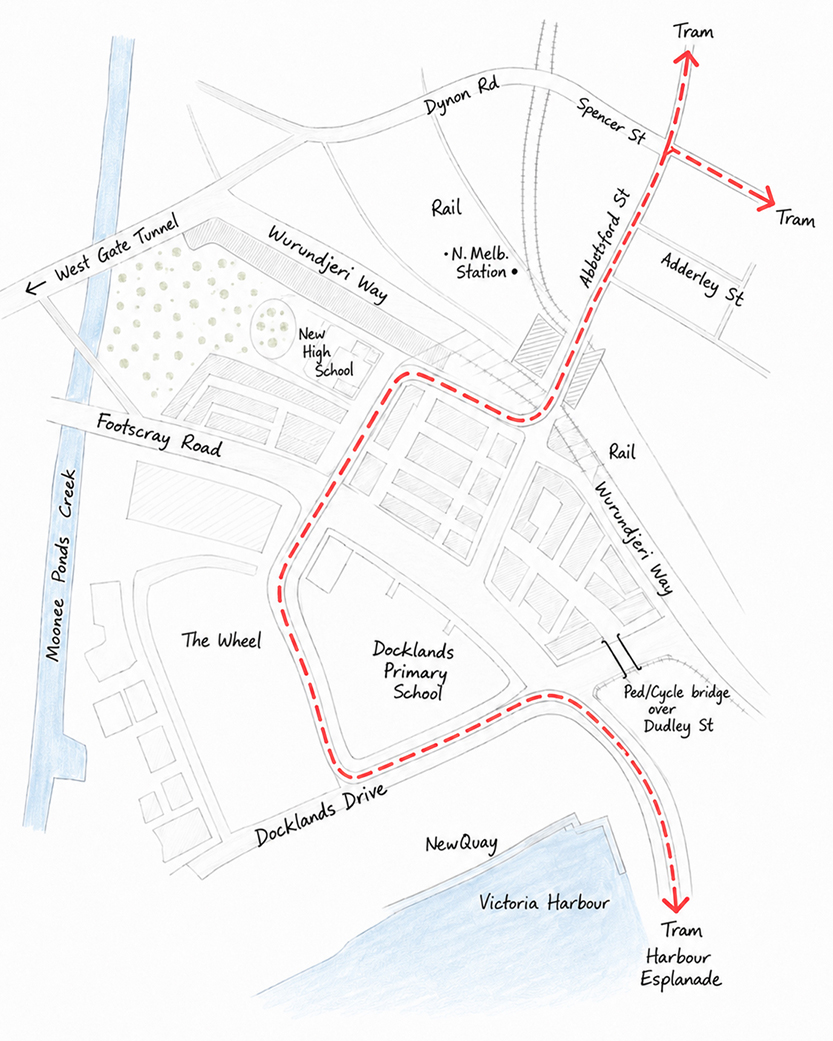
A diagram highlighting how the proposed tram link would connect from West Melbourne via E-Gate to Docklands.
That would also allow the bridge to support walking, cycling, emergency access and potentially buses or other limited vehicle movements, while avoiding the need to encourage general private car traffic through E-Gate.
A lighter bridge for pedestrians, cyclists and emergency vehicles was also considered as a lower-cost alternative if a tram was ruled out. But the work found that any bridge over active rail infrastructure would be expensive, meaning the cost difference between a lighter structure and a tram-capable bridge may not be as dramatic as assumed.
The study was preliminary and would need to be updated, particularly given rising construction costs. But Docklands News understands both the City of Melbourne and the state government could say “hand on heart” that a tram connection was doable.
That finding is likely to sharpen pressure on the state government to make a clear election commitment to E-Gate, one of Melbourne’s largest remaining government-owned urban renewal sites.
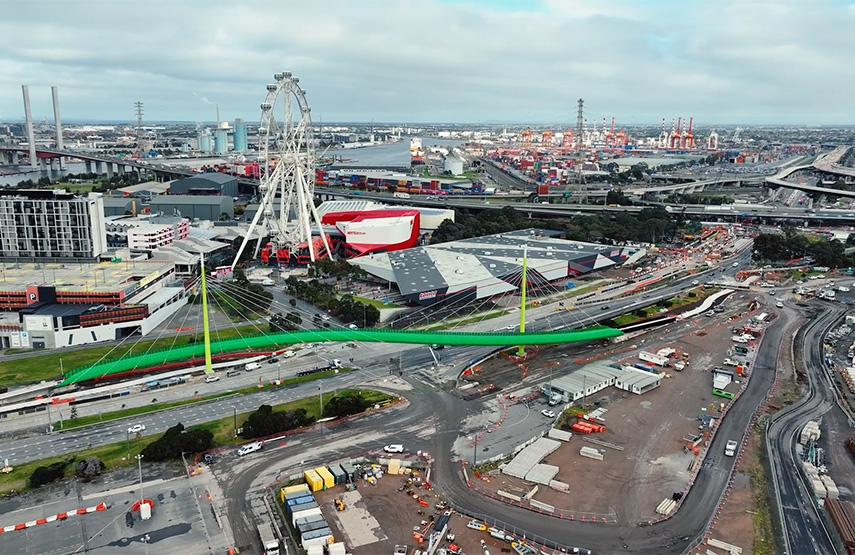
The 20-hectare precinct, located between Docklands, West Melbourne, North Melbourne and Moonee Ponds Creek, has long been seen as a missing link in Melbourne’s urban structure.
It has been earmarked in the past as a future mixed-use neighbourhood capable of housing thousands of residents, but planning has stalled while major road infrastructure has cut through the site.
For Docklands, E-Gate is particularly significant. The precinct’s western end, including NewQuay and Waterfront City, has long struggled with poor connections, underperforming retail and a sense of isolation from surrounding neighbourhoods.
The source described E-Gate as Docklands’ “missing tooth” – the gap that, if properly planned, could connect the western end of Docklands to North and West Melbourne and help unlock a more complete inner-city community.
Rather than treating E-Gate as a lost opportunity, the source said the state should now revisit the site with a more ambitious plan centred on housing, public transport, open space and community infrastructure.
Its government ownership makes the challenge even more pointed. As a former Fishermans Bend Development Board member once observed, “if you can’t get urban renewal right on government-owned land, you’re just not trying hard enough.”
The opportunity is also about more than housing yield.
Docklands, North Melbourne and West Melbourne continue to face major shortages in open space, sporting facilities and secondary school provision. Docklands Primary School, which opened in 2021, is already under pressure, while hopes for a secondary school at the former Costco site in Docklands were dashed earlier this year after the building was acquired for another use.
E-Gate could provide the kind of land that is almost impossible to find elsewhere in the inner city.
The source said the western end of E-Gate, near Moonee Ponds Creek, could be particularly suitable for a secondary school, sports fields and open space, especially if combined with flood mitigation infrastructure such as retarding basins.
Sports fields that occasionally flood could still serve a major community function, while delivering much-needed active open space for both Docklands and North and West Melbourne.
The eastern end of the site, closer to Docklands and the CBD, could then support denser mixed-use development, including social and affordable housing.
While housing near the new road would need careful acoustic treatment, the earlier work suggested development could still occur close to the northern edge if apartments were designed to face south into the site, with appropriate buffering from the road.
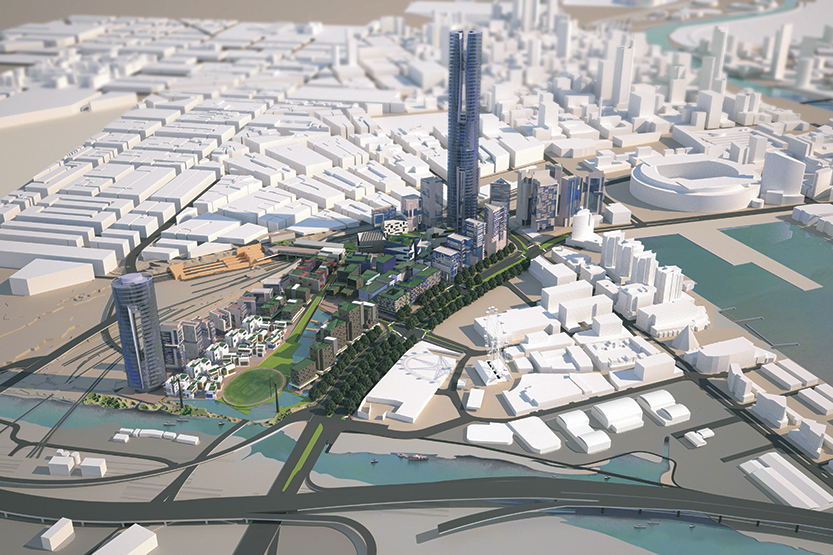
A previous vision of E-gate.
The City of Melbourne has previously said E-Gate retains potential to become a “world-leading sustainable and affordable mixed-use neighbourhood”, with connections to Docklands, Arden, West Melbourne and Dynon.
But the question now is whether the state government is prepared to turn that potential into a funded plan.
The West Gate Tunnel Project has already transformed the physical conditions around E-Gate. The next state election presents an opportunity for the government and opposition to commit to repairing the connectivity damage, protecting a tram corridor and finally unlocking the land for public benefit.
Lord Mayor Nick Reece said, “with more than 40 hectares to work with, E-Gate is a once-in-a-generation opportunity to deliver the open space and community infrastructure for the 300,000 residents who live nearby.”
Cr Reece added that the council would be advocating for the investments “that matter most to Melburnians” - including green space and transport infrastructure - ahead of the State Election in November.
“We also know that reliable, accessible public transport is essential to a liveable city. There’s no point investing in new precincts if people can’t easily get to and from them,” the Lord Mayor said.
A tram extension into West Melbourne would support rapid population growth and help ensure these emerging neighbourhoods are connected, accessible and easy to move around.
The City of Melbourne’s Advocacy and Partnerships Plan 2025–29, sets out six key priority areas, including “Melbourne thrives as we grow”. As part of this priority area, the council said it was advocating to the Victorian Government to:
- Unlock open space at E-Gate, “creating the Fawkner Park of the west”
- Extend the free tram zone and tram lines into urban renewal areas, including an additional route to West Melbourne (via Spencer St).
Community3008 co-president Peter Lardner said Docklands’ continuing population growth made the need for family infrastructure increasingly urgent, with several residential towers under construction and more expected to begin soon.
He said the number of families living in Docklands would continue to rise, placing further pressure on local childcare, primary school and secondary school places, where demand was already exceeding availability.
Mr Lardner said inner-city living and raising families were “not mutually exclusive”, but required governments to plan differently for vertical communities.
“To the contrary, they are necessarily interwoven concepts in contemporary society,” he said. “So we need to take every opportunity to design and build infrastructure and precincts that support families in the vertical living environment.”
He said the vacant E-Gate site provided a rare opportunity for “true strategic planning” by government and other relevant authorities.
Mr Lardner said the precinct could be designed to have a positive long-term impact on children and families by delivering education, connection, safety and active community spaces.
“The vacant E-Gate parcel of land provides a unique opportunity … to create a precinct that positively impacts on the future for our children,” he said. “A precinct that educates and connects. A precinct that is safe and active. A precinct built for long-term community enhancement.”
A Victorian Government spokesperson said, “E-Gate does not form part of the Victorian Government’s current program of state-led planning and urban renewal works," adding that progressing this area as an urban renewal precinct would require further planning.
The government said the Plan for Victoria strategy sets the state-wide vision for how Victoria will grow over time, including Priority Precincts and Train and Tram Zone Activity Centres Program. •
Related Articles
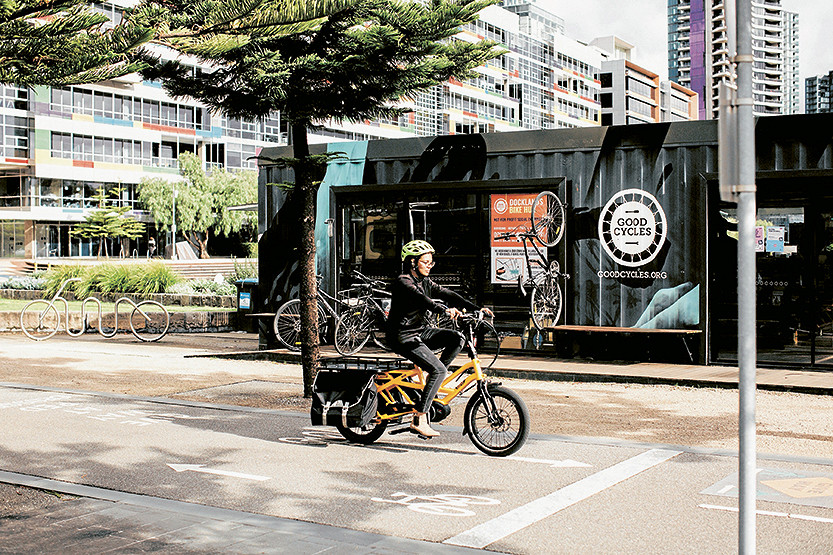
Good Cycles departs Docklands bike hub after decade on Harbour Esplanade
The Good Cycles bike hub on Harbour Esplanade has closed after almost a decade in Docklands, opening up a new opportunity for the City of Melbourne and Development Victoria to rethink one of the waterfront’s most visible small-scale activation sites.
Read More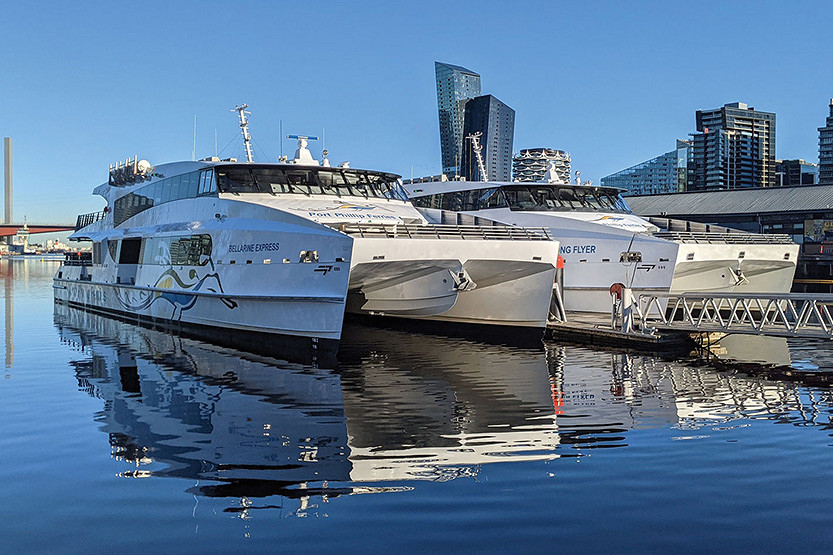
Port Phillip Ferries introduces temporary fuel surcharge amid global price pressures
Port Phillip Ferries will introduce a temporary fuel surcharge from March 30, citing sustained increases in global fuel prices linked to ongoing conflict in the Middle East. But commuters can still take advantage of a “strong value” travel offer.
Read More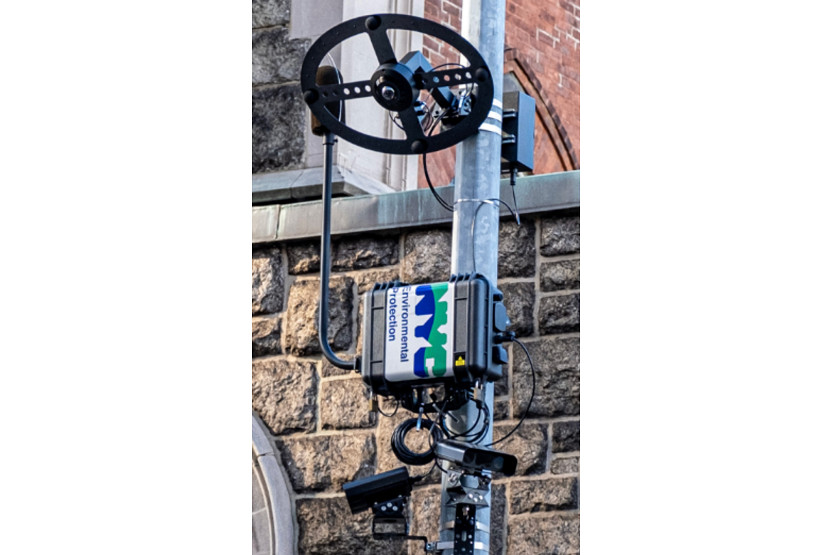
Port Phillip pushes for acoustic camera trial to tackle hooning around Port Melbourne
The City of Port Phillip is stepping up pressure on the Victorian Government to trial a new acoustic camera in Port Melbourne, as residents around Beacon Cove and Station Pier continue to battle hooning, dangerous driving and extreme vehicle noise.
Read More
Pam the Bird disappears from Bolte Bridge following chaotic Docklands scenes

Meals with Impact launches free Docklands food market

 Download the Latest Edition