
The inseparable link between money and mental health
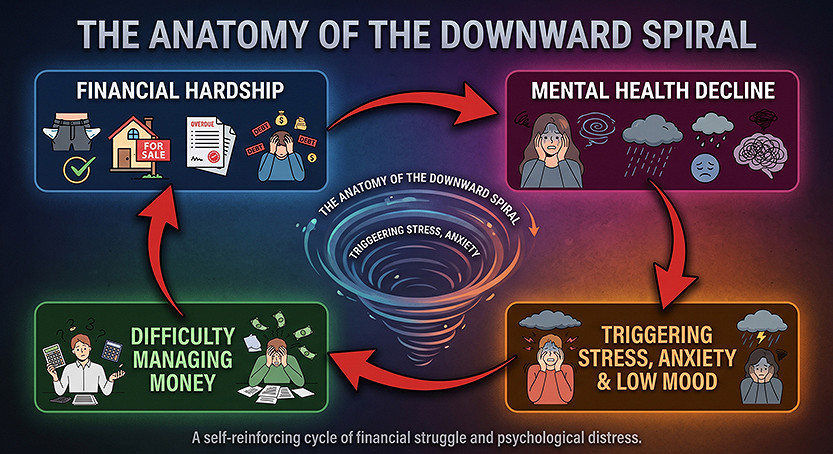

Money and mental health are often treated as separate issues: one about spreadsheets and bank accounts, the other about psychology and emotional wellbeing.
But Australian research commissioned by the Australian Securities and Investments Commission (ASIC) and Beyond Blue shows the two are deeply linked.
According to the research, 14 per cent of Australian adults experienced both financial hardship and mental health symptoms over a five-year period. People experiencing financial challenges were twice as likely to also experience mental health issues, while those facing mental health challenges were twice as likely to experience financial strain.
Money troubles do not just exist on paper. They can affect people physically and emotionally, creating a cycle that can be difficult to break.
Financial stressors such as unpaid bills, lack of emergency savings or sudden income loss can trigger poor mental health. This may show up as insomnia, chest pain, intense worry, social isolation, shame or low self-worth.
When mental health declines, it can also affect financial capability. Ongoing stress, low motivation or the cognitive load of a mental health condition can make everyday money management, decision-making and maintaining steady employment much harder.
This interaction can quickly become a downward spiral. A person may defer one bill, fall behind on another, then struggle to recover as financial and psychological pressure compounds.
One of the biggest barriers to reversing this cycle is stigma. Financial success is often wrongly tied to personal worth, while debt or money struggles are framed as personal failure. This can lead to embarrassment and shame, causing people to hide their difficulties and delay seeking help.
The start of a new financial year can be a useful moment to reset. Small, practical steps can help create an “upward spiral”, where improvements in financial management support better mental health, and vice versa.
1. Shift from avoidance to awareness
When money causes anxiety, avoidance is common. People may ignore bank statements, skip bills or avoid looking at their accounts. But facing the numbers clearly can reduce the fear of the unknown and make it easier to form a realistic plan.
2. Build a micro-buffer
A lack of emergency savings is a major source of stress. While a large safety net may feel impossible, small automated savings can still help. Even $10 or $20 a week in a separate account can build a sense of security and choice.
3. Stay connected
Financial stress often causes people to withdraw socially, especially when they feel ashamed or worried about spending money. But isolation can worsen mental health. Free or low-cost connection, such as walks, community events or casual meals at home, can help maintain support networks.
4. Seek help early
Do not wait for a crisis. If you are struggling with bills, contact your utility provider, bank or telco early and ask about hardship options. Free services such as the National Debt Helpline on 1800 007 007 can also provide confidential financial counselling.
5. Practise self-compassion
Financial hardship is often caused by unexpected life events, health issues or broader economic pressures, not personal failure. Separating your self-worth from your bank balance is one of the most important ways to protect your mental wellbeing while working towards financial recovery. •
Related Articles

Don’t play through the pain: Why Melbourne’s tradies need to prioritise their physical health this August
Every August, Australia marks Tradies National Health Month, an initiative established by the Australian Physiotherapy Association (APA) to shine a light on the unique physical and mental health demands faced by trade professionals.
Read More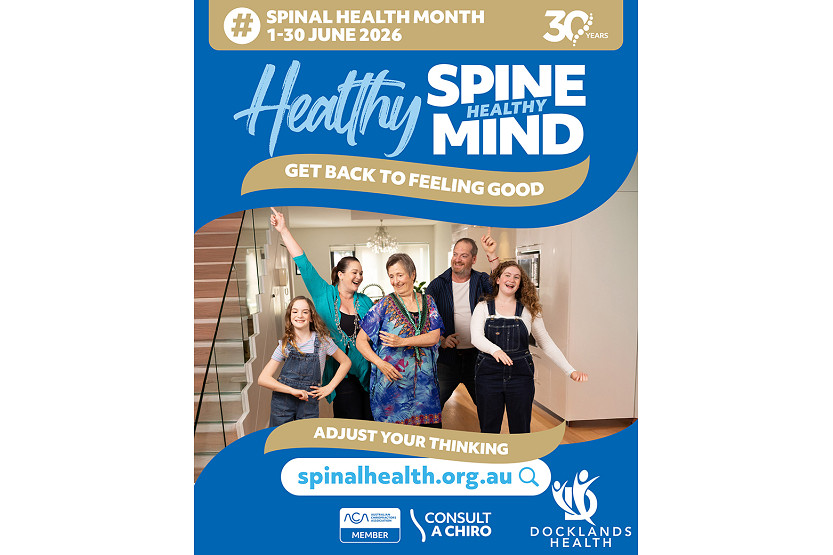
Australia’s silent back pain burden impacts mental health and the economy
National Spinal Health Month: a healthy spine supports a healthy mind.
Read More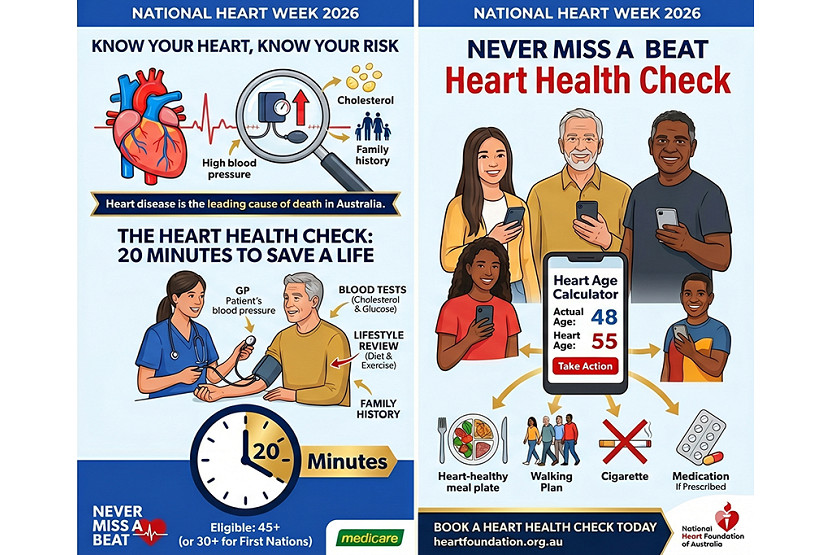
Heart Week 2026: “Never Miss a BEAT” with vital health checks
As Heart Week 2026 kicks off across Australia from May 4 to 10, health experts and the National Heart Foundation are issuing a critical call to action: “Never miss a BEAT”.
Read More
Pam the Bird disappears from Bolte Bridge following chaotic Docklands scenes

Meals with Impact launches free Docklands food market

 Download the Latest Edition