
The Docklands that might have been – and the ideas it still has time to reclaim
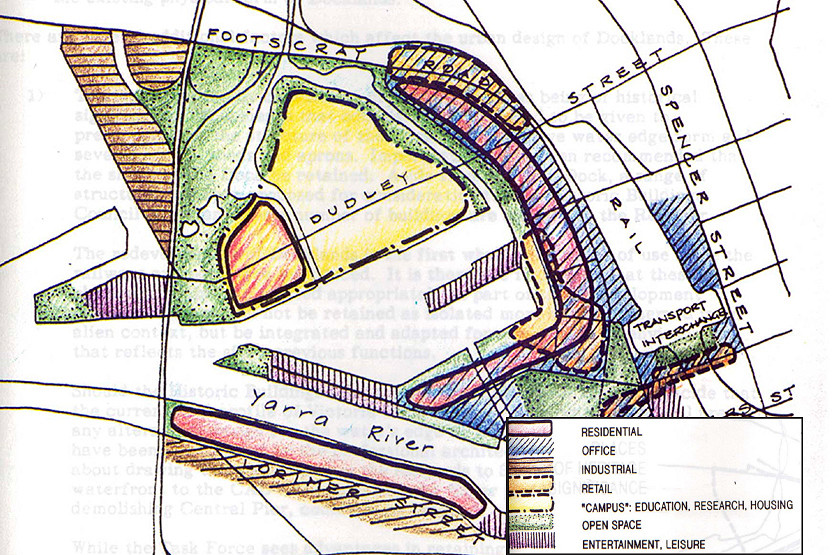

When the Public Record Office Victoria opened a new tranche of cabinet records from the Cain and Kirner Labor governments on January 1, it added another layer to a story that continues to shape Melbourne’s most debated urban experiment: Docklands.
The cabinet documents reveal just how comprehensive, ambitious and civically minded the early 1990s vision for Docklands truly was – and how sharply it diverges from the precinct that eventually emerged.
Reviewed by Docklands News, the newly released draft strategy papers show Docklands was once conceived as a low-rise, mixed-use waterfront extension of the CBD, anchored by education, research, public housing and open space, rather than the large-scale spectacle we know today.
Far from being an afterthought, education sat at the heart of the plan, alongside proposals for a major casino, a technology and research hub, medium-density housing and a highly integrated transport strategy.
At the centre of the 1990s vision was a 24-hectare education and research precinct, initially described as a shared “Docklands campus” for Victoria’s universities. Early documents from 1990 placed the campus near Victoria Dock and Moonee Ponds Creek, between what is now NewQuay and The District Docklands.
By 1992, the thinking had evolved towards a postgraduate or international institution, linked to emerging industries and supported by nearby research-based employment. The intent was clear: Docklands was to generate daily foot traffic, intellectual activity and long-term civic value, not just commercial returns.
Housing was also treated very differently. Cabinet submissions proposed a predominantly low-rise environment, with most buildings under 12 storeys, and medium-density housing forming the backbone of residential development. At least 10 per cent of housing was to be public, and a significant proportion priced affordably by the standards of the time. The aim was “social mix”, not exclusivity, with student housing, family apartments and community infrastructure all envisaged as part of a balanced neighbourhood.
The documents also confirm that a casino was always part of the Docklands conversation, but not in the form it eventually took on the Southbank riverfront. Planners argued Docklands had the greatest capacity to manage the traffic and scale of an “open casino set in parkland,” with locations canvassed along the Yarra, at North Wharf and Central Pier. The casino was framed as one element within a broader cultural and entertainment mix, not a standalone economic engine.

Transport planning was equally bold. While public transport in Docklands today is very sound, the strategy included a proposal for a rapid transit link to Melbourne Airport, and provision for a future very fast train terminal at Spencer Street Station.
However, the Webb Dock freight bridge, still considered today to be a “killer” for Docklands, also appears in the strategy. While the documents acknowledge that it is “a major barrier to Docklands development”, it proposes to relocate it alongside the Western Bypass (the Bolte Bridge) in a similar area to current day visions, to “unlock land for development”. A Western Bypass tunnel was explored as an alternative to a bridge, partly to protect cruise ship access and preserve waterfront continuity.
The plans also called for wetlands at the mouth of Moonee Ponds Creek, large areas of reclaimed open space, and a continuous chain of parks, plazas and public squares linking the waterfront. Heritage structures were to be recycled and adapted, human-scale design prioritised, and Docklands positioned as a model of contemporary urban sustainability.
Urban design of Docklands must of the highest possible quality,” one document stated. “The unique character of the area as a maritime and freight centre throughout Melbourne’s history must be captured and retained.
“This is not merely a matter of preserving heritage structures but of incorporating the flavour of the past into the developments of the future.”
This original command comes against a backdrop today where much of Docklands’ maritime past, with the odd exception like the Shipping Control Tower, have been almost entirely deleted from memory. This now includes the Heritage Fleet.
What emerges from the newly released papers is not an unrealistic utopia, but a carefully staged strategy that assumed Docklands would take decades to evolve. The Docklands Task Force was charged with extensive consultation, and cabinet acknowledged the risks posed by the early 1990s recession, warning repeatedly that expectations needed to be managed. Internal briefings described the real estate slump as the worst in recent history and questioned the timing of major legislative moves.
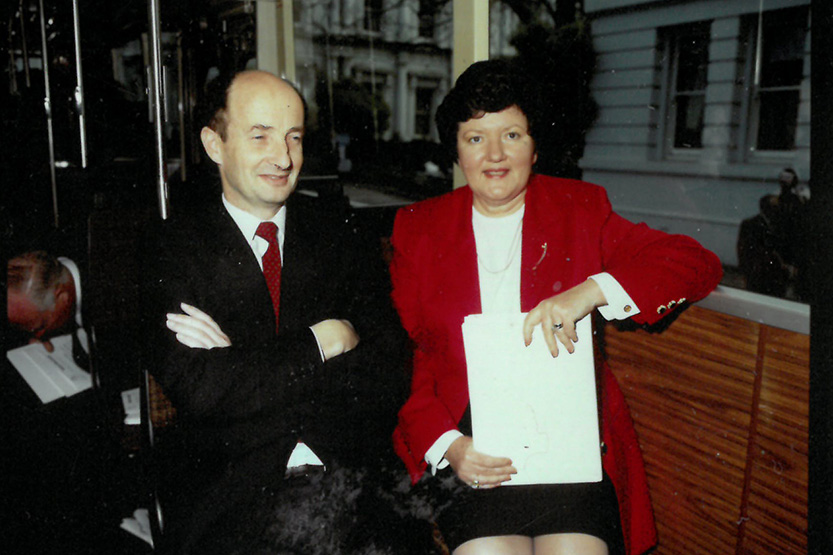
Former Premier Joan Kirner and Minister David White at the launch of Gov Efficiency Strategy June 1991 VPRS 13141.
Those economic warnings ultimately proved decisive. The collapse of state finances, followed by the election of the Kennett government in 1992, marked a philosophical shift. Docklands was reframed as a market-led project requiring minimal public investment. The site was carved into large precincts and sold to private developers, and many of the social, educational and environmental aspirations embedded in the Labor-era plans were abandoned.
The decision to build Docklands Stadium, now Marvel Stadium, on land originally earmarked for mixed residential and office development crystallised that shift. The stadium delivered visibility and visitation, but it also locked Docklands into an events-driven identity that continues to shape perceptions today.
Three decades later, many of the criticisms levelled at Docklands echo the issues the early planners were trying to avoid: a lack of everyday street life, weak community infrastructure, monocultural land use and a dependence on peaks rather than continuity. While Docklands has matured, it remains a precinct searching for a deeper civic role.
For former City of Melbourne councillor and Docklands resident Jamal Hakim, the release of these cabinet documents is not about revisiting old grievances, but about recognising deferred opportunity.
“Honestly, it’s a completely different plan, isn’t it? It’s a different picture,” he told Docklands News. “That original vision included a full tertiary and research project. That alone would have changed everything.”
Mr Hakim argues that the absence of a university or equivalent anchor has had cascading effects.
“I talk about daily foot traffic, intergenerational life, nighttime economy – and not just bars. I’m talking about food, cafes, entertainment, spin-off housing diversity. You would have seen student housing, that public housing concept, that comes about because of that diversity.”
He believes Docklands is uniquely placed to revive that thinking in a contemporary form. With Docklands Studios now hosting world-scale productions and advanced LED volume technology, the precinct already functions as an informal production campus. What’s missing, he says, is a formal tertiary and research presence to lock those industries in place.
“Let’s revive that original concept of a university, but make it contemporary,” Mr Hakim said.
Film, digital production, climate tech, urban research. We’ve got Docklands Studios. That gives us a once-in-a-generation opportunity to brand this as Australia’s creative engine.
Mr Hakim envisions a partnership model involving universities, Docklands Studios, the City of Melbourne, state government and industry, embedding students directly into the precinct.
“You could have a dedicated Docklands film and city lab. A place where education, research and production happen side by side. That would transform the streets overnight. It would create identity, trust and community.”
The cabinet documents released by Public Record Office Victoria show that this way of thinking is not new. Education, research and innovation were once seen as the structural glue that would hold Docklands together. Their absence is not accidental – it is the result of political and economic decisions made under pressure.
As Melbourne continues to address long-standing criticisms of Docklands, the newly released records offer more than historical curiosity. They provide a blueprint for what Docklands was meant to be – and a reminder that some of the most important ideas were never tested. •
Related Articles
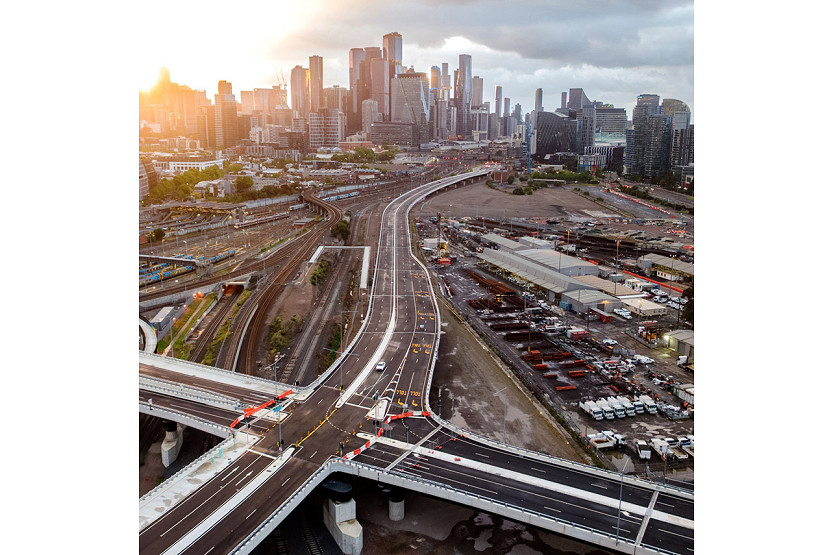
Tram bridge to E-Gate still possible despite West Gate Tunnel fears
A long-mooted tram connection linking West Melbourne to E-Gate and Docklands remains technically feasible despite the construction of the West Gate Tunnel Project’s Wurundjeri Way extension, Docklands News can reveal.
Read More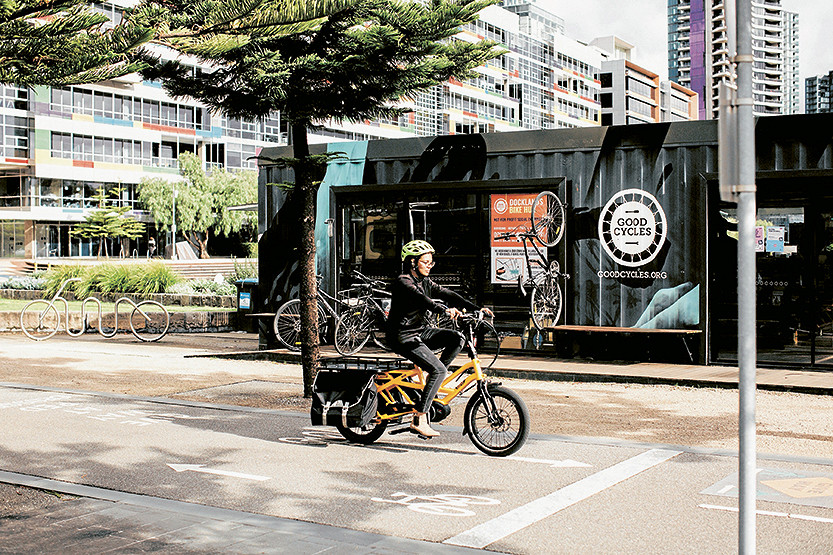
Good Cycles departs Docklands bike hub after decade on Harbour Esplanade
The Good Cycles bike hub on Harbour Esplanade has closed after almost a decade in Docklands, opening up a new opportunity for the City of Melbourne and Development Victoria to rethink one of the waterfront’s most visible small-scale activation sites.
Read More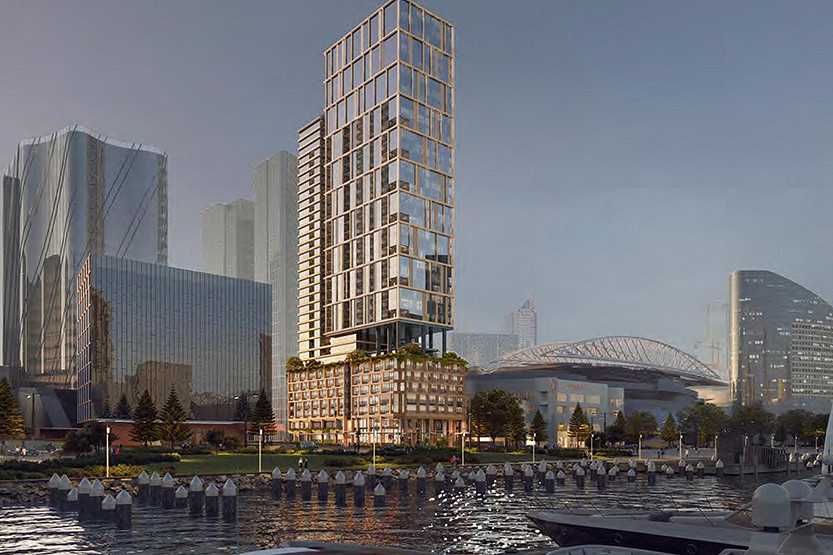
State approves major Docklands build-to-rent tower near Marvel Stadium
The Victorian Government has approved a major new build-to-rent tower in Docklands, giving the green light to a 554-home rental project at 699 La Trobe St in another sign of the precinct’s growing role in Melbourne’s expanding BTR market.
Read More
From one café client to 60 brands: The growth of Born Social
Tram bridge to E-Gate still possible despite West Gate Tunnel fears

 Download the Latest Edition