
Port Phillip pushes for acoustic camera trial to tackle hooning around Port Melbourne
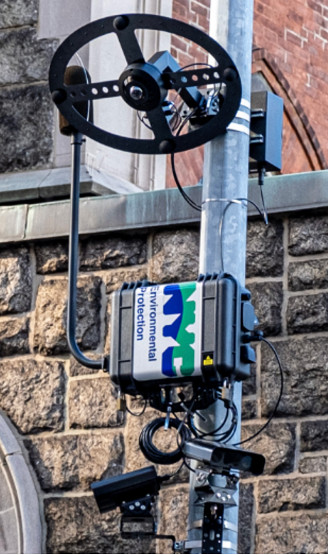

The City of Port Phillip is stepping up pressure on the Victorian Government to trial a new acoustic camera in Port Melbourne, as residents around Beacon Cove and Station Pier continue to battle hooning, dangerous driving and extreme vehicle noise.
At its March 4 council meeting, Port Phillip unanimously backed a Notice of Motion calling for Victoria’s first acoustic noise camera trial at a local hotspot, with the council proposing a partnership involving Victoria Police, the Environment Protection Authority (EPA) and local residents.
Under the proposal, the camera would be funded and managed by the EPA, with the council contributing to installation costs. The final location would be informed by police and affected residents.
The move comes amid ongoing frustration from Port Melbourne residents, particularly around Beacon Cove, Beaconsfield Parade and Station Pier, where hoons are said to gather late at night on weekends.
Port Phillip Mayor Alex Makin said the problem remained severe, noting that over one recent weekend alone he had received around 148 hoon-related emails and phone calls from residents.
“Council has been advocating for anti-hooning measures since 2022 as our residents shouldn’t feel scared and sleepless by this dangerous behaviour,” Cr Makin said.
He said acoustic camera technology offered a chance to test whether another enforcement tool could help reduce dangerous behaviour while restoring some peace to nearby homes.
The technology being proposed is different from ordinary CCTV. According to the council, the fixed-post camera uses algorithms and AI to detect and record noisy vehicles by capturing exhaust noise levels along with audio and visual data. That information can then be used by the EPA to determine whether a vehicle has exceeded regulated sound limits and whether a Vehicle Testing Notice should be issued.
If approved by the state, the trial would be reviewed after 12 months to assess whether it had reduced both vehicle noise and hoon behaviour, and whether the technology might then be rolled out more broadly.
The push has been strongly backed by the Beacon Cove Neighbourhood Association (BCNA), which has released a position paper calling for stronger deterrence measures and government leadership on what it says is a persistent quality-of-life and public safety issue.
The group says hoon driving and illegal vehicle noise remain major concerns not only around Beacon Cove but across surrounding Port Melbourne areas, especially Station Pier, Waterfront Place and Beaconsfield Parade. It describes burnouts, racing and excessive engine and exhaust noise as behaviours that are often organised via social media and which undermine sleep, wellbeing and residents’ sense of safety.
BCNA’s position paper argues that acoustic cameras offer significant promise because they can record both vehicle noise and number plates, and points out that the technology is already being used in Europe and North America. It also notes that New South Wales and Queensland have trialled the technology with local councils, while Victoria has yet to do so.
The issue is not confined to Port Phillip. Similar frustrations have simmered for years just across the municipal boundary in Docklands, particularly along Lorimer St and the Yarra’s Edge area, which links directly into Port Melbourne and Fishermans Bend. Residents there have long complained of burnouts, revving engines, illegal parking and antisocial behaviour associated with late-night car and motorcycle gatherings.
As previously reported by Docklands News, state government community engagement into hooning in 2022 and 2023 heard calls from inner-city residents for more cameras, more coordinated enforcement and technology-based responses rather than simply relying on police attendance after the fact.
In that sense, Port Phillip’s push may carry significance beyond Beacon Cove. If the state were to back a trial in Port Melbourne and it proved effective, it could open the door to similar technology being considered in other inner-city hooning hotspots, including those affecting Docklands residents.
Port Melbourne Ward councillor Heather Cunsolo said the council’s position was not anti-car, but anti-noise and anti-dangerous behaviour.
“We’re not anti-car, we’re against noisy vehicles exceeding EPA sound limits,” she said.
For residents around Beacon Cove, that distinction is important. The area is no stranger to car-related events and waterfront activity, but locals say the line is crossed when modified vehicles, excessive revving and dangerous driving begin disrupting homes and putting people at risk.
BCNA is now calling for a broader, coordinated response from all levels of government, including stronger hoon laws, targeted patrols, acoustic monitoring, CCTV, better lighting and even by-laws to penalise spectators at illegal driving events.
Trialling the technology now rests with the state government.
Image: Soundvue.
Related Articles
Tram bridge to E-Gate still possible despite West Gate Tunnel fears
A long-mooted tram connection linking West Melbourne to E-Gate and Docklands remains technically feasible despite the construction of the West Gate Tunnel Project’s Wurundjeri Way extension, Docklands News can reveal.
Read More
Good Cycles departs Docklands bike hub after decade on Harbour Esplanade
The Good Cycles bike hub on Harbour Esplanade has closed after almost a decade in Docklands, opening up a new opportunity for the City of Melbourne and Development Victoria to rethink one of the waterfront’s most visible small-scale activation sites.
Read More
Port Phillip Ferries introduces temporary fuel surcharge amid global price pressures
Port Phillip Ferries will introduce a temporary fuel surcharge from March 30, citing sustained increases in global fuel prices linked to ongoing conflict in the Middle East. But commuters can still take advantage of a “strong value” travel offer.
Read More
Pam the Bird disappears from Bolte Bridge following chaotic Docklands scenes

Meals with Impact launches free Docklands food market

 Download the Latest Edition