
“Plan now, pay less later”: Docklands engineer urges high-rise owners to prepare for electrification costs
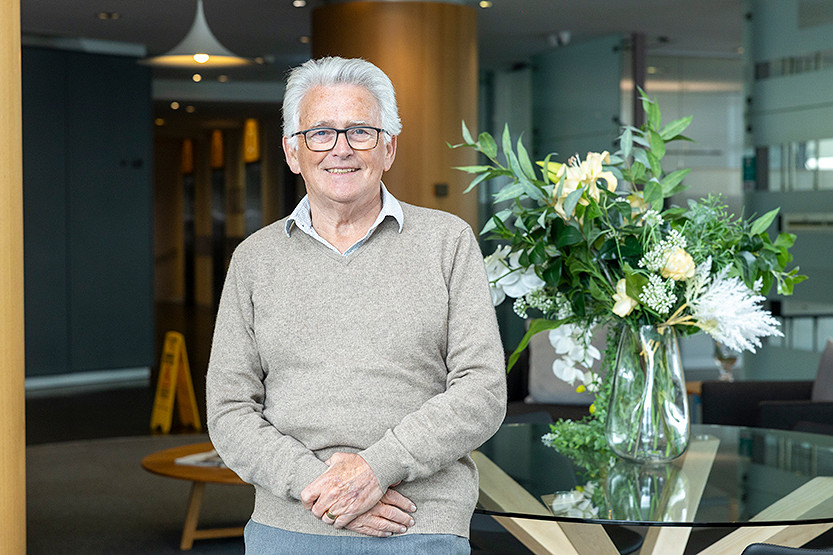

Howard Barnes has spent the past decade studying the guts of his building. A mechanical engineer and Tower 3 resident at Yarra’s Edge since 2013, he has a message for communities living in Melbourne towers built around 20 years ago or more: start planning – and saving – for electrification now.
Mr Barnes’s owners’ corporation (OC) is investigating how to future-proof Towers 2 and 3 as Victoria transitions away from gas, and as apartment living absorbs new electrical loads, from induction cooktops to heat-pump systems and electric vehicles.
His assessment is blunt but measured: making space for a larger substation and a new motor control centre, then switching plant and apartments over, is likely to be a long, staged project. The working estimate, he says, is from $8 million up to $12 million across both towers, spread over about 20 years.
“We’re at the very beginning of a long journey,” Mr Barnes said. “The project itself is probably five years of design and logistics once you’re ready to go, from finding a location, purchasing the space and redesigning services, to the tricky changeover from the old system to the new.”
Like many buildings completed during the gas-first era, Yarra’s Edge was designed with electricity for lighting and “secondary” functions, while space for future electrical expansion was limited. As gas becomes more expensive and electrification accelerates, that design legacy is now a constraint.
Independent engineering advice commissioned by the OC in 2019 found the main distribution board was already operating beyond its safe cable rating, and that the car-park boards had only enough spare capacity for a handful of low-power EV chargers.
When the building trialled two EV chargers anyway, the garage experienced nuisance tripping and overheating; the chargers were removed.
A subsequent meeting and discussions with CitiPower/Powercor in 2024 clarified responsibilities. The distributor can deliver more power to the property boundary, but space for larger equipment is an OC responsibility.
CitiPower indicated there may be limited spare capacity of 770–820 amps without rebuilding the substation, but anything beyond that would require a larger transformer, a new or upgraded main switchboard and building modifications. Under current rules, connection upgrades are customer-funded.
“CitiPower provides the power; we have to provide the space,” Mr Barnes told Docklands News.
In practice, that likely means purchasing and reconfiguring ground-level commercial space shared by the two towers, undertaking civil and structural works, and sequencing a changeover while keeping the building running. Mr Barnes noted the existing motor control centre would also be due for renewal within the timeframe.
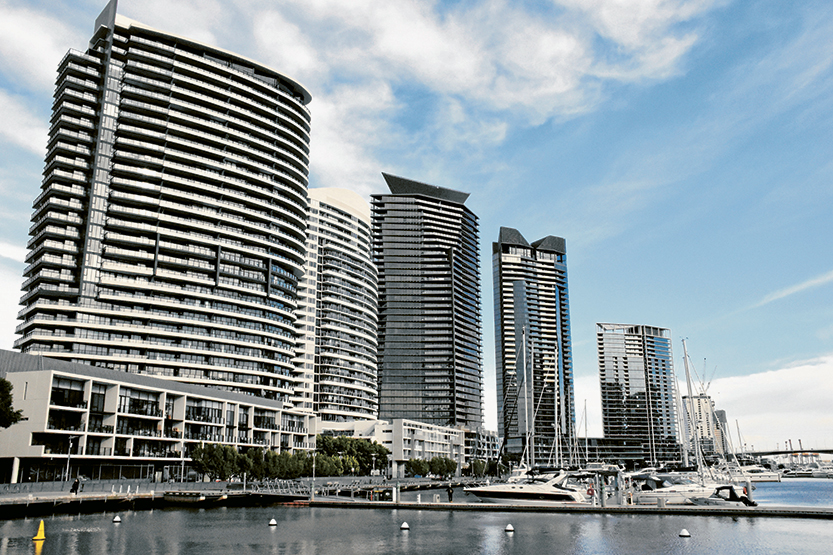
For owners, the obvious concern is affordability. Mr Barnes argues the best protection against future shocks is time.
The OC has engaged a consultant to produce a realistic 20-year maintenance plan using current market pricing, including allowances for cranes, logistics and construction.
Spread over two decades, he believes contributions can remain in “the realm of the doable” – roughly 10 to 15 per cent higher than current maintenance fund inputs – rather than the 40 per cent uplift a shorter program might require.
He also wants the state government’s current review of the Owners Corporation Act 2006 to consider how maintenance funds are set up. In his view, many plans escalate original developer estimates by a flat percentage each year without testing present-day costs, and they don’t account for the cranage and logistics premiums that high-rise plant replacements inevitably attract.
“After COVID, labour jumped sharply, and big lifts add hundreds of thousands of dollars to individual jobs,” he said.
If funds aren’t calibrated to reality, owners get hit with special levies.
While electrification is often discussed in terms of rooftop solar or community batteries, Mr Barnes is pragmatic about scale. Solar on his complex’s garage roof covers only about 10 per cent of common-area power when new.
Community batteries, like those the City of Melbourne is rolling out through its Power Melbourne scheme, he quips, are “mustard after the meal” if the fundamental issue – getting more supply capacity into dense inner-city streets – isn’t addressed.
In Docklands, he expects substantial new cables will ultimately be needed along Lorimer St to serve multiple towers. That is a longer-term city-building task.
For now, his advice to other OCs is practical and calm: audit today’s load and space, engage early with the distributor, stage upgrades sensibly, be transparent with residents and plan EV charging realistically.
Mr Barnes says the conversation is only just beginning across many inner-city towers. At a recent meeting of Yarra’s Edge OC chairs, debate about whether the precinct’s postcode should be 3008 or 3007 attracted more attention than multimillion-dollar infrastructure planning.
“People will care a lot more when gas prices bite or when they want an EV charger and the building can’t support it,” he said.
His message is not alarmist; it is simply a call to get ahead of the curve.
“We probably have around 20 years,” Mr Barnes said. “If buildings start now – on the engineering, the space planning and a realistic, long-term funding model – they’ll be ready when the time comes. If they don’t, costs will only go up.”
Victorian MP for Albert Park Nina Taylor said, “We know that more work needs to be done to make this a simpler, smoother process” and that the state government was currently undertaking a review of the Victorian Energy Upgrades (VEU) program “to make sure the program continues to be fit-for-purpose and accessible.”
She added that high-rise residential buildings were eligible for bespoke incentives for electric appliances through the VEU, and that she would soon be hosting a round table for local OCs to discuss these issues further. •
Related Articles
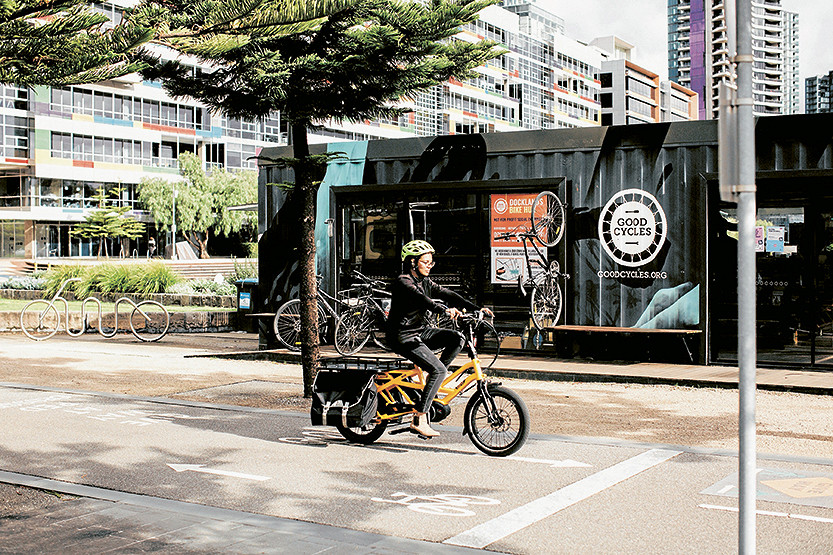
Good Cycles departs Docklands bike hub after decade on Harbour Esplanade
The Good Cycles bike hub on Harbour Esplanade has closed after almost a decade in Docklands, opening up a new opportunity for the City of Melbourne and Development Victoria to rethink one of the waterfront’s most visible small-scale activation sites.
Read More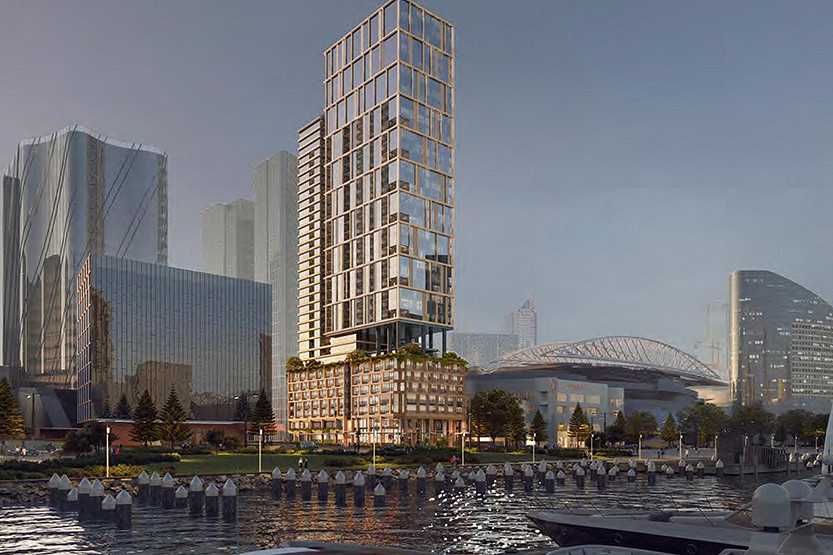
State approves major Docklands build-to-rent tower near Marvel Stadium
The Victorian Government has approved a major new build-to-rent tower in Docklands, giving the green light to a 554-home rental project at 699 La Trobe St in another sign of the precinct’s growing role in Melbourne’s expanding BTR market.
Read More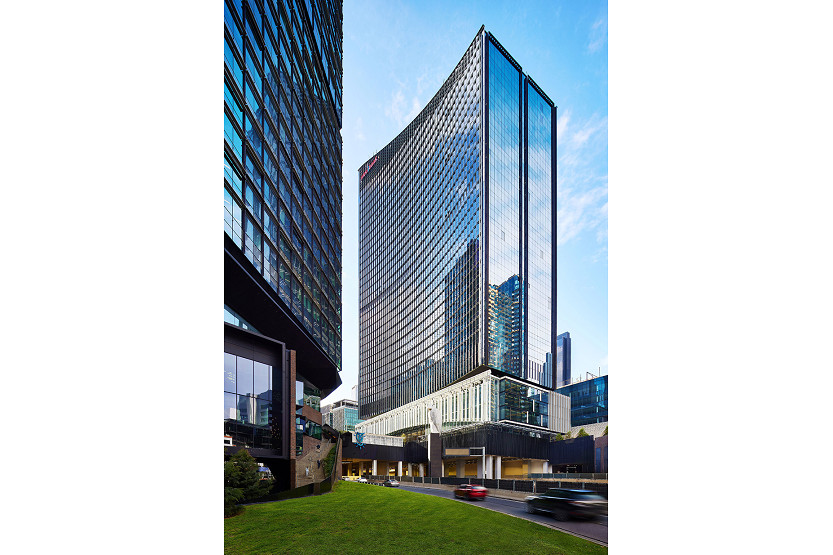
AFL to make temporary move to Melbourne Quarter as Marvel waterfront redevelopment nears
The AFL will temporarily relocate its Melbourne headquarters to Lendlease’s Melbourne Quarter Tower later this year, in a major office move that clears an important path for the long-anticipated redevelopment of Marvel Stadium’s waterfront edge at Docklands.
Read More
New street food and entertainment series to boost Docklands this winter

City of Melbourne chief Alison Leighton to take leave as acting CEO appointed

 Download the Latest Edition