
Farewell to the fleet: Docklands loses its last living links to a maritime past


The quiet departure of Docklands’ heritage fleet marks the end of a long and dispiriting chapter for Victoria Harbour, and a moment that demands reflection on how Melbourne’s waterfront has been shaped, and what has been lost along the way.
After years of negotiations, advocacy and public pressure, the last of the Docklands-based heritage vessels are leaving the precinct. The Alma Doepel, perhaps the most symbolically significant of the fleet, which also includes the Enterprize and steam tug Wattle, is relocating to Williamstown following a late-arriving interim deal with the Victorian Government that will fund three years of berthing and workshop costs at Seaworks. It is a reprieve of sorts, but not a resolution. As the Alma Doepel Foundation has made clear, it “buys time, not a solution”.
The immediate cause is the redevelopment of Shed 2 at North Wharf by Lendlease, overseen by Development Victoria. The fleet’s continued occupation of Docklands was no longer supported under the agency’s program, despite more than a year of discussions and historic commitments to find an alternative location within the precinct. Certainty, when it finally came, arrived late and under pressure, placing enormous strain on volunteer-run organisations that had already invested years of labour and scarce funds into restoration.
This outcome sits uneasily against Docklands’ origins. Once Victoria Dock, it was a working heart of the Port of Melbourne. Today, almost every physical trace of that maritime past has been erased. Central Pier is gone. The old sheds and wharves have been demolished or fundamentally altered. Harbour Esplanade has been reshaped beyond recognition. With the departure of the heritage fleet, the last living, working reminders of Docklands’ port history are disappearing from public view.
The irony is sharp. The Bolte Bridge was designed with sufficient clearance to allow vessels like the Alma Doepel to pass beneath it, an acknowledgement at the time that large heritage ships would continue to access Victoria Harbour. Now, those same vessels are being squeezed out, even as the Port of Melbourne continues to advocate for a new freight bridge parallel to the Bolte between Webb and Swanson docks, a proposal that would further constrain access and effectively suffocate the harbour for larger ships. In a striking twist, it is Port of Melbourne that has stepped in to provide the Alma Doepel with a temporary home while it awaits relocation to Williamstown.
None of this can be reduced to a single decision or moment. Development Victoria has, over the years, supported the heritage operators with space and access, and those efforts should be acknowledged. But support without a long-term plan is fragile. Commitments made in policy documents, including past promises to facilitate berths for heritage vessels, have not translated into enduring outcomes. The cumulative effect is that Docklands’ maritime story has been steadily hollowed out, not through overt hostility, but through neglect, shifting priorities and an overwhelming focus on real estate outcomes over place and identity.
Other port cities offer a different lesson. In Fremantle, maritime heritage is not treated as an inconvenience to be managed away, but as a defining asset that shapes the public realm and sense of place. Wander through Docklands today and there is little to suggest it was once a great working port. Criticisms of its glass-and-concrete anonymity may sound harsh, but they are understandable when every tangible link to history is removed.
That loss makes it all the more important to recognise what the heritage fleet has contributed. For years, these vessels animated the harbour, offered education programs, told stories of sail, steam and trade, and embodied a continuity that no plaque or sculpture can replace. Docklands News has documented the painstaking restoration of the Alma Doepel, the tireless volunteer hours, and the belief that living heritage matters most when it is seen, touched and used.
Williamstown will now benefit from that passion and expertise, and its maritime precinct will be richer for it. Docklands, by contrast, is poorer, not just culturally but symbolically. The departure of the fleet should serve as a reckoning for Development Victoria and the state government. Cities that sever themselves from their past do not become more vibrant by default. They become thinner, less legible, and less loved.
The farewell to Docklands’ heritage fleet is not simply about vessels moving berths. It is about a precinct losing its memory, and a missed opportunity to let history continue to inform its future. •
Related Articles
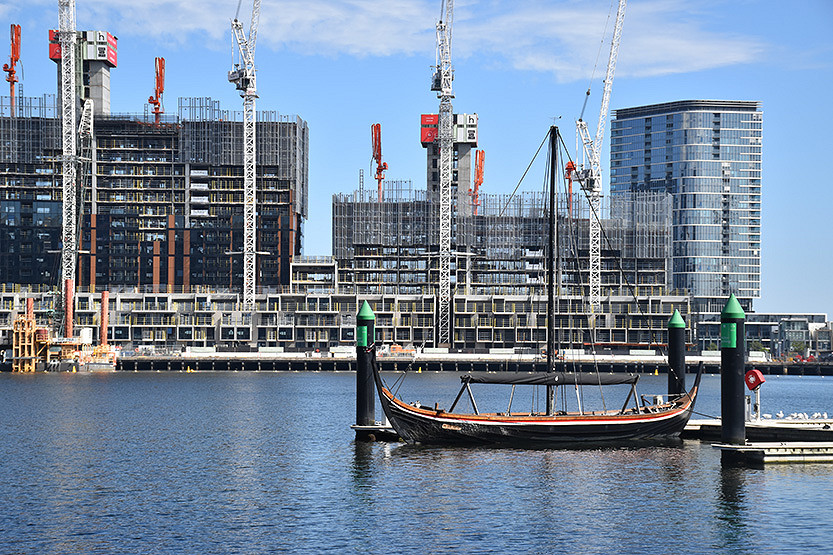
Viking ship makes Docklands stop ahead of royal visit
A reconstructed Viking ship built in Melbourne has made a striking appearance at Docklands, berthing at NewQuay near the Melbourne City Marina ahead of the expected arrival of Denmark’s King and Queen in Melbourne.
Read More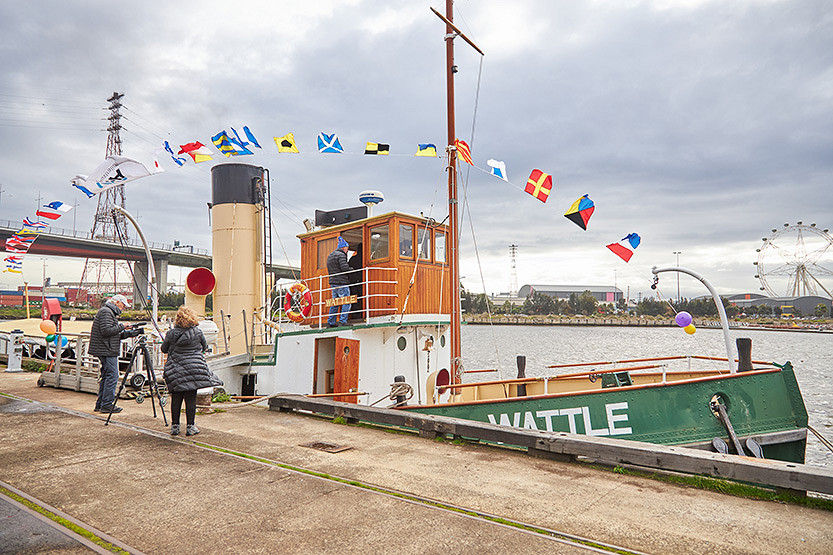
Heritage fleet in dire straits as groups issue desperate plea to Premier
Docklands’ embattled heritage fleet has issued a desperate plea to Premier Jacinta Allan, warning that Victoria’s most significant historic ships face eviction within months and risk being left without a home.
Read More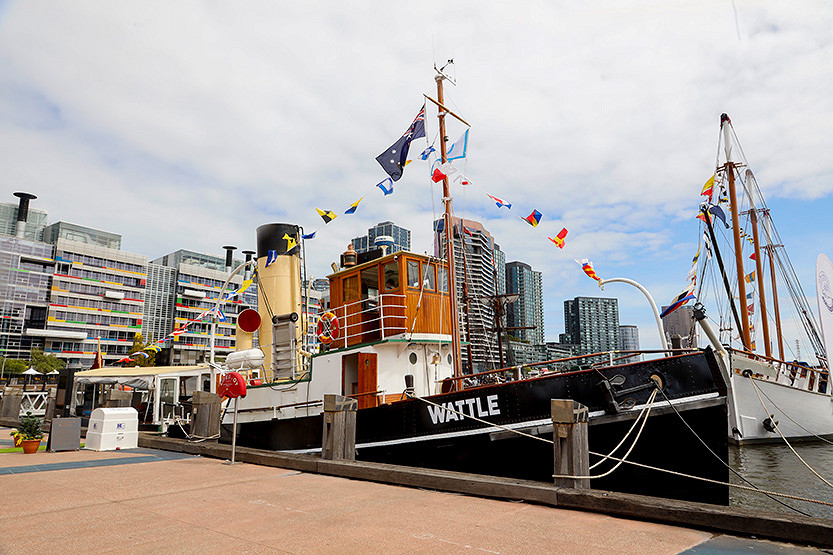
Cash offer deepens controversy over Docklands’ heritage fleet
The long-running standoff between Development Victoria (DV) and Docklands’ heritage fleet has escalated, with DV now offering operators cash to vacate North Wharf – a move described by critics as a “pay-off” that does nothing to solve the fleet’s future.
Read More
Pam the Bird disappears from Bolte Bridge following chaotic Docklands scenes

Meals with Impact launches free Docklands food market

 Download the Latest Edition