
Docklands’ low canopy in focus as council considers urban forest plan
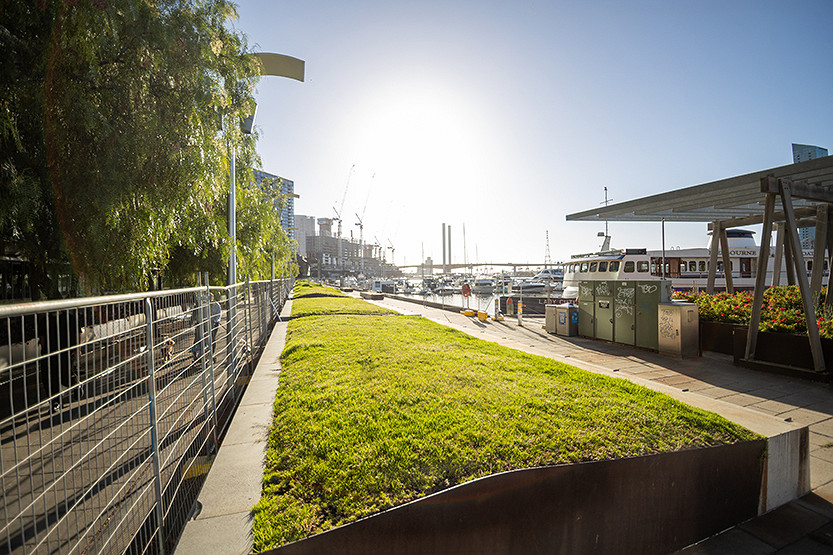

Docklands’ low tree canopy and exposed waterfront streets will come under renewed focus as the City of Melbourne considers a new 10-year Urban Forest Precinct Plan for the neighbourhood.
The Docklands Urban Forest Precinct Plan 2025–35 is due to be considered at the July 7 Future Melbourne Committee meeting, alongside final plans for Kensington and North and West Melbourne.
The precinct plans form part of the council’s broader Urban Forest Strategy, which aims to increase canopy cover across the municipality to 40 per cent by 2040, reduce the urban heat island effect, improve biodiversity and guide street tree planting over the next decade.
For Docklands, the challenge is particularly acute.
The report identifies Docklands as having one of the lowest canopy covers in the municipality, at 8.2 per cent, well below established inner-city areas such as South Yarra, East Melbourne, Parkville, Carlton and Kensington.
The plan notes that Docklands is still a relatively young urban forest. The precinct was developed from the 1990s as an urban renewal area of docks and wharves, with the first strategic tree planting taking place around 2001 when the first residents
moved in.
Located at the meeting point of Victoria Harbour, the Yarra River and Moonee Ponds Creek, Docklands has seven kilometres of waterfront edge, with Harbour Esplanade forming its central spine.
While the report says the deciduous tree canopy of the Hoddle Grid continues along streets such as Collins, Bourke, La Trobe and Dudley streets, the rest of Docklands has a more native and evergreen character.
The plan says Docklands already has the highest proportion of native species in the municipality and the second-lowest proportion of exotic species, giving it a distinct character from many of Melbourne’s older neighbourhoods.
Community feedback has reinforced that direction, with residents wanting Docklands to remain “self-contained and distinct” from the CBD, while better connecting water, tall trees, understorey planting, wildlife and people.
The report says the community wants more native species, more understorey planting, stronger biodiversity corridors and a clearer connection to Docklands’ pre-development landscape of rivers, wetlands and working docks.
It also notes that future planting should reduce reliance on London plane trees, partly because their suitability in future climates is less certain, and because further plane tree planting would be less consistent with the community’s desire to distinguish Docklands from the central city area.
Under the plan, low-canopy streets without recent tree planting will be prioritised for new planting over the next decade, with works staged according to complexity.
The council will also monitor recently planted streets to support healthy growth, and review older or underperforming streetscapes later in the 10-year period.
Biodiversity is another major focus. The plan identifies Docklands as a prime location for biodiversity corridors because of its proximity to waterways, with several streets mapped as important for bird habitat.
Future planting will seek to connect open spaces, maximise canopy cover, use understorey planting to support biodiversity, and extend the character of parks into adjoining streets.
The plan also seeks to build resilience against pests and disease. It identifies sycamore lace bug as a high risk for Docklands and says mixed tree species will help reduce the risk of large-scale tree loss.
If endorsed, the Docklands plan will guide street-by-street planting decisions through to 2035, with all streetscapes in the precinct expected to be assessed for tree planting potential by 2032.
For a suburb often criticised for its hard surfaces, wind exposure and limited shade, the plan represents a long-term attempt to make Docklands cooler, greener and more ecologically connected while strengthening its waterfront identity. •
Related Articles
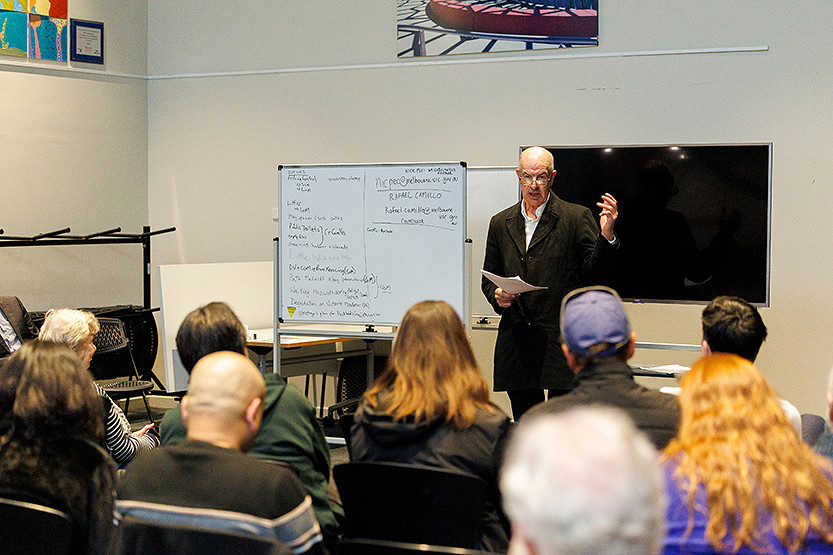
Renewed push to reclaim Moonee Ponds Creek in Docklands
Docklands residents are being urged to help renew pressure on the state government to restore public access and improve the neglected mouth of Moonee Ponds Creek, following an address by former federal MP and long-time creek advocate Kelvin Thomson.
Read More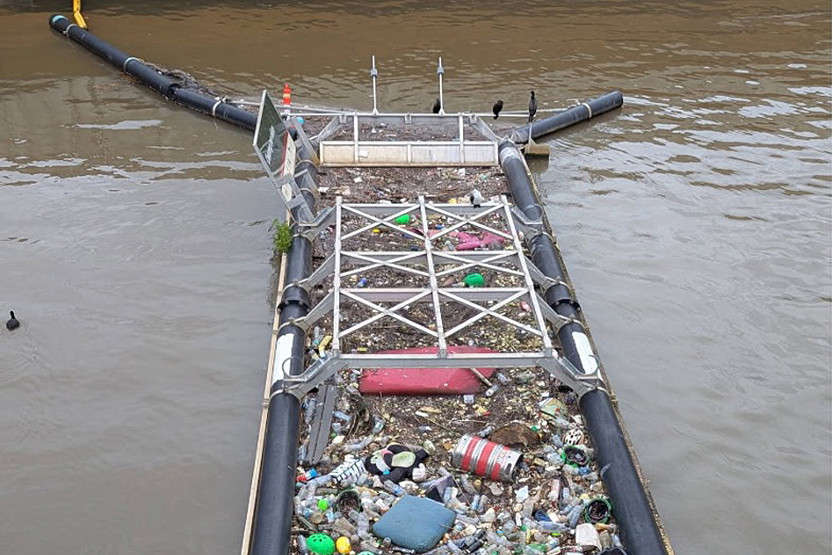
“Schematic of the floating boom”
The schematic depicts the 80-metre section of water through which litter enters Victoria Harbour, particularly during southerly and easterly winds.
Read More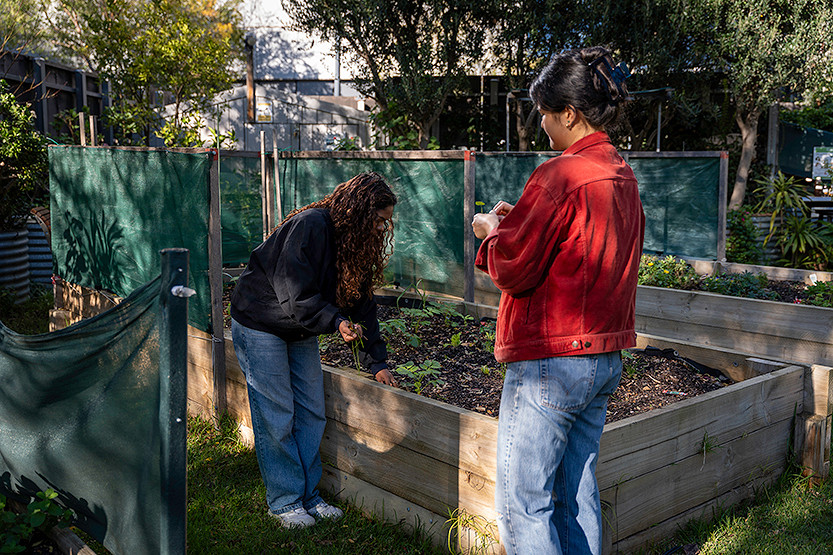
Volunteers sought to keep Docklands garden growing
The Docklands Community Garden has long provided a peaceful green refuge in one of Melbourne’s busiest high-rise neighbourhoods, but more volunteers are needed to help keep it thriving.
Read More
Pam the Bird disappears from Bolte Bridge following chaotic Docklands scenes

Meals with Impact launches free Docklands food market

 Download the Latest Edition