
Docklands gaps exposed in council infrastructure plan
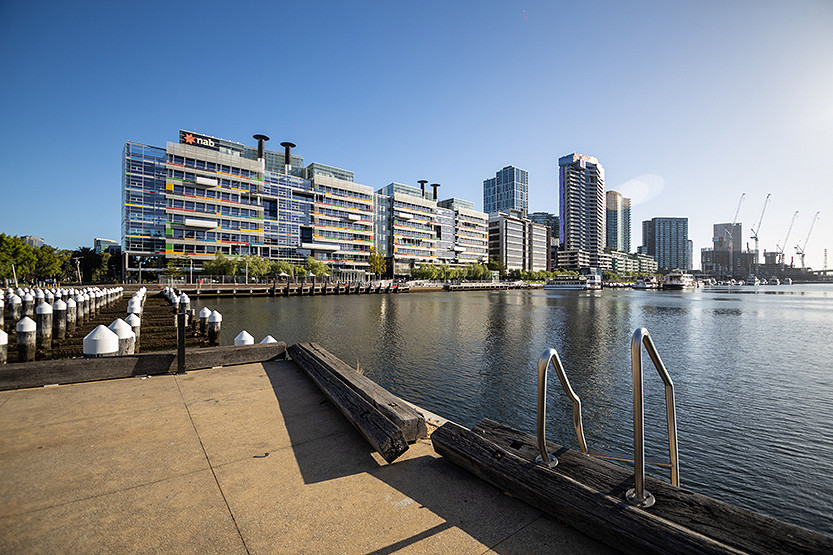

Docklands and its surrounding urban renewal areas face significant gaps in community infrastructure as population growth continues to place pressure on schools, open space, sportsgrounds, early years services and flexible community facilities.
The City of Melbourne’s new Community Infrastructure Plan 2026–36, endorsed unanimously at the June 16 Future Melbourne Committee meeting, identifies the south-west district – covering Docklands, West Melbourne, Fishermans Bend, Lorimer and E-Gate – as a major growth area with historic under-supply.
While Docklands already has several important community assets, including Library at The Dock, Community Hub at The Dock, Ron Barassi Senior Park and Pavilion and Yarra’s Edge Community Space, the report says community space across the broader district remains limited.
It identifies “significant gaps” in open space, sport, arts, early years and health spaces, driven by growth and long-term under-provision.
Docklands is singled out as a major residential, employment and visitor destination where growth is expected to continue. According to the plan, Docklands’ residential population is forecast to rise from 18,199 in 2023 to 29,586 by 2043, an increase of 63 per cent.
Its worker population is also expected to grow from 76,700 to 96,600 over the same period.
The report says young adults will remain the largest age group in Docklands, while children aged zero to 11 are the fastest-growing cohort – creating increased demand for local community spaces and services.
In the short term, Docklands needs arts and culture spaces, community gardens, flexible bookable spaces, including for older people, and early years services such as long day care, kindergarten and playgroups.
The report also notes that Docklands Primary School, which opened in 2021, is already at capacity, with demand for an additional primary school.
For a suburb that has long advocated for better community infrastructure to match its residential growth, the plan provides an important acknowledgement of gaps that many locals have raised for years.
The council’s four-year pipeline for the south-west includes planning to optimise the use of Hub@Docklands and surrounding land for community purposes, managing and activating Yarra’s Edge Community Space, and partnering on new community spaces and transfer of assets in Docklands.
It will also advocate for a new or expanded primary school in West Melbourne and Docklands and for the expansion of Ron Barassi Senior Park.
Other priorities for the district include planning for new and improved open space, preparing a master plan for Westgate Park, connecting cultural and creative organisations to meet local needs, and coordinating delivery of community space planned for Fishermans Bend.
The plan also identifies E-Gate as a future opportunity. While the site remains an industrial area, the report says it has long-term potential to accommodate large-scale community spaces, including open space, recreation and aquatic facilities, subject to strategic planning and further investigation.
That will be closely watched in Docklands, where E-Gate has long been seen as a potential missing link between the waterfront, West Melbourne and North Melbourne, and a rare opportunity to deliver infrastructure at a scale not easily achieved in the built-out parts of the inner city.
Fishermans Bend is also central to the council’s long-term thinking. The report describes it as Australia’s largest urban renewal precinct, with Lorimer planned as a dense urban neighbourhood and the Employment and Innovation Area focused on advanced manufacturing and business.
While growth in Fishermans Bend is expected to be gradual over the next two decades, the area is forecast to accommodate more than 12,000 residents and 80,000 workers, with development dependent on investment in transport and community space.
The council says Fishermans Bend should support municipal facilities, including arts, open space, sport and recreation.
City strategy director Jo Cannington told councillors the plan was a “first of its kind” for the City of Melbourne, bringing together the council’s understanding of its community infrastructure assets and future demand.
Acting Lord Mayor Roshena Campbell said the plan provided a “much needed reset” and a more transparent framework for identifying existing supply, future demand and the gaps to be addressed.
The final motion also requires future project ideas to be monitored, considered and, where necessary, reprioritised through the council’s annual plan and budget process.
For Docklands, the challenge will be turning the plan’s acknowledgement of long-standing gaps into funded projects.
With Docklands continuing to grow, Fishermans Bend emerging and E-Gate still waiting for a clear future, the south-west district is likely to remain one of the city’s most important tests of whether community infrastructure can keep pace with urban renewal. •
Related Articles
Little India precinct debate puts Docklands’ future in sharper focus
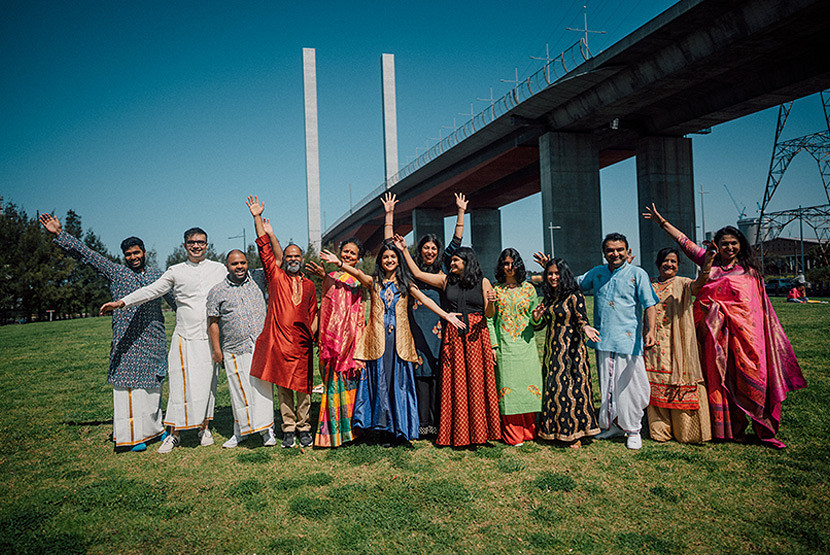
The City of Melbourne’s proposal to establish a Little India precinct in Docklands has emerged as one of the most debated issues of this year’s council budget, prompting strong support from Melbourne’s Indian diaspora, significant concern from local residents, and a renewed council focus on Docklands’ public realm.
Read More
City of Melbourne chief Alison Leighton to take leave as acting CEO appointed
City of Melbourne councillors have endorsed the council’s general manager of infrastructure and amenity, Rick Kwasek, as acting chief executive officer for a six-week period from June 26 to August 7 while CEO Alison Leighton is on leave.
Read More
Council backs Little India vision for Docklands with $1.2 million budget commitment
The City of Melbourne has taken its clearest step yet towards establishing a Little India precinct in Docklands, with more than $1.2 million allocated in the draft 2026-27 budget to progress the proposal through infrastructure, public realm upgrades, creative projects and events.
Read More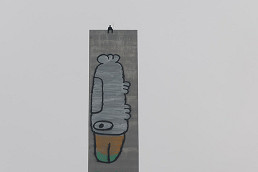
Pam the Bird disappears from Bolte Bridge following chaotic Docklands scenes
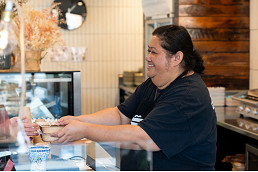
Meals with Impact launches free Docklands food market

 Download the Latest Edition