
Docklands deserves to grow as a real neighbourhood
Docklands has always represented a different side of Melbourne’s CBD, one shaped by renewal, ambition and a sense of what a modern, connected city can look like.
But over the past few months, what has become clear to me is that behind the striking skyline and waterfront views is a growing community asking practical questions about how this precinct evolves.
Since the start of the year, I’ve spent time in Docklands meeting with residents, local workers and small business owners. It is a unique part of the electorate: quieter than the city core in some ways but facing its own distinct pressures. Conversations here often centre on connectivity, safety and the need to build a stronger sense of neighbourhood.
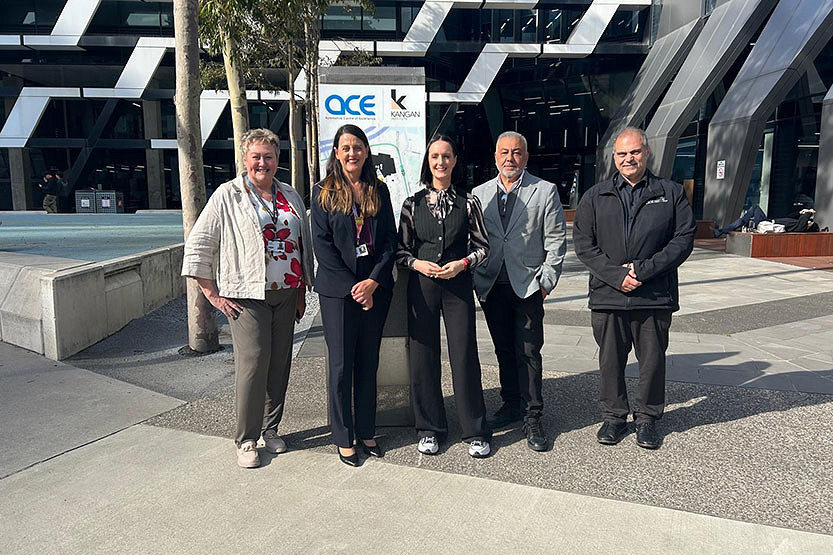
One of the most consistent themes I’ve heard is access, both physical and social. Docklands is well-positioned, but it can still feel disconnected. Whether it is public transport links, pedestrian access, or simply the flow of foot traffic needed to sustain local businesses, there is a clear desire to see the area better integrated with the rest of the city. A good example of that growing connection is Kangan Institute, where I saw firsthand how investment in education can deliver real outcomes for people and help strengthen the local community.
Local traders have spoken to me about the opportunities Docklands presents, but also the challenges. Weekday office traffic has not fully stabilised, and weekend visitation can be uneven. For small businesses, that unpredictability matters. What they are looking for is activation: events, community programming and planning decisions that bring more consistent life to the precinct. To help inform my work, I met with the Community3008 group to hear directly from residents and others helping turn Docklands into a stronger community.
I have also met with residents in some of Docklands’ apartment communities, where the conversation often turns to liveability. Issues such as green space, local services and community infrastructure come up frequently. Docklands was designed as a place to live as well as work, but there is more to do to ensure it feels like a fully realised neighbourhood.
That includes thinking carefully about how development continues. Growth is important, but it needs to be matched with the infrastructure that supports it: schools, health services, public space and transport. Done well, Docklands can be a model for high-density urban living that does not compromise on quality of life.
There are positive signs. I’ve attended local events along the waterfront that show what Docklands can be at its best: engaged, active and welcoming. I’ve spoken with community groups building stronger connections between residents, and with organisations exploring new ways to use public space.
In Parliament, I’ve been focused on how federal priorities intersect with these local realities. Investment in infrastructure, support for small business and broader cost-of-living measures all have a direct impact on communities like Docklands. But just as importantly, it is about ensuring that the voices of residents here are part of those national conversations.
Docklands is still, in many ways, a work in progress. That is not a weakness, but an opportunity. The decisions we make now will shape how this precinct feels and functions for years to come.
What I’ve taken from my time in Docklands this year is a strong sense that people want to be part of that process. They want a precinct that is not just well designed, but well lived in. A place where businesses can thrive, where residents feel connected and where public spaces are genuinely shared.
That is the future I will continue to advocate for: one where Docklands is not just a destination, but a community in its own right. Because like every part of Melbourne, its success will ultimately be measured not just by its buildings, but by the everyday experiences of the people who live and work there. •
Related Articles
Docklands is continuing to grow – and so should the services that support it
Every time I’m in Docklands, I’m reminded that it’s one of Melbourne’s fastest-growing communities.
Read More
Pam the Bird disappears from Bolte Bridge following chaotic Docklands scenes
Meals with Impact launches free Docklands food market

 Download the Latest Edition