
Development Victoria pressed over Docklands’ unfinished business
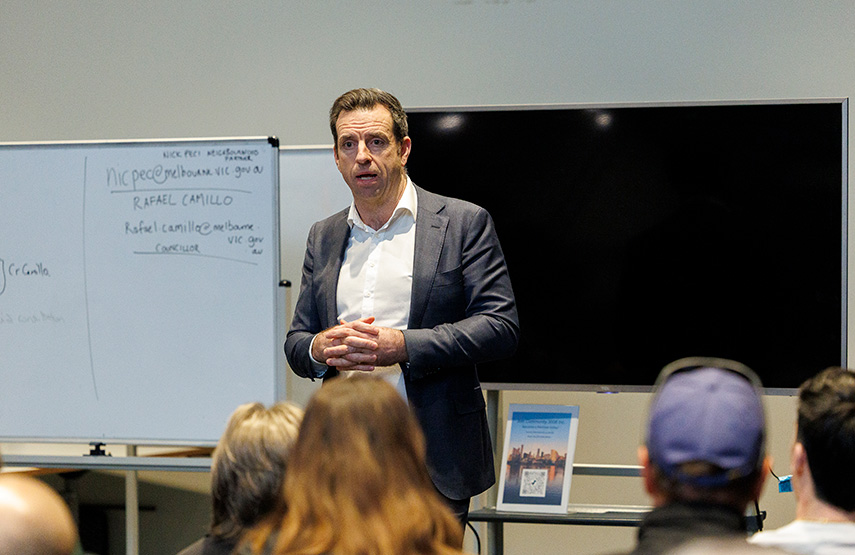
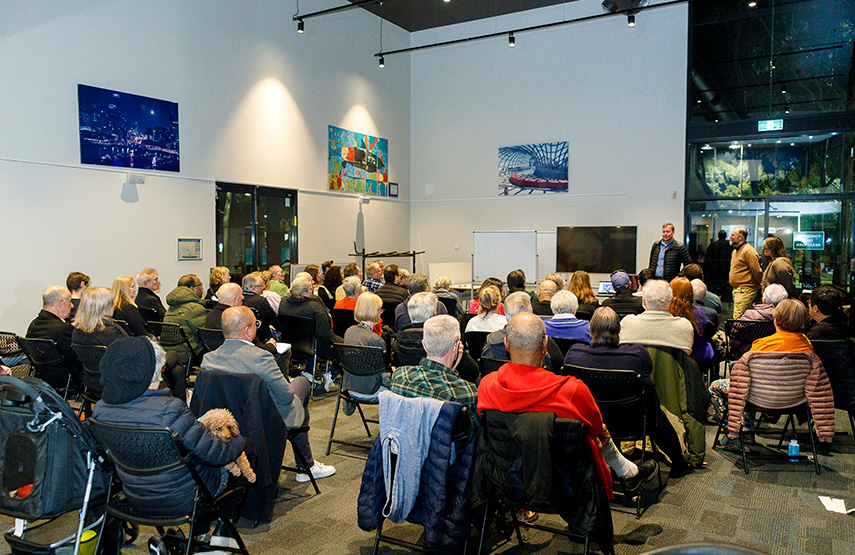

Development Victoria has faced direct questions from Docklands residents over the future of Central Pier, Victoria Harbour safety issues and whether the precinct’s public infrastructure is keeping pace with its growing population.
At a Community3008-led Docklands Community Forum at The Hub on July 8, Development Victoria’s executive general manager of precincts Niall Cunningham fronted residents for a wide-ranging discussion about the state agency’s role in the next phase of Docklands.
Mr Cunningham provided updates on the former Central Pier site, temporary activations along Harbour Esplanade, fencing around Victoria Harbour and the broader challenge of managing a precinct that remains only partly complete.
He said Development Victoria had heard clearly that many residents were enjoying the open waterway created by the removal of Central Pier and that some preferred nothing be rebuilt there.
“We have nothing planned for anything there at the moment, so there’s nobody working on any plans to put anything back there in the near term,” Mr Cunningham said.
He described the current controversial $150,000 Echo of Central Pier installation as a temporary artwork and said Development Victoria was continuing to test temporary uses across the waterfront before determining longer-term plans.
Recent activations have included play stickers on the ground along Harbour Esplanade, food trucks linked to Marvel Stadium events, support for Firelight Festival, the relocation of markets and involvement in the Melbourne Boat Show.
Mr Cunningham said some of the simplest ideas had proven unexpectedly popular.
“We’re actually surprised with how such a simple interaction gets so popular,” he said of the play stickers, adding that the agency was trying to understand “what works well”, what people loved, and what might be more divisive.
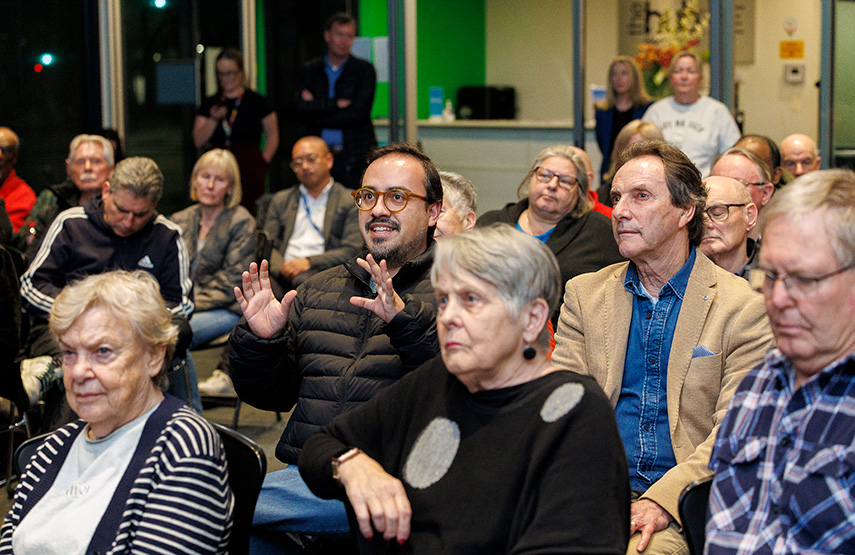
But residents made clear that while activations were welcome, Docklands also needed the basics of a functioning neighbourhood: shade, safer walking surfaces, public toilets, places for children and a clearer long-term plan.
One resident said Development Victoria did not need to “stretch the imagination too far” to understand what was missing.
“Walk from NewQuay Promenade to this side of the harbour between September and April in the mid-afternoon, you’ll know exactly what you’re thinking – the shade,” one resident said.
“The last thing, personally, I think we need is more activations. We need the basic foundation of a suburb, such as liveability, having some shade somewhere to take a kid, somewhere to walk where you don’t trip over.”
The most pointed questioning came over fencing along Victoria Harbour, which was installed after inspections identified potential structural issues with parts of the wharf.
Mr Cunningham said the decision to restrict access had been made in the interests of safety after a small representative sample indicated possible issues.
He said Development Victoria was now undertaking a much larger investigation, involving divers inspecting piles and taking samples to build a more complete picture of the harbour’s condition.
“What we’re trying to do is build a more complex picture as to the condition of the wharf,” he said.
The fencing is expected to remain in place until at least the end of the year while investigations continue, though Mr Cunningham said Development Victoria would seek to reopen areas if they were found to be safe.
Residents questioned why the issue had not been identified earlier, given regular inspections had been undertaken over many years. Mr Cunningham said inspections typically occurred every 12 months to two years, depending on the asset, but that the most recent work had identified a potential safety concern requiring further investigation.
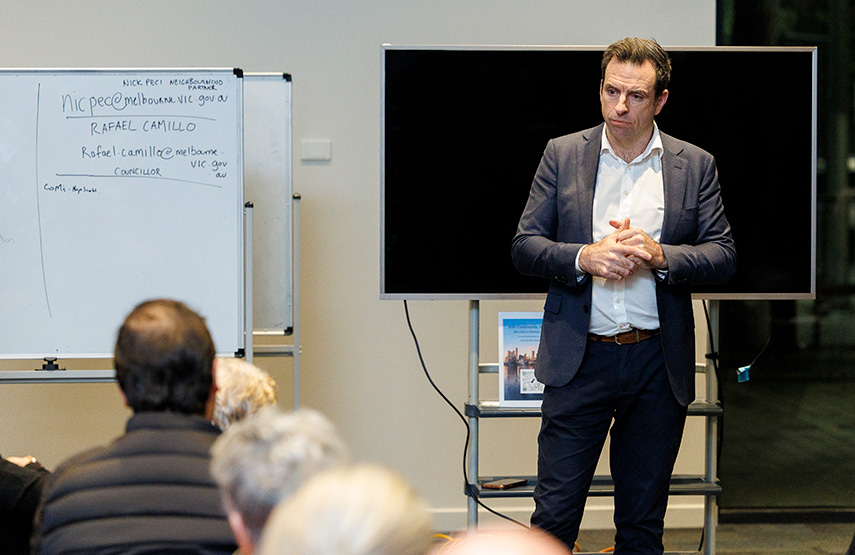
He also acknowledged the current temporary fencing was unattractive and not always effective, with Development Victoria and the City of Melbourne working on a more suitable barrier and better signage.
Safety concerns also extended to Harbour Esplanade and the former Central Pier surrounds, with residents raising concerns about uneven surfaces, old tram tracks, puddles and poor visibility during major events such as Firelight Festival.
Mr Cunningham said some land remained state-controlled, but Development Victoria paid the City of Melbourne an annual fee to maintain parts of the precinct. He encouraged residents to report surface hazards to the council where it was responsible for maintenance.
The discussion again highlighted Docklands’ complex governance arrangements, with residents asking whether future concerns should be directed to private developers, Development Victoria, the state government or the City of Melbourne.
Mr Cunningham said planning for future social infrastructure and amenity was a joint initiative between Development Victoria and the council, particularly as Docklands continued to grow.
He described Docklands as being “about 70 per cent of the way through its regeneration” and said the precinct was “not yet finished”.
Community3008 co-president Peter Lardner said the forum had exposed a broader need for more strategic engagement between residents, Development Victoria and the City of Melbourne.
He said Community3008 would write to both agencies to reflect the themes raised and seek further discussion on how the community could help shape solutions.
Mr Lardner also pointed to recent community-led work on floating wetlands and greening Docklands as an example of how residents with ideas and passion could work constructively with agencies.
Related Articles
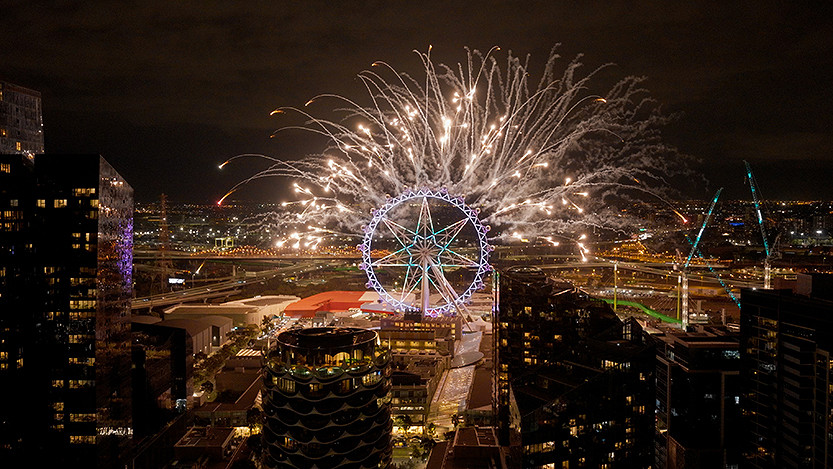
Melbourne Star lights up Docklands again
After nearly five years in the dark, the Melbourne Star has lit up the Docklands skyline once again, marking a symbolic milestone in the long-awaited return of one of Melbourne’s most recognisable landmarks.
Read More
Meals with Impact launches free Docklands food market
Docklands café and catering social enterprise Meals with Impact is launching a new initiative to help tackle food insecurity in the neighbourhood and beyond.
Read More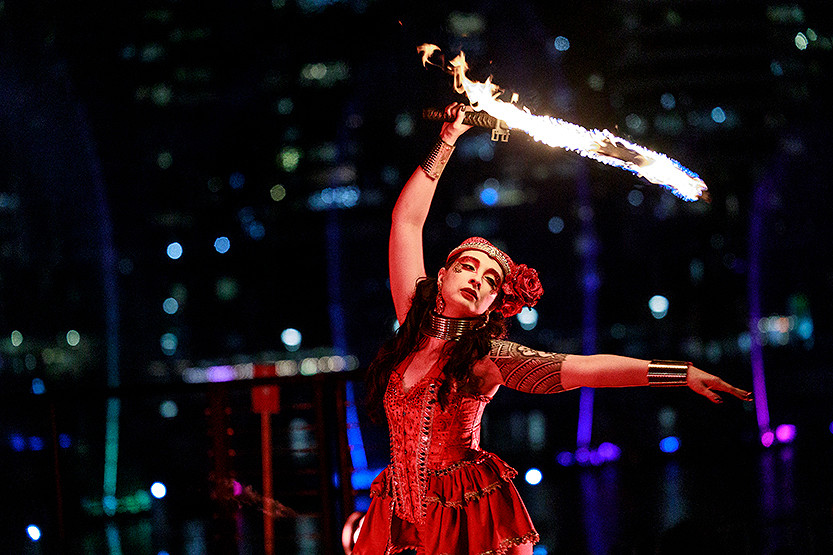
Firelight shines despite promenade closure
Docklands has again enjoyed one of its biggest weekends of the year, with the City of Melbourne’s annual Firelight Festival drawing around 100,000 people to the waterfront despite long-term closures along Victoria Harbour Promenade.
Read More
Pam the Bird disappears from Bolte Bridge following chaotic Docklands scenes

Meals with Impact launches free Docklands food market

 Download the Latest Edition