
Maritime futures, port pressures and Antarctic legacy

This first Melbourne Maritime Heritage Network (MMHN) Docklands News column for 2026 comes amid ongoing global turbulence. Regrettably, the socio-political instability that escalated in late 2025 has continued into the new year, with clear implications for the maritime sector.
Against this backdrop, a recent report from the Australian Strategic Policy Institute offers a timely reflection on the purpose and preparedness of a modern navy. Contrary to much media focus, the report argues that the Royal Australian Navy’s greatest challenge is not nuclear submarines or fleet size, but transitioning its culture from a peacetime force to one capable of sustained maritime war-fighting operations.
Closer to home, MMHN is pleased to welcome Captain Ben Esler, Commanding Officer of HMAS Cerberus, to the MMHN Board. His experience will bring valuable insight to the network.
Port of Melbourne and Docklands
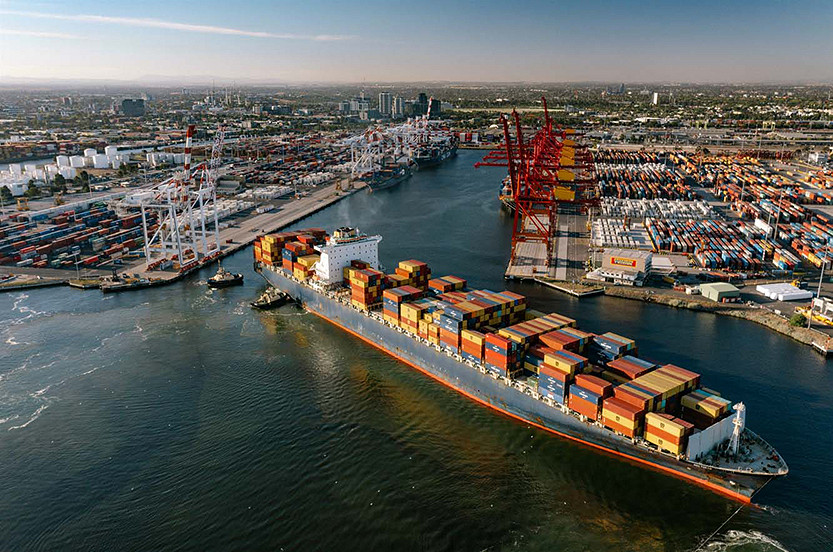
The Port of Melbourne (PoM) continues to have major economic, environmental and social influence over the Docklands Precinct. Its recently released Port Development Strategy 2055, published quietly just before last Christmas, deserves close scrutiny.
MMHN strongly encourages Docklands residents, investors and maritime stakeholders to review the strategy in detail. Of particular concern is PoM’s continued proposal to construct an at-grade freight rail crossing at the Bolte Bridge. Despite extensive community feedback, there remains no clear evidence that the Port acknowledges the severity of the impact such infrastructure would have on the Docklands Precinct and maritime access.
As outlined on pages 84 and 85 of the swtrategy, the proposed crossing would restrict access to the upper Birrarung/Yarra River and Victoria Harbour, effectively reducing a world-renowned heritage waterway to a confined basin. The implications for water-based recreation, visual amenity and Docklands’ iconic harbour outlook would be profound.
The strategy also highlights PoM’s broader footprint across the city, including public open space, cycling and walking trails, and the Port Heritage Trail, which stretches 22 kilometres from Station Pier to Williamstown. While these initiatives are welcome, MMHN maintains that future port development must better balance industrial growth with community, heritage and environmental values.
Antarctic heritage
MMHN also congratulates the Australian National Antarctic Research Expedition on the John King Davis Memorial Project. The initiative will restore and re-dedicate Captain Davis’s previously unmarked grave at Melbourne General Cemetery on February 19, 2026, marking both the 142nd anniversary of his birth and the 75th anniversary of the ANARE Club.
As a reminder, No. 5 Wharf (now Seafarers Rest Park) on the Birrarung/Yarra once served as the home port for many Antarctic expeditions prior to the Australian Antarctic Division’s relocation to Hobart in 1981.
MMHN welcomes feedback on its work and encourages those with an interest in maritime advocacy to consider joining the network in 2026. •
Related Articles
Changing tack in Docklands
We see plenty of “changing tack” in action in Victorian state politics currently. Nautical terms bob up in common use across aspects of life. Sailors change tack by using the wind to turn the vessel in a new direction.
Read More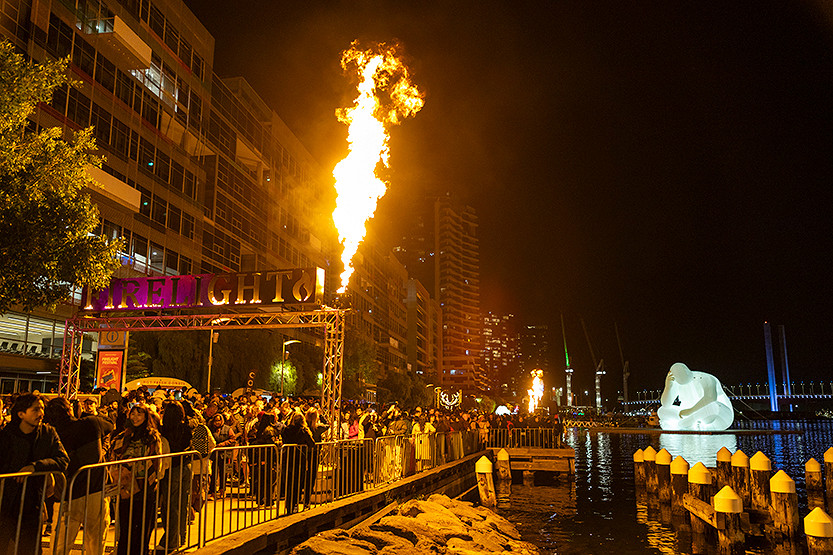
Docklands: Firelight returns, and the harbour takes centre stage
Melbourne is into the coldest stretch of the year, which is precisely when Docklands does its best work – turning Victoria Harbour into a stage.
Read More
Schools in Docklands
After a regrettably long delay, we are delighted to welcome news of a new campus for Docklands Primary School. But we say, this is not enough! Now is the time to ramp up pressure on the state government for a Docklands Secondary School.
Read More
Pam the Bird disappears from Bolte Bridge following chaotic Docklands scenes

Meals with Impact launches free Docklands food market

 Download the Latest Edition