
“Game-changer” for Docklands? Council backs BID pilot for waterfront precinct
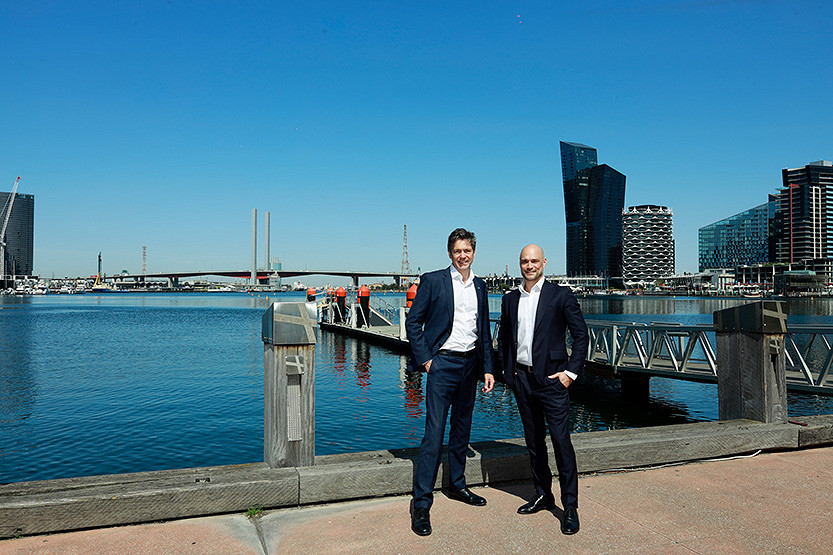

Docklands could become the testing ground for one of the City of Melbourne’s most significant new economic development experiments, after councillors unanimously backed a Melbourne-first pilot for a business improvement district model.
At its March 17 Future Melbourne Committee meeting, the council approved voluntary co-investment pilots in both the Docklands Chamber of Commerce and the Collins Street Precinct as a first step toward establishing formal Business Improvement Districts, or BIDs, in Melbourne.
For Docklands, the decision is potentially more consequential than symbolic.
While BIDs are well established overseas, the concept has never properly taken hold in Australia. In Docklands, where businesses have long argued the precinct needs stronger activation, better coordination and more local investment, supporters believe the model could provide a new mechanism for getting things done.
Docklands Chamber of Commerce president Daniel Hibberd said BIDs offered a collaborative way of working that was new to Australia but backed by decades of international experience.
“BIDs can provide the impact of a collaborative way of working that is new in Australia, but with the assurance of decades of proven added value around the world,” he said.
We think it could be a real game-changer for Docklands.
In basic terms, a BID is a structured arrangement where businesses and landlords in a defined area pool money to fund improvements to their precinct beyond normal council services. Overseas, that has included things like marketing, events, cleaner streets, better lighting, safety programs and public realm upgrades.
In Docklands, the idea has previously raised some concern among smaller traders already doing it tough, particularly around whether a levy model could unfairly shift extra costs onto struggling businesses.
But those concerns appear to have eased during the early discussions, with the emerging expectation that in Docklands any future model would be shaped around the precinct’s larger employers, major landowners and institutional players doing much of the heavy lifting.
That is significant in a precinct like Docklands, where the business base includes some of the city’s biggest corporate occupiers, developers and asset owners, from ANZ and other office tenants to major property interests with a direct stake in the area’s performance.
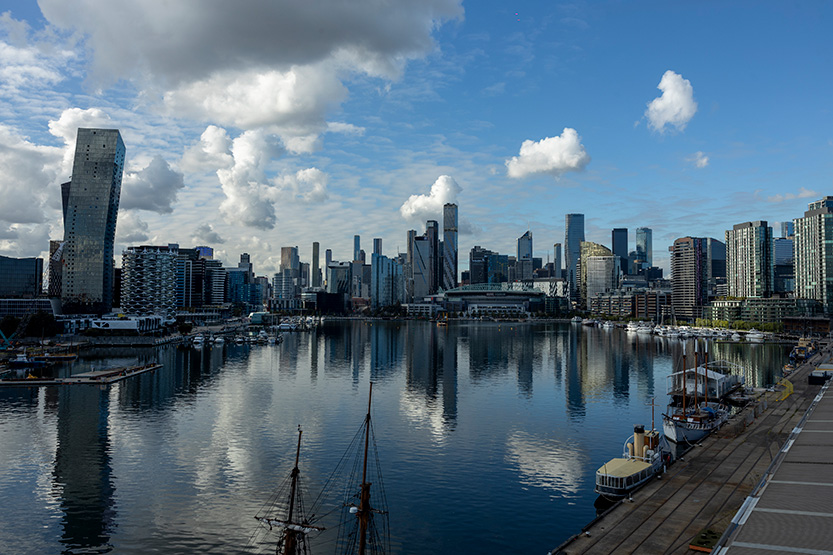
The council report does not lock in any final levy structure, but makes clear that the immediate next step is not a compulsory charge. Rather, it is a voluntary co-investment pilot to test what sorts of projects businesses actually want, how funding could work and whether broad support exists for a future formal BID.
The City of Melbourne said both Docklands and Collins St had already shown an appetite to explore a special rate scheme after early engagement with their respective business associations. It is now proposing a year-long process of workshops, project design and on-the-ground trial activity before reporting back to council in May 2027.
According to the report, engagement and co-design will run from March to June this year, trial projects will be delivered from July 2026 to April 2027, and a report on findings and next steps will then be prepared for councillors.
Lord Mayor Nick Reece described the proposal as a Melbourne-first move that could help the city follow global examples such as New York, London and Singapore.
“We want to breathe new life into our high streets and business precincts. A voluntary co-investment pilot would allow local businesses to pool resources and deliver improvements that attract visitors, boost trade and create more vibrant places,” he said.
He added that the city was proposing to explore the model in Docklands and Collins St while putting “businesses firmly in the driver’s seat”.
The council’s city economy and business portfolio lead Cr Kevin Louey said the interest had come from the precincts themselves.
“Businesses want to explore this model – that’s why we’re proposing pilots in Docklands and Collins St. This model has transformed cities worldwide, now it’s Melbourne’s turn,” he said.
At the council meeting, officers said all of Melbourne’s precinct groups had been contacted, but Docklands and Collins St were the two that felt able and willing to embark on the project first.
That is notable for Docklands, where local business advocates have often argued that the precinct needs a more tailored and ambitious model than the city’s existing precinct support arrangements can offer.
The report itself stems from a review of the city’s Business Precinct Program, which found that while the program offered value, its strategic impact was limited and a more transformative, place-based approach was needed. It said BIDs were an internationally proven model that could unlock stronger economic outcomes through collective investment.
Potential focus areas for the pilot include public realm improvements, destination marketing, events, promotions and other activations. Crucially, the report says any initiatives funded through the pilot would be above and beyond normal council service levels.
For Docklands, that could mean a new vehicle to fund exactly the kinds of interventions businesses have long wanted, whether that be stronger identity and branding, better amenity, more foot traffic, improved lighting, more coordinated programming or sharper advocacy around the precinct’s needs.
It is still early days. Any future formal BID would require much more detailed consultation and, if it ultimately moved to a special rate model, legal processes under the Local Government Act. Council officers also warned that BID design needs to be carefully tailored to Melbourne’s local context rather than copied directly from overseas.
But after years of debate about how to better activate Docklands, the pilot gives the precinct something it has not had for some time: a potentially serious new mechanism for change.
Related Articles
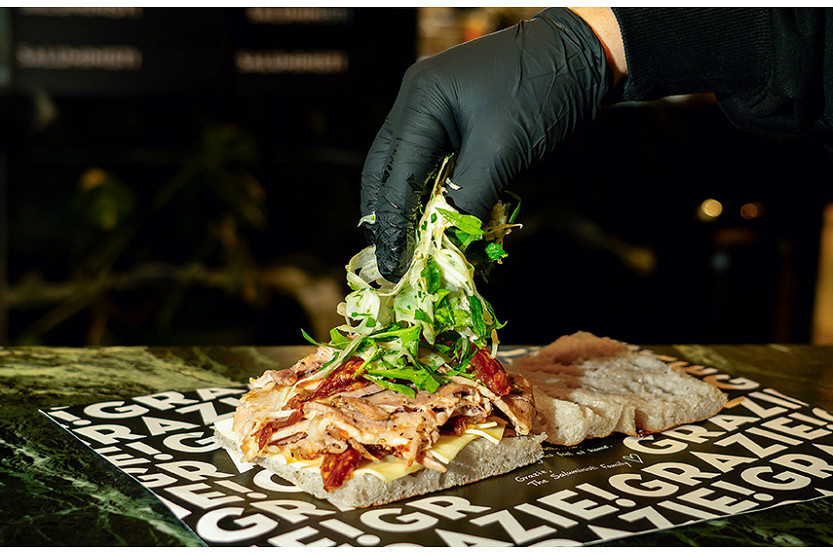
Saluministi celebrates 10 years in Docklands
A much-loved Docklands institution is celebrating 10 years in the best way it knows how – by serving up its signature porchetta panino at 2016 prices.
Read More
From one café client to 60 brands: The growth of Born Social
When Janelle Warner launched Born Social in 2017, she wasn't thinking about international expansion, offices in New York or managing a team of more than 20 people.
Read More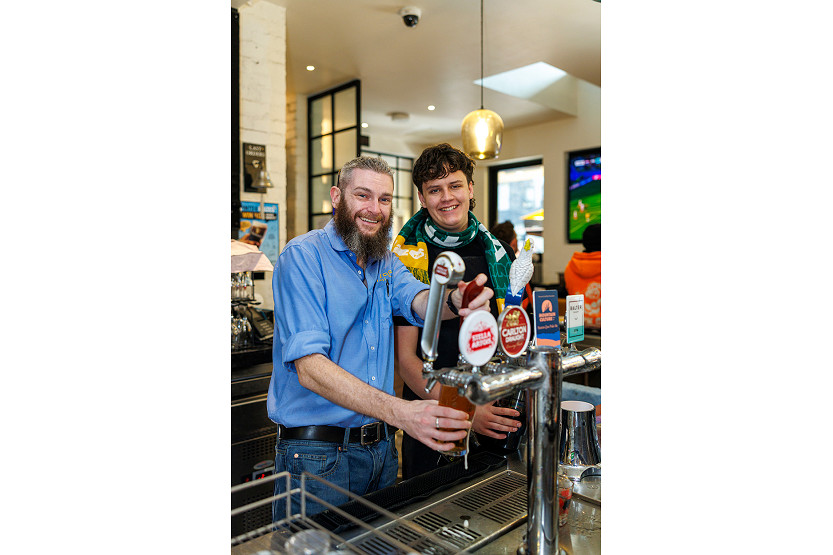
TAP831: Docklands’ local
Tucked away on the corner of Merchant St and 831 Bourke St, TAP831 is something of a rare find in Docklands – a welcoming pub and restaurant that has built a loyal following among the local business community while also becoming a favourite stop before a game or concert at Marvel Stadium.
Read More
Pam the Bird disappears from Bolte Bridge following chaotic Docklands scenes

Meals with Impact launches free Docklands food market

 Download the Latest Edition