
London Docklands is like our own

By Shane Scanlan
Docklands News visited London Docklands last month and was struck by the many similarities.
For starters, it’s windy!
And the “fine grain” urban character that Lord Mayor Robert Doyle is seeking for Melbourne Docklands is not apparent, even 12 years after its completion.
Even more so than our Docklands, its redeveloped public spaces are large scale, uninviting and exposed.
And speaking of scale, it’s huge – some ten times the size of Melbourne’s version.
Interestingly, the more inviting outdoor dining areas are away from the waterfront and take advantage of old tall warehouses which surround internal man-made waterways.
Like Melbourne’s Docklands, it was the containerisation of sea freight that caused the area to lose its economic viability in the 1960s and 70s. But unlike Melbourne, London’s old docks had an entrenched resident working class population.
This human dimension is one of the stark differences between the two developments.
The development became a battleground for class warfare as the old communities were pushed out and the “yuppies” moved in. This tension still exists where new apartments sit next to run-down public housing estates.
Like our Docklands, the London version is a major financial centre and now rivals the “City” for dominance in this sector.
But unlike Melbourne Docklands, the London version is quite a distance away from central London. The old city can be seen in the distance upstream on the River Thames.
London Docklands was developed over 17 years by the London Docklands Development Corporation, a powerful government organisation which operated an “enterprise zone” offering various inducements to businesses, including tax breaks.
Despite this assistance, the largest commercial development, Canary Wharf had a difficult birth with bankruptcy in 1992 and another take over in 2004.
In 1998, the LDDC was wound up and control was handed back to three London borough councils.
The use of the term “Docklands” is more informal in London. The area covers numerous suburbs and spans both sides of the river.
Related Articles
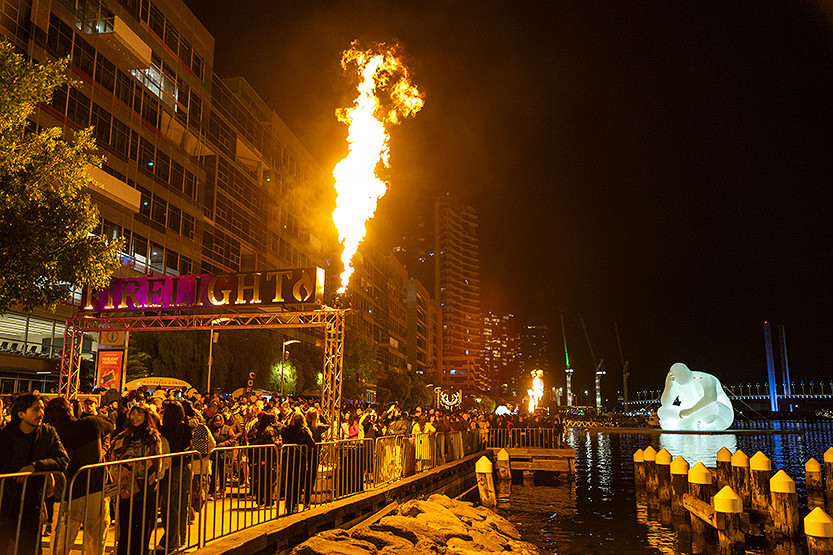
Firelight Festival returns to heat up Docklands
Docklands is set to glow again this winter, with the City of Melbourne’s Firelight Festival returning to Harbour Esplanade for three nights of fire, music, food and after-dark entertainment.
Read More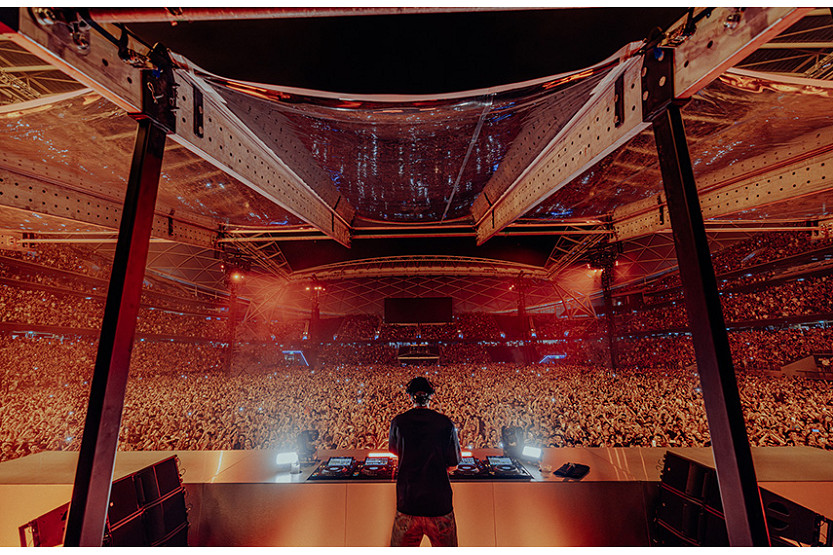
Dom Dolla sellout delivers another boost for Docklands
Docklands is set for another major event boost this September, with Melbourne’s own Dom Dolla selling out Marvel Stadium for what is being billed as one of the biggest electronic music moments in Australian history.
Read More
ATET case circles back as City of Melbourne’s amended defence revives old admissions
The City of Melbourne’s latest pleadings in the $7 million Supreme Court battle over Docklands venue ATET suggest the case has come almost full circle, raising fresh questions about why so much court time was burned in April on a position the council now appears to have largely abandoned.
Read More
ATET case circles back as City of Melbourne’s amended defence revives old admissions

New street food and entertainment series to boost Docklands this winter

 Download the Latest Edition